
Introduction
Creative Lao Seafood Specials with Modern Twists celebrates a vibrant thread in Lao food culture. This menu concept honors fresh catch from rivers and lakes, then elevates it with contemporary techniques while preserving core values. The result is a bright, inviting conversation between tradition and innovation. Diners experience how Lao cooks listen to the land and water, then respond with thoughtful, modern artistry. This dish set shows how culture and cuisine grow together in a kitchen that respects the past and welcomes the present.
Lao Seafood as a Cultural Thread
Seafood has long linked people to the rhythms of daily life in Laos. The Mekong and its tributaries shape seasonal meals, festivals, and family gatherings. Fresh fish and shellfish appear at markets, in street stalls, and on family tables. The culinary language of Lao seafood centers on balance: bright acidity, gentle heat, and nuanced saltiness. Herbs and aromatics act like color in a painting, enhancing natural sweetness without overpowering the fish. Creative Lao Seafood Specials with Modern Twists keeps this dialogue alive, offering new textures and presentations while honoring the quiet dignity of simple, well‑flavored ingredients.
The Flavor Lexicon of Lao Cuisine
Lao cooking prizes harmony among tastes and aromas. Spicy notes meet sour citrus, while saltiness carries the depth of fish sauce and fermented elements. Fresh herbs—lemongrass, dill, mint, basil, and cilantro—provide lift and perfume. Aromatics like garlic and shallots add warmth, while lime leaves and kaffir lime impart a bright, citrusy edge. In its modern iterations, this tradition remains faithful to the idea that food should be lively, clean, and uplifting. The result is dishes that feel rooted in place yet open to discovery, allowing the eater to sense both space and memory in every bite.
Modern Twists and Culinary Techniques
The modern twists bring clarity and texture to Lao seafood without losing the soul of the dish. Grilling over bamboo charcoal adds subtle smokiness that complements river fish. Quick sears and precision temp control preserve delicate flesh while forming a gentle crust. Fermented or citrusy dressings introduce brightness and tang, cutting richness and lengthening finish. Light foams or herb oils can float on top, guiding the palate toward fresh notes. Deconstructed plates reveal components separately, inviting curious diners to savor each element before they unite on the tongue. In every technique, the goal remains the same: highlight the seafood, celebrate herbs, and invite a shared, joyful meal.
Key Ingredients that Define Lao Seafood
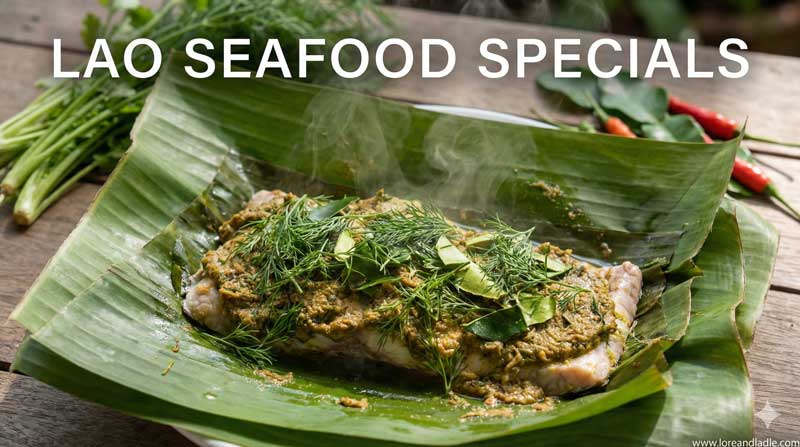
Local river fish, prawns, and shellfish anchor these creations. Lemongrass brings a citrusy snap; dill adds a delicate herbal note that harmonizes with fishy sweetness. Mint and cilantro brighten the plate, while lime or kaffir lime leaves lift the aroma. Fish sauce and palm sugar provide a nuanced, balanced savory-sweet foundation. Coconut milk or a light cream can round edges for a modern texture, never masking the fish’s personality. Rice, especially sticky rice, helps readers of Lao cuisine appreciate balance and provide a comforting, familiar base. Together, these ingredients tell a story of place, water, and careful, respectful preparation.
From Market to Table: Preparation and Presentation
Smart sourcing matters in this concept. Chefs select fish with sheen and firm texture, then handle it with clean, confident motions. Marinades are brief but intense, designed to wake flavors without dulling the fish’s natural character. Plates arrive vibrant and inviting: color contrasts that echo Lao gardens, and textures that invite a gentle bite. Banana leaves or simple ceramic serveware provide a warm, natural frame. Each course presents a small journey—a single bite that opens into a broader exploration of aroma, acidity, and freshness. The presentation teaches patience and appreciation, turning every meal into a mindful experience.
Sharing, Rituals, and Community
Communal dining holds a cherished place in Lao culture. Dishes are often enjoyed slowly, with conversation and smiles shared around a central spread. Creative Lao Seafood Specials with Modern Twists fit beautifully into this pattern, encouraging guests to compare flavors, textures, and techniques. The act of passing dishes, offering tastes, and praising freshness enriches social bonds. This approach to dining mirrors the broader values of hospitality, generosity, and respect for ingredients. In this light, the dish becomes more than sustenance; it becomes a living memory of gatherings, stories, and shared delight.
Sustainability and Craftsmanship
Sustainability shines through in every choice—from selecting local seafood to minimizing waste in prep. Chefs prioritize seasonal availability and responsible sourcing, supporting healthy ecosystems and the communities that depend on them. The craftsmanship lies in balance: precise heat, careful seasoning, and respectful plating. Each plate demonstrates how modern technique can serve tradition without overshadowing its essence. The result is a confident, refined expression of Lao seafood culture that travels well to new audiences while staying deeply connected to its roots.
Conclusion
Creative Lao Seafood Specials with Modern Twists invites readers to savor more than flavor; it invites them to experience culture through careful preparation, bright aromas, and thoughtful presentation. The dish celebrates Lao resilience and artistry: a culinary conversation where nature’s bounty is honored, skill is applied with care, and meals become shared celebrations. If you seek a dining moment that feels both familiar and exciting, this fusion of tradition and innovation offers a welcoming, respectful invitation to taste the beauty of Lao seafood and its enduring place in the food culture.