
Introduction
Protein-Packed Lao Party & Family-Style Platters for After-Workout Meals celebrates a warm tradition in Lao cuisine: sharing abundant, flavorful food with friends and family. This concept centers on nourishment, grace, and the joy of gathering. It blends protein-forward dishes with the fresh herbs, tangy dressings, and earthy rice that define Lao cooking. The result Is a platter of robust flavors that feels both festive and grounded. In Lao homes and eateries, meals are more than sustenance; they are a ritual of care and connection. This dish mirrors that spirit, inviting everyone to participate, savor, and honor the cooks and the guests alike.
Next, consider how the platter fits a modern routine. After a workout, the body craves protein, minerals, and energy. This Lao-inspired approach provides those essentials while staying faithful to cultural settings. The emphasis on sharing and balance makes it a welcoming option for post-exercise meals. By presenting a variety of proteins, textures, and sauces on a single spread, the platter becomes a convivially nourishing experience that respects both athletic goals and culinary heritage.
Finally, this dish invites curiosity. It embraces Lao flavors with confidence and clarity while remaining accessible to Home Cooks. The platter form is adaptable: you can scale up for a party, or tailor the components for a quiet family dinner. In every bite, you sense the beauty of Lao kitchen wisdom—fresh herbs, bright citrus, careful seasoning, and the satisfaction of a meal prepared with care.
Core ingredients and Their Cultural Significance
Proteins form the heart of the platter. Choose a mix of grilled chicken, pork, beef, or fish, and include a plant-based option like tofu for variety. Each protein is usually seasoned to be bold enough to stand beside herbs and dips, yet balanced so the flavors support one another. In Lao cooking, protein is often enlivened with a touch of citrus, fish sauce, or a smoky-charred edge from grilling. This creates a confident, satisfying core that fuels recovery and celebration alike.
Sticky rice anchors the platter. It’s the threading that binds the meal, easily picked up with fingers and hands. It invites sharing and makes it simple for guests to scoop just the right amount. Fresh herbs—mint, cilantro, and sometimes dill or culantro—add brightness and perfume. They cleanse the palate and elevate the perfume of grilled meat and tangy dips. A bright lime or lemon arrives with a gentle sourness that harmonizes the savory notes. Toasted rice powder adds a toasty, nutty depth that ties everything together.
Classic dips and salads round out the spread. A zesty jeow (dip) made with chilies, garlic, lime, fish sauce, and herbs provides a piquant contrast to the milder, smoky proteins. A larb-inspired salad—minced meat tossed with lime juice, fish sauce, roasted rice powder, onions, and herbs—offers a crisp, bright counterpoint. These elements reflect a culinary philosophy that favors balance: sour, salty, spicy, and fresh greens all mingling in harmony.
- Protein options: grilled chicken, pork, beef, fish, plus tofu for variety.
- Staples: sticky rice, fresh herbs (mint, cilantro), citrus (lime), fish sauce, roasted rice powder.
- Dips and salads: jeow dips, larb-style salads, and herb-forward accompaniments.
- Flavor emphasis: bold but balanced, with a focus on brightness and aroma.
Cooking techniques that honor tradition
Lao home cooks often rely on a few trusted techniques that bring depth to the platter. Grilling over charcoal or wood imparts a smoky, irresistible edge to meats. Marinating with fish sauce, lime, garlic, and pepper infuses proteins with brightness and savory depth. Pestle-mortar work remains a cherished way to blend herbs, chilies, and aromatics for jeow dips and larb sauces. The mortar and pestle release essential oils from herbs, creating a vivid aroma that invites tasting.
Steaming and simmering also play roles, especially for tender meats or fish, which are then sliced or shredded for easy sharing. Sticky rice is steamed in baskets until glossy and pliable, perfect for forming gentle mounds on the platter. Finally, fresh chopping of herbs at the last moment preserves their aroma and color, ensuring every bite feels vibrant and alive.
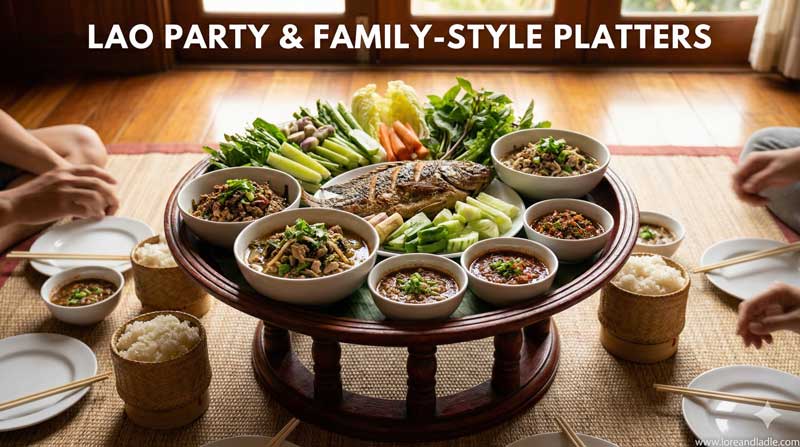
Next, consider the social technique of arrangement. A well-curated Lao platter uses space and color to guide guests. Brighter greens and lime wedges punctuate the board, while bowls of jeow invite dipping. Slices of meat are fanned or stacked for easy pickup, and a central portion of larb-like salad provides a fragrant, crisp centerpiece. This thoughtful arrangement mirrors the care found in Lao hospitality—every guest can reach a favorite element without fuss.
Cultural value of communal dining
Communal dining sits at the core of Lao hospitality. The act of sharing a single platter expresses generosity, respect, and togetherness. People gather, serve themselves, and pass dishes clockwise, maintaining a gentle rhythm of conversation and connection. After a workout, this social ritual gains even more meaning. Friends and family come together to celebrate effort and recovery, nourishing not just the body but also the bond among participants.
The party-and-family-style approach reinforces food as a shared heritage. Elders savor a portion first, signaling respect and gratitude. The youngest participants learn to help, learning patience and generosity in the process. The platter becomes a stage for storytelling, laughter, and the aroma of fresh herbs wafting through the room. In this setting, the dish becomes more than sustenance; it is a living invitation to a community’s culinary memory.
Additionally, the Lao emphasis on freshness shines in this platter. Herbs and citrus are added just before serving, so every bite tastes bright and immediate. This practice honors the fleeting sweetness of herbs and the crispness of vegetables, enhancing the overall dining experience without overwhelming the proteins. The result is a table where nourishment and sociability rise together.
Culinary significance: flavor profiles and balance
Lao cuisine is known for its bold, clean flavors and its balance of tastes. The protein-packed platter showcases this through four key elements:
- Sour: Lime juice or tangy jeow provides brightness that wakes the palate.
- Salty: A kiss of fish sauce or saltiness in marinades anchors the flavors.
- Spicy: Chili and pepper bring warmth and depth, inviting careful, measured heat.
- Fresh: Mint, cilantro, and other herbs release a clean aroma that carries the dish forward.
Toasted rice powder adds a distinctive, subtle nuttiness that ties elements together without overwhelming the meat or herbs. The combination of textures—succulent meat, crisp larb-style elements, and silky dips—creates a multi-sensory experience that Lao cooks prize. The platter’s design enables guests to taste each component in balance, learning how different ingredients illuminate one another.
Platter presentation and after-workout nutrition
The platter is designed for easy sharing and dynamic tasting. Arrange the proteins in generous piles, with slices fanned neatly. Place a few bowls of jeow around the edges, along with a central larb-style salad to invite tasting and comparison. Small plates and extra napkins keep the experience comfortable and communal. The sticky rice forms the anchor, with portions ready to pick up and press into a small bundle for dipping.
From a nutritional viewpoint, the platter supports post-workout recovery by delivering high-quality protein along with carbohydrates from sticky rice and a bounty of vitamins from herbs and greens. The diverse textures—grilled meat, crunchy herbs, and silky dips—also support satiety and satisfaction, encouraging a satisfying end to the meal. The social aspect of sharing, of course, makes the experience feel rewarding beyond nutrition alone.
Regional variations and adaptations
Lao cuisine varies by region, and the platter can reflect those differences while preserving core ideas. Northern Lao styles might emphasize lighter marinades and herbs with bold greens. Central Lao influences often lean toward richer dips and a pronounced use of lime and fish sauce. Southern Lao flavors may embrace more pronounced spice and a broader selection of fresh herbs. Regardless of region, the concept remains a celebration of protein, community, and the bright, clean flavors that define Lao cooking.
Adaptations are easy. Swap in locally sourced fish, poultry, or tofu; adjust chili levels to suit heat tolerance; and pair with regional jeow or larb variations. The versatility of the platter makes it a welcoming choice for cooks new to Lao flavors and seasoned enthusiasts alike.
Tips for recreating at home
- Start with a plan: choose two or three proteins, one larb-inspired component, one jeow dip, and a generous batch of sticky rice.
- Marinate proteins with a simple blend of lime juice, fish sauce, garlic, and pepper for 30 minutes to several hours for more depth.
- Use a hot grill or skillet to finish proteins quickly, creating a pleasing exterior and juicy interior.
- Prepare jeow dips fresh, using garlic, chilies, lime, and herbs; adjust chili levels to taste.
- Slice proteins thinly for easy picking and plate fans or ribbons to create an inviting arrangement.
- Arrange herbs around the platter for vibrant color and aroma; sprinkle toasted rice powder just before serving for aroma and texture.
- Set the table for a party atmosphere: bowls for sauces, tongs for easy serving, and extra napkins for sharing.
With these steps, you can reproduce the essence of the Protein-Packed Lao Party & Family-Style Platters for After-Workout Meals in a home kitchen. The result is a lively, nutritious, and culturally rich spread that honors Lao culinary values and supports communal dining.
Conclusion
Protein-Packed Lao Party & Family-Style Platters for After-Workout Meals embodies a fusion of nourishment, craft, and hospitality. It carries the beauty of Lao culinary traditions into a modern, athletic-friendly context, offering a generous, protein-rich experience that is also deeply communal. The dish honors the Lao palate—bright, balanced, and fragrant—while inviting everyone to share, reflect, and celebrate together. In every platter, you taste the care of Lao kitchens, the joy of gathering, and the timeless appeal of food as a bridge between body, mind, and community.