
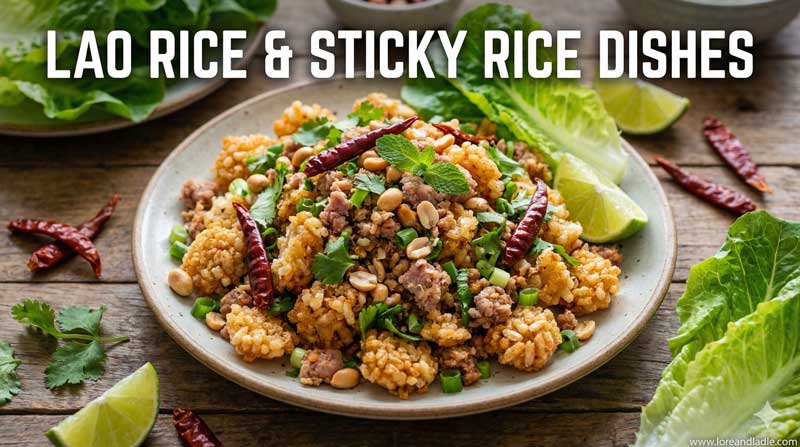
Welcome to the Fresh Herb–Lovers Guide to Lao Rice & Sticky Rice Dishes
This post celebrates a beloved part of Lao dining: rice, brightened by fresh herbs. The dish named Fresh Herb–Lovers Guide to Lao Rice & Sticky Rice Dishes invites us to see how fragrance and texture carry culture. You will discover how herbs awaken simple grains and how every bite connects home, table, and tradition. We focus on flavors that matter, the techniques that bring them to life, and the shared joy of eating together. The guide centers on nourishment, color, and the quiet ritual of preparing rice with care.
The Heart of Lao Tables: Rice as Culture
Rice sits at the center of Lao meals, not as a side, but as a daily companion. In Lao homes, sticky rice is more than food; it is a graceful form of hospitality. A steaming basket signals welcome. The grains, soft yet chewy, carry the day’s stories. This dish emphasizes how rice shapes rhythms, from market markets to Family Dinners. The Fresh Herb–Lovers Guide highlights these moments, showing how steady work in the kitchen yields bright, fresh results. When you taste Lao rice, you taste years of farmer’s sun, water from the hills, and patient pounding or steaming. The result is comfort with a clear sense of place.
Fresh Herbs: A Living Palette on the Plate
Fresh herbs are the spark in Lao rice dishes. Mint lends a cool brightness, cilantro adds a citrus note, and dill brings a delicate aroma. Lemongrass and lime leaves release citrusy sweetness as you chew. Thai basil offers a peppery finish that lingers pleasantly. Green onions drift in for freshness, while culantro and dill deepen the herb chorus. These leaves and stems are not garnish alone; they are collaborators. They wake the rice, balance the starch, and lift the entire plate. Each herb is chosen for its ability to harmonize with the grain’s natural sweetness. The result is a dish that feels alive, fragrant, and deeply satisfying.
Sticky Rice: Texture, Technique, Tradition
Sticky rice, or khao niao, has a precise, soothing texture. The grains cling softly, forming gentle mounds that fit hand to palm. The technique centers on patience: soak, steam, and rest. The steaming basket, often lined with cloth, gives the rice its gloss and cohesion. When done well, the grains separate slightly yet stay together with a tender bite. The sensory magic comes from steam rising through the herb-scented air and from the quiet act of shaping the rice into neat portions. This technique turns a simple starch into a stage for herb flavors and for shared bites with family and friends.
Flavor Profiles: Bright Herbs Meet Soft Rice
In this guide, flavors arise in balance. The greens bring coolness and vibrancy, while the rice provides a gentle backbone. A touch of heat from a fresh chili dip, a kiss of lime juice, or a velvet drizzle of sesame oil can finish the plate without masking the herbs. The key is restraint—let the herbs do the talking, and let the rice listen. The result is a dish that feels clean, uplifting, and endlessly adaptable. Each bite offers a moment of clarity, where the herb notes ping against the soft chew of sticky rice.
Pairings and Possibilities: Dips, Sauces, and Sides
Fresh herb-focused Lao rice shines with simple accompaniments. A bright, peppery dip made from chilies and garlic complements the herb-forward grains. Fermented or fresh vegetables add crunch and acidity. A smoky fish or a light grilled meat provides contrast, while cucumber slices cool the palate between bites. The philosophy is to honor the rice by surrounding it with colors, textures, and aromas that amplify its natural sweetness. These pairings reveal how Lao cooks see balance: light, fresh, and true to the ingredients.
Serving Traditions: Sharing the Table
Sharing is central to Lao dining. Dishes arrive in small portions that invite sampling and conversation. Hands guide the sticky rice into portions for each guest, a humble act that strengthens connection. When herbs are present, they are passed around to refresh the air and remind everyone of the meal’s freshness. The Fresh Herb–Lovers Guide celebrates this communal spirit. It shows how a simple bowl of rice becomes a ceremony of care, exchange, and gentle hospitality.
Fresh Herb–Lovers at Home: Practical Tips
You can bring this experience into your kitchen with accessible steps. Start by rinsing and soaking the rice, then steaming until it glows with aroma. Chop fresh herbs finely to release their oils, and fold a handful into the hot rice to perfume it. Create a light dipping sauce with lime, fish sauce, and a touch of sugar. Keep portions modest and focused on balance. The dish rewards patience and attention to detail, and it welcomes improvisation with regional herb choices.
The Cultural Value: A Living, Tasty Tradition
This dish stands as a celebration of Lao culinary heritage. It honors farmers, markets, and cooks who keep herb gardens thriving. It honors the rice’s pulse and its role in daily life. It honors the table as a gathering place where generations share stories, flavors, and smiles. The Fresh Herb–Lovers Guide to Lao Rice & Sticky Rice Dishes offers a respectful, inviting view of how herbs and rice shape a cuisine that is bright, grounded, and deeply humane.