
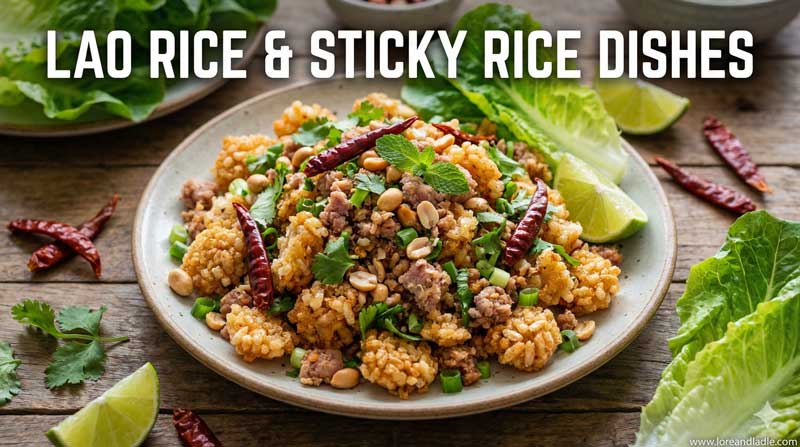
The Heart of Lao Rice in Daily Life
Rice sits at the center of Lao meals. Sticky rice, or khao niaw, accompanies nearly every dish. It binds families around the table and invites shared bites. Each basket of rice signals hospitality and balance. The aroma of steam, the soft texture, and the simple act of pinching a piece to dip into a sauce remind us that food is a language of welcome. In Lao culture, the grain is more than nourishment; it is a daily ritual that carries memory, care, and respect. This guide explores how Lao rice and sticky rice dishes deepen flavor and fellowship for Busy Home Cooks.
Sticky Rice as the Core of Flavor and Form
Sticky rice is the backbone of Lao cuisine. Its unique texture pairs beautifully with bold toppings and fresh herbs. The grain is steamed until glossy and tender, then shaped into small portions for sharing. You’ll often see a traveler’s basket kept warm at the table, ready to receive the next helping. When you eat, use your fingers to press the warm grain into a small bite. This simple method keeps the experience tactile and intimate. The rice absorbs sauces and gravies just enough to brighten, never overpowering the main flavors of larb, grilled meat, or fish. The result is harmony—rice that carries but never dominates.
Quick Techniques for Busy Home Cooks
You can enjoy authentic Lao texture with practical steps. Soak sticky rice for 20 minutes to 1 hour, then steam until it shines. If you use a steamer or a rice cooker’s steam setting, choose a medium-high heat and fluff gently with a fork after cooking. For faster weeknights, rinse the grains briefly to remove excess starch and use slightly less water. Keep a small ornamental basket or a clean cloth nearby to shape each portion. A quick jaew (chili dip) or a bright herb sauce finishes the plate in moments, letting the rice shine.
Dishes and Pairings That Highlight the Grain
Sticky rice accepts a variety of pairings. Try it with grilled meats, minced meat salads, fresh herbs, and crisp vegetables. A simple larb or minced fish with lime and chili complements the soft rice beautifully. A tangy jaew sauce adds brightness, while a side of green papaya salad or fresh greens delivers crunch. The rice acts as a neutral canvas, enhancing sour, salty, and herbal notes. In Lao cuisine, the best meals balance texture, scent, and clean tastes that linger pleasantly.
Sharing Etiquette and the Joy of Hospitality
Hosting a Lao meal centers on warmth. Offer the first bite to guests, then pass the rice basket with a gentle gesture. Place the Rice in front of guests, and allow each person to take a portion with their fingers, as is customary in many homes. This quiet ritual reinforces generosity and togetherness. Even a simple, well-made plate can become a memory when shared with openness and kindness.
Quick Start for Flavorful, Low-Stress Meals
- Start with a batch of sticky rice to cover several meals.
- Pair with a quick larb or grilled protein and a bright herb salad.
- Finish with a lively jaew or citrusy sauce to lift the plate.
- Keep fresh herbs and a small dipping sauce ready for instant flavor boosts.
A Gentle Conclusion: The Beauty of Lao Rice
Lao rice and sticky rice dishes celebrate daily life with grace. They teach balance, shareability, and attentiveness to simple, vibrant flavors. For busy cooks, this cuisine offers clear methods, flexible pairings, and a comforting tradition to lean on. In every bite, you taste tradition, warmth, and the enduring beauty of Lao food culture.