
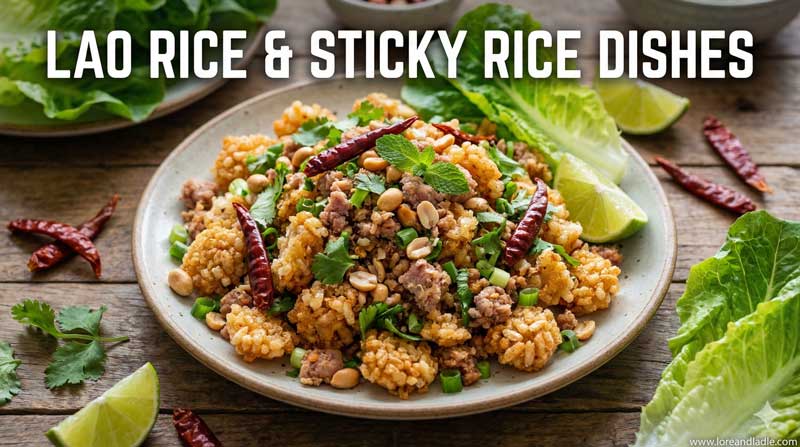
Welcome to the Ultimate List of Lao Rice & Sticky Rice Dishes to Explore in the U.S.
This post introduces a beloved concept: Lao rice and sticky rice as a cultural and culinary thread. The dish collection honors the beauty of glutinous rice, its texture, and the way it unites people at the table. The aim is a respectful, appetizing tour that highlights both tradition and present-day flavor in the United States.
The cultural heartbeat of Lao sticky rice
Sticky rice is more than a staple. It is a daily ritual and a sign of hospitality. In Lao meals, rice is shared and shaped by hand, inviting conversation and connection. The texture is glossy and soft, yet resilient enough to scoop sauces and dips. Pairing with herbs, chili pastes, and grilled meats creates balance between earthiness and brightness. This rice carries stories of harvest, seasonality, and careful preparation. When you taste it, you feel the patience and care of cooks who honor a centuries-old approach to food.
Techniques that sing in the steam
The magic starts with the rice itself: glutinous rice, grown with care, washed, and soaked to awaken its natural starch. It then steams in a basket, rising with fragrant steam. The result is a rice that holds together gently, ready to be shaped into small mounds or simply torn with fingers. The serving style often includes jeow, a lively chili paste or dipping sauce, plus fresh herbs and vegetables. The texture, aroma, and communal sharing create a distinctive dining rhythm that defines Lao cuisine.
A tasting map: dishes that illuminate Lao rice culture
-
Mango sticky rice: ripe mango accompanies glossy sticky rice, finished with a gentle coconut note. This dish balances sweetness with the rice’s subtle maltiness, a familiar favorite in Lao kitchens and markets.
-
Sticky rice with jeow dips and herbs: a simple yet expressive pairing. The rice acts as a neutral canvas for spicy, sour, and herbal jeows. The result is bright, fresh, and deeply satisfying.
-
Larb with sticky rice: a fragrant minced meat salad seasoned with lime, herbs, and chili, served alongside sticky rice. The combination celebrates texture and contrast in every bite.
-
Grilled meat with sticky rice: slices of marinated meat meet the soft, chewy rice. Fresh herbs lift the dish, creating a harmonized plate that feels both rustic and refined.
-
Lao-style grilled fish with sticky rice: delicate fish gains new dimension when eaten with the soft rice and a dab of jeow. The pairing emphasizes balance and seasonality.
-
Jeow with greens and sticky rice: a vibrant set of vegetable greens, herbs, and a bold dipping sauce beside a mound of rice. The plate invites you to explore layers of heat, sourness, and freshness.
Each dish in this ultimate list centers on sticky rice as the thread that weaves together flavor, texture, and communal enjoyment. The result is a versatile repertoire that travels well in the U.S. while keeping Lao culinary identity intact.
Savoring in the United States: places and moments
Across the United States, Lao restaurants and markets offer warm introductions to these dishes. You’ll find sticky rice featured prominently, served with a range of dips, grilled meats, and fresh herbs. When you visit, take time to observe the care in plating and the generosity of sampling portions. The experience emphasizes sharing, presenting, and appreciating the season’s best produce.
Bringing this culture home: cooking tips for the kitchen
- Soak the glutinous rice in cool water for several hours, then steam until it glistens. The patience pays off in texture.
- Use a bamboo steamer or a perforated basket to allow steady, even heat.
- Pair rice with a bright jeow or fresh herbs to brighten flavors.
- Serve with friends and family, inviting conversation as you eat.
A final note: celebrating the beauty of Lao rice
The Ultimate List of Lao Rice & Sticky Rice Dishes to Explore in the U.S. celebrates a core culinary value: rice as a bridge between land, craft, and community. With careful technique and thoughtful pairing, these dishes reveal a culture that honors simplicity, balance, and shared meals. This is more than food; it is a warm invitation to pause, savor, and connect.