
Welcome: Discovering Lao Soups and Stews in the U.S.
This post introduces the idea of Best Lao Soups & Stews to Try in the U.S. This Year. It celebrates the cultural value and culinary significance of Lao bowls. The focus is on flavor, technique, and the joy of sharing meals. You will find a clear path to understand why these soups and stews matter, how they are built, and how they fit into today’s American dining landscape. The goal is to inspire curiosity and respect for Lao cooking as a living tradition.
What makes Lao soups and stews meaningful
Lao soups and stews are more than meals. They are acts of nourishment, texture, and aroma all at once. The dishes center balance—savory depth, bright acidity, and gentle warmth. Fresh herbs lift every mouthful, while slow simmering draws out sweetness from meat and bones. The result is a bowl that speaks of family meals, market days, and shared kitchens. In these soups and stews, tradition meets technique, and every spoonful tells a small story of place, season, and care.
Khao Piak Sen: A silky, comforting noodle soup
Khao Piak Sen is a beloved Lao noodle soup with a milky, silky broth. It is made by simmering bones and aromatics until the liquid becomes rich and comfortingly smooth. Rice noodles rise gracefully in the bowl, soaking up the broth’s warmth. A squeeze of lime, a scatter of herbs, and a dash of chili oil bring brightness and balance. Khao Piak Sen embodies the Lao talent for turning simple ingredients into a restorative, everyday luxury. Its texture invites slow savoring, making it a favorite for Home Cooks and restaurant diners alike.
Or Lam: A fragrant, hearty Lao stew
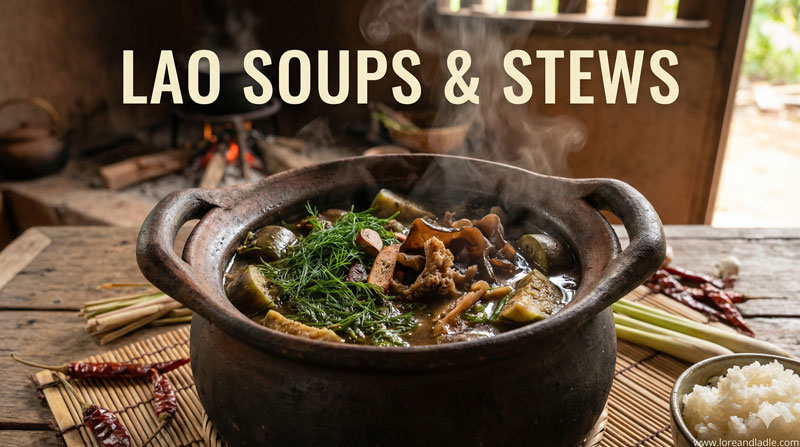
Or Lam is a standout Lao stew famed for depth and fragrance. It features meat such as pork or chicken, paired with vegetables like eggplant and beans, along with mushrooms and a chorus of herbs. Dill, lemongrass, chilies, and sometimes cilantro stems weave through the pot, releasing citrusy, peppery notes as the dish cooks. The result is a stew with a gentle heat and a bright, herb-forward profile. Or Lam showcases how Lao cooking layers flavors—earthy, herbal, and slightly sweet—into a single, satisfying pot.
Herb-forward flavors and the role of ingredients
Lao soups and stews rely on a bright herb garden in the bowl. Dill, mint, cilantro, lemongrass, and lime lift each recipe, while garlic and shallots provide a savory backbone. Fish sauce adds depth without overpowering freshness. The care lies in selecting ingredients that harmonize—creamy broths with crisp herbs, meaty warmth with tangy brightness, and soft noodles or vegetables with a satisfying bite. This balance is a cultural hallmark: food that pleases the palate while honoring natural flavors.
Techniques that define Lao soups and stews
Two techniques stand out: patient simmering and careful chopping. Slow simmering releases rich flavors from bones and vegetables, creating broths with a velvety mouthfeel. Precise chopping ensures herbs and vegetables contribute texture and aroma in every bite. In Or Lam, the layering of herbs as the dish finishes adds a fresh lift. In Khao Piak Sen, the noodles and broth meet just as the dish is served, preserving textural contrasts. The techniques are practical, guiding cooks toward bowls that feel crafted and respectful.
The texture dance: noodles, broth, and greens
A good Lao soup or stew offers a texture journey. In Khao Piak Sen, the noodles provide a soft bite against a silky broth. In Or Lam, vegetables stay tender yet distinct, allowing each component to declare its role. Fresh greens or herbs on top add crispness and perfume. This texture balance makes the experience of eating Lao soups and stews both comforting and uplifting, inviting you to slow down and enjoy.
In the United States: a tasting journey across cities
Across the United States, Lao soups and stews appear in dedicated Lao restaurants, Asian fusion spots, and home kitchens. In major cities, you’ll find menus that highlight Khao Piak Sen and Or Lam, alongside other Lao favorites. These bowls travel well into the American palate, offering familiar comfort with new, bright accents. The experience is often social: bowls shared among friends, conversations blooming over steam and aroma, and a sense of discovery with each spoonful. The U.S. dining scene welcomes these dishes with warmth, highlighting artisans and home cooks who keep Lao flavors vibrant and accessible.
Pairings and serving ideas that honor the dish
- Serve hot, in shallow bowls to help the aroma rise with steam.
- Add a squeeze of lime and a handful of fresh herbs at the table for brightness.
- Offer small plates of pickled vegetables or fresh chilies to customize heat and tang.
- Pair with a light Jasmine tea or a crisp sparkling water to cleanse the palate between bites.
These simple pairings respect the dish’s balance and invite guests to explore all flavor notes.
Home cooking: bringing Lao soups and stews to your kitchen
Home cooks can celebrate Lao flavors with accessible ingredients. Start with a clear or slightly cloudy broth, depending on your preference. Use bone-in chicken or pork for depth, and choose rice noodles or flat noodles for texture. Fresh dill and lemongrass bring bright notes, while lime juice awakens flavors at the finish. Don’t fear layering herbs; add them gradually to reach the ideal brightness. Cooking at Home makes the cultural value tangible: you learn about ingredients, timing, and the care that goes into every comforting bowl.
Cultural value and culinary significance
Lao soups and stews embody welcoming hospitality. They are bowls for gatherings, where stories, laughter, and food mingle. The recipes emphasize balance and seasonality, inviting cooks to respond to what they have on hand while preserving traditional methods. The dishes celebrate the harmony of earth and garden, meat and greens, warmth and freshness. This emphasis on balance and generosity has a lasting place in kitchens across the United States, enriching meals with a sense of depth and tradition.
A quick guide to choosing the best Lao bowls this year
- Look for Khao Piak Sen with a rich, milky broth and well-cooked noodles.
- Seek Or Lam with a fragrant herb line and tender vegetables.
- Notice fresh herbs and citrus at the finish to gauge a dish’s brightness.
- Choose places that source herbs and vegetables seasonally for authentic flavor.
- Enjoy bowls with friends or family; shared meals deepen appreciation for the craft.
Final invitation: explore and savor
Best Lao Soups & Stews to Try in the U.S. This Year invites you to explore a culinary tradition that respects simplicity and elevates flavor. With careful technique, bright herbs, and comforting textures, Lao bowls offer a meaningful bridge between culture and kitchen. Whether you visit a Lao restaurant or cook at home, you’ll discover why these soups and stews hold a cherished place in food culture. Come savor the warmth, the balance, and the care that go into every spoonful.