
Introduction: The Ultimate Guide and Its Purpose
The Ultimate Guide to Classic Myanmar Main Dishes for U.S. Home Cooks introduces a flavorful world of Myanmar meals. This article highlights cultural value and culinary significance. It invites home cooks to explore balanced flavors, careful technique, and warm hospitality expressed through food. Each dish reflects everyday life, seasonal produce, and time-honored methods. The goal is to inspire respect for the cuisine and to help recreate authentic meals at Home with confidence and joy.
What makes Myanmar main dishes unique
Myanmar cuisine centers on harmony. Fresh herbs and bright citrus meet rich pastes, savory fish sauces, and gentle coconut milk. Rice stands as the heart of the meal, often accompanied by well-seasoned curries, noodle dishes, and vegetable sides. Flavor comes from layering elements: sourness from lime or pickles, salt from fermented products, heat from chilies, and fragrance from lemongrass and garlic. This balance makes each main dish comforting, nourishing, and memorable. In addition, regional touches appear in herbs, fish, and spice blends, enriching the same basic framework.
Core techniques and ingredients to know
- Rice as the base: plain steamed rice or turmeric-yellow rice pairs with curry, soup, or fish dishes.
- Fermented seasoning: ngapi (fish paste) and shrimp pastes add depth and umami.
- Aromatics: garlic, shallots, lemongrass, and ginger provide fragrance and backbone.
- Spices and pastes: turmeric for color and warmth; chili for gentle heat; coriander seeds and cumin appear in many curries.
- Coconut milk: lends sweetness and body to certain curries and soups.
- Fresh herbs and acidity: lime juice, fresh cilantro, and green chili brighten dishes just before serving.
With these elements, you can build confidence while cooking classic meals that feel both homey and special.
Mohinga: The comfort dish that greets the day
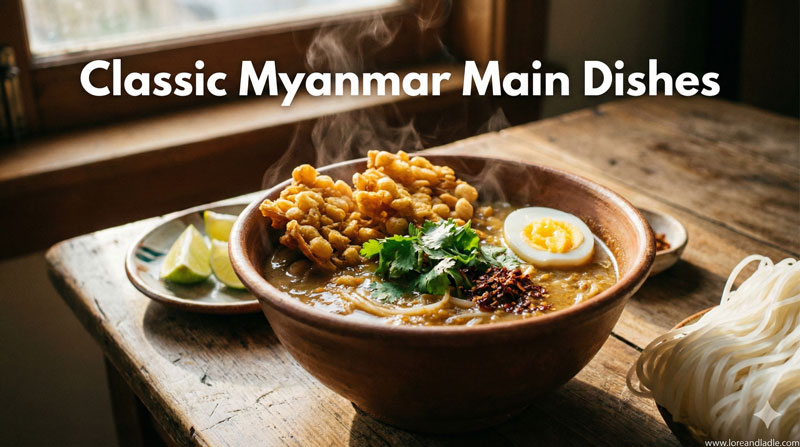
Mohinga is a beloved main that many households enjoy beyond breakfast hours. A fragrant fish broth forms the heart, seasoned with lemongrass, shallots, garlic, and a touch of ngapi. Rice noodles float in the silky soup, and crispy fritters or boiled eggs often accompany the bowl. The dish exemplifies how a single pot can carry warmth, aroma, and a sense of home. When you prepare Mohinga, you invite a comforting, universal feeling of sharing a meal with family and friends.
Nga Htamin: Fish with turmeric rice
Nga Htamin pairs tender fish with turmeric-infused rice for a bright, balanced plate. The fish curry that accompanies the turmeric rice is mild and aromatic, often finished with garlic oil for a gentle sheen. This dish shows the coastal and riverine roots of Myanmar cooking, where fish and rice are naturally paired. The result is a visually striking plate: pale yellow rice and flaked fish in a comforting sauce. It is a classic example of how simple components, treated with care, become a satisfying main.
Ohn No Khao Swè: Coconut chicken noodle soup with depth
Ohn No Khao Swè blends coconut milk with chicken stock to create a creamy, mellow broth. Thin noodles lift in the soup, while shredded chicken, soft potatoes, and fresh herbs add texture and brightness. The dish embodies comfort and everyday nourishment, yet it remains distinctly Myanmar in aroma and balance. It is versatile for family meals or Weekend Gatherings, and it adapts well to a home kitchen with accessible ingredients.
Burmese chicken curry: Aromatic and versatile
Burmese chicken curry offers a warm, gently spiced main that pairs beautifully with rice or flatbread. A tomato-onion base, fragrant spices, and tender chicken create a sauce that clings to each grain of rice. Potatoes or peas may appear as well, adding substance and sweetness. This curry celebrates slow simmering, depth of flavor, and the joy of a shared meal. It is a staple that demonstrates how roasted onions, garlic, turmeric, and a light touch of chili can transform simple ingredients into a memorable dish.
Bringing these dishes into a U.S. home kitchen: tips and substitutions
- Find flexible substitutes: if ngapi is hard to locate, mix fish sauce with a small amount of shrimp paste and a dash of miso to mimic depth. Lemon juice or lime can replace tamarind in some tangy notes.
- Freshness matters: use bright herbs and lime zest to lift flavors just before serving.
- Ingredient timing: many Myanmar curries benefit from a short sauté of aromatics before simmering to unlock fragrance.
- Equipment adjustments: a good heavy pot or Dutch oven helps keep sauces even and rich.
- Pacing the heat: start with milder chili levels and adjust to taste, preserving the dish’s balance between sour, salty, and spicy elements.
These tips help U.S. home cooks approach Myanmar flavors with confidence while keeping the essence intact.
Plating, serving, and appreciating the meal
In Myanmar dining, food is shared with care and attention. Serve main dishes with steamed rice or noodles, and present fresh herbs or lime wedges on the side for brightness. A small plate of pickled vegetables or a crisp salad can balance richness. The act of serving and the warmth of the table contribute to the overall experience, highlighting the culture of hospitality that surrounds every Myanmar meal.
Conclusion: A respectful path to flavorful journeys
The Ultimate Guide to Classic Myanmar Main Dishes for U.S. Home Cooks invites you to explore a cuisine rooted in balance, technique, and generosity. By embracing the core ingredients, essential methods, and the joy of shared meals, you can bring the beauty of Myanmar cooking into your own kitchen. Each dish offers a connection to tradition, skill, and everyday delight. Enjoy the process, savor the flavors, and celebrate the culinary heritage with every bite.