
Introducing the Must-Try Classic Myanmar Main Dishes for Your Next Dinner Party
This post showcases the Must-Try Classic Myanmar Main Dishes for Your Next Dinner Party. The focus is on cultural value and culinary significance. You will discover how these dishes reflect everyday life, hospitality, and the art of balance in Burmese cooking. Each dish offers a unique voice from Myanmar’s kitchens, inviting both curiosity and appreciation.
A window into Myanmar’s dinner table
Myanmar cuisine centers on fresh ingredients, aromatic herbs, and shared plates. Rice ties the table together, while curries, broths, and noodle dishes create a rhythm of flavors and textures. In Myanmar homes, meals are occasions for warmth, conversation, and seasonal cooking. The dishes highlighted here celebrate that spirit. They are designed to be approachable for a dinner party, yet deeply rooted in tradition. Expect bright fish notes, creamy coconut lines, and crisp textures that contrast with tender mains. This trio of dishes shows how Myanmar turns Simple Ingredients into expressive, memorable meals.
Mohinga: The aromatic start to any meal
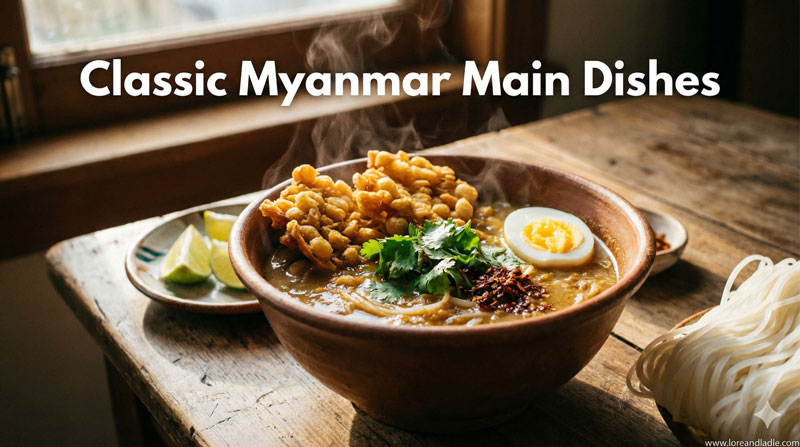
Mohinga is more than a bowl of soup; it’s a morning ritual carried into family life and festive menus. The core is a fragrant fish broth, simmered with lemongrass, garlic, shallots, and a hint of turmeric. Rice noodles soak in this warm, comforting liquid, while garnishes add brightness. The dish embodies balance: the fish provides depth, citrus brings lift, and the subtle spice keeps the aroma inviting. Cabbage, banana stem, fried shallots, and lime are common accompaniments that let guests customize every spoonful. In a dinner party setting, Mohinga signals hospitality and a welcoming mood. It invites conversation about aroma, texture, and the way a single pot can carry memories of markets, rivers, and family kitchens.
Nan Gyi Thoke: Texture, culture, and sharing
Nan Gyi Thoke translates into “thick noodle with curry,” and it is a showcase of Burma’s Love for texture and communal eating. Thick rice noodles form a sturdy base, topped with a rich chicken curry sauce, sliced onions, sesame seeds, and fresh herbs. The dish blends softness from the noodles with the warmth of slow-cooked chicken and a silky curry sauce. Crunchy elements, like fried garlic or crushed chickpeas, add lively contrast. This dish shines at gatherings because everyone can assemble bowls to their liking, turning a single dish into a shared experience. Nan Gyi Thoke also reveals regional touches—variations in herbs, spice levels, and the exact thickness of the noodles—demonstrating how Myanmar’s kitchens honor place and season while keeping a common culinary language.
Ohn No Khao Swe: Comfort in a coconut broth
Ohn No Khao Swe offers a comforting alternative that’s bright with coconut richness. This coconut chicken noodle soup blends creamy milk with a savory stock, then lifts it with lime juice, chili, and fresh herbs. Shreds of chicken mingle with soft noodles, creating a harmonious bowl that feels both homey and celebratory. The dish travels well to a dinner party because it is satisfying without being heavy, and its aroma invites guests to slow down and savor the moment. The coconut base is common in coastal and river regions, where it connects taste with the land and sea. In a menu, Ohn No Khao Swe provides balance to Mohinga and Nan Gyi Thoke, offering another thread in Myanmar’s tapestry of flavors.
Regional flavors and seasonal freshness
Myanmar’s geography shapes its cooking. Coastal regions highlight fish, coconut, and bright herbs; inland areas emphasize chicken, pork, and cilantro-rich broths; hills and plains bring root vegetables and earthier spices. The dishes above reflect this range without losing a cohesive voice. Seasonal ingredients—fresh herbs, greens, and citrus—make each dinner party menu feel alive and evolving. When you emphasize regional touches, guests sense a living culture rather than a static tradition. Presenting a small map-like explanation beside the dishes can also spark curiosity and appreciation for local flavors.
Crafting a dinner party menu with Myanmar main dishes
To create an inviting menu, consider these practical steps. First, balance flavors: a bright Mohinga starter, a hearty Nan Gyi Thoke main, and a creamy Ohn No Khao Swe as a comforting counterpoint. Next, think about texture contrast: noodles, tender meat, and crisp garnishes keep the palate engaged. Additionally, offer simple accompaniments like fresh lime wedges, fried garlic, and chopped herbs so guests can personalize each bowl. Finally, plan a relaxing service flow: a warm welcome dish, a satisfying main, and a light, fragrant finish can mirror Myanmar’s tradition of generous hospitality. Such a menu invites conversation about aroma, texture, and the care behind each dish.
A note on cultural value and culinary significance
These dishes carry cultural value beyond taste. They reflect careful technique, balanced seasoning, and a deep respect for ingredients. They show how a community builds comfort and identity around food, turning everyday meals into meaningful experiences. By presenting Mohinga, Nan Gyi Thoke, and Ohn No Khao Swe at your dinner party, you invite guests into a shared moment of Burmese culinary artistry. The result is a dinner that feels both soulful and refined—an homage to hospitality, family kitchens, and the beauty of Myanmar’s main-course traditions.
Conclusion: inviting curiosity and warmth
The Must-Try Classic Myanmar Main Dishes for Your Next Dinner Party offer more than flavors; they offer stories of land, sea, and table manners threaded through generations. Each dish speaks with clarity and grace, inviting guests to explore the culture through aroma, texture, and conversation. Whether you serve them in a single, generous spread or as a curated trio, these dishes create a warm, respectful, and delicious celebration of Myanmar’s culinary heritage.