
Introduction: A Dish, A Dialogue Across Time
Classic Myanmar main dishes carry a quiet, confident rhythm. They speak through ingredients that travel from river nets to village markets, from family kitchens to bustling stalls. When we call this article “Classic vs Modern Takes on Classic Myanmar Main Dishes,” we invite a gentle conversation about how flavor and culture evolve together. The aim is to celebrate culinary significance and the cultural value these dishes hold in daily life. In Myanmar, meals are more than fuel; they’re rituals of care, shared stories, and away to honor the land that nourishes them.
What Defines a Classic Myanmar Main Dish
Classic Myanmar main dishes prioritize balance and freshness. They blend bright aromatics with deep broths, often featuring fish, seafood, or hearty vegetables as the centerpiece. Common elements include lemongrass, garlic, shallots, turmeric, and a touch of fermented paste for depth. Coconut milk can mellow heat and add sweetness, while lime or tamarind brings brightness. Rice and rice noodles provide a familiar, comforting foundation. These dishes are built to be enjoyed in a family setting or in a friendly market seat, where both aroma and texture invite a longer, shared pause.
The skill lies in layering rather than shouting. A good broth is built slowly, allowing the fish or plant-based proteins to infuse it with their essence. Garnishes—fresh herbs, crisp shallots, a squeeze of lime, or a scattering of fried crunch—finish the bowl with color and contrast. Such dishes are anchored in regional markets and family cookbooks, where generations add small improvements while keeping the core harmony intact.
Mohinga: The Compass Dish for Myanmar Main Cooking
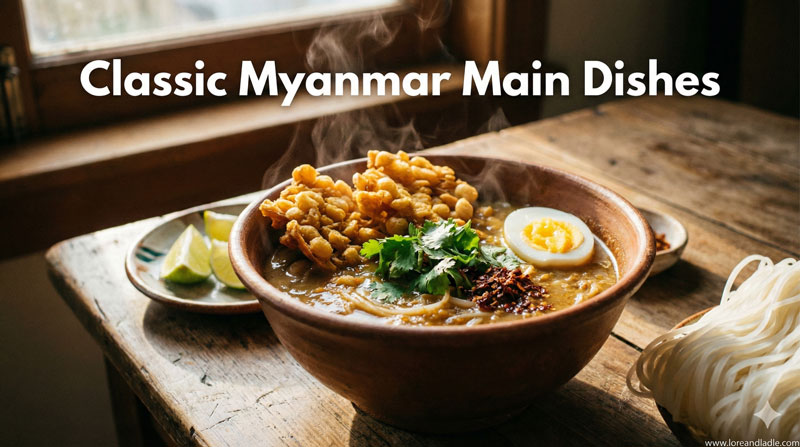
Mohinga often serves as a compass for traditional Myanmar flavors. This beloved main dish centers on a fragrant fish broth, subtly seasoned and brightened with lime, lemongrass, ginger, and a kiss of fish sauce or ngapi. It arrives with rice noodles, and a platter of toppings—cilantro, chili, fried fritters, and crisp shallots—so each person can tailor the dish to their taste. Mohinga embodies morning warmth, shared bowls, and the skill of achieving clarity in the broth while maintaining depth. Its presence across households, markets, and eateries makes it a touchstone for what makes Myanmar classics so enduring: a simple scent that invites conversation, a balance that feels precisely right, and a readiness to adapt without losing soul.
Modern Takes: Fresh Ways to Honor a Classic
Modern reinterpretations honor the origins while inviting new textures, ingredients, and techniques. Here are several ways cooks and chefs bring contemporary life to classic Myanmar main dishes:
- Protein and plant-forward twists: Substituting fish with tofu, mushrooms, or chickpeas creates lighter or vegetarian options that still harmonize with traditional seasonings. Seared or smoked components add new texture layers that surprise the palate while honoring familiar flavors.
- Broth clarity and intensity: Chefs experiment with broth clarity, reducing or enriching stock to offer a cleaner or more concentrated finish. A crisper broth can highlight delicate aromatics, while a richer version can cradle bolder spice blends.
- Regional and seasonal inspirations: Local markets inspire variations that reflect seasonal produce. Fresh herbs, peppers, and fruit accents can appear in different combinations, giving each region a distinctive note while keeping the core profile intact.
- Global textures and plating: Modern presentations incorporate varied textures—crunch from fried elements, silkiness from smooth broths, and soft noodles—arranged in bowls that emphasize visual balance. Plating becomes a part of the dining experience, inviting curiosity and appreciation.
- Sustainable and mindful sourcing: Many cooks choose sustainable fish options, responsibly harvested ingredients, and locally grown vegetables. This care for ingredients adds to the cultural value by aligning tradition with contemporary sensibilities.
These modern takes do not erase tradition; they dialogue with it. They show how a classic main dish can welcome new ideas, inviting cooks to explore while still honoring the essence of Myanmar’s flavors and techniques.
The Cultural Value of Myanmar Main Dishes
Myanmar main dishes carry meaning beyond taste. They anchor daily life and social connection in several meaningful ways:
- Family and sharing: A bowl shared among family members or friends turns a meal into a communal ritual. The care shown in simmering stocks, preparing toppings, and serving portions speaks to hospitality and generosity.
- Market as a hub of culture: The market is where classics are learned and reinterpreted. Vendors, cooks, and customers exchange ideas in a living tapestry of flavors, textures, and dialogue.
- Seasonal and regional identity: The same core dish can reflect a region’s produce and climate. Seasonal vegetables, local fish, and favored herbs shape the dish’s character, reinforcing a sense of place.
- Craft and memory: The craft of balancing broth, seasoning, and aroma is a memory-work that passes from mentor to apprentice. Each generation adds subtle refinements, preserving a living tradition.
- Everyday beauty: The visual appeal—colorful toppings, clear broth, glossy noodles—heightens the experience of eating. Beauty in a bowl becomes a daily celebration of the country’s culinary artistry.
How to Appreciate the Evolution at Home
If you want to explore both classic and modern takes, here are approachable ideas to try at Home:
- Start with a classic base: Build a simple, well-balanced broth using fresh aromatics, light seasoning, and a modest amount of salt. Taste as you go to preserve clarity.
- Add a modern twist gradually: Introduce a new element—tofu for protein, a roasted nut crunch, or a citrus note from a different fruit. Adjust the seasoning to maintain harmony.
- Respect texture: Alternate between soft noodles and crisp toppings to create a dynamic bite. A gentle crunch complements a silky broth.
- Plate with intention: Present the dish in a clean bowl, arrange toppings thoughtfully, and finish with a final drizzle of lime or oil to lift the aroma.
- Source mindfully: Choose fresh, locally available ingredients and consider sustainable options for fish and seafood.
A Gentle Map for Tasting and Travel in Your Kitchen
- Begin with mohinga or a mohinga-inspired broth as a reference. Note how the aroma and balance feel to you, then compare with a modern twist.
- Track the flavor notes you notice: salty, sour, sweet, bitter, and umami. Observe which elements feel most at home with your palate and why.
- Celebrate the pairing: How do textures and temperatures interact? How does the broth’s clarity influence the overall impression?
- Keep a little notebook: Jot down what works, what excites you, and what you’d like to experiment with next time.
Conclusion: The Gentle Arc of Tradition and Innovation
Classic Myanmar main dishes are more than recipes. They are living expressions of culture, craft, and community. When modern takes appear, they illuminate the adaptability and curiosity at the heart of Myanmar’s food culture. The value lies not only in taste but in the shared experiences around a table, the careful selection of ingredients, and the quiet joy of discovering new expressions within a familiar frame. In this evolving conversation, the dishes remain beloved touchstones—comforting, inspiring, and profoundly human. Embrace them with curiosity, and you’ll taste not just flavors but a culture that welcomes both heritage and invention.