
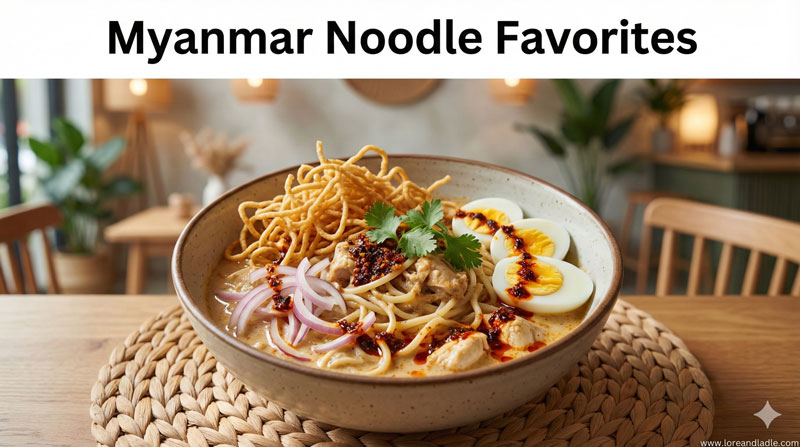
Trending Myanmar Noodle Favorites Dishes in the U.S. This Year invites readers into a vibrant corner of Southeast Asian cuisine. The bowls below showcase how Myanmar’s noodle traditions carry beauty, balance, and craftsmanship across borders. Each dish highlights technique, seasonality, and a sense of place that resonates in kitchens and on tables in the United States this year.
Mohinga: A Morning Bloom in Broth
Mohinga is more than a dish; it is a morning ritual for many in Myanmar. In recent years, its comforting aroma has found welcoming space in U.S. kitchens and restaurants. The base is a bright fish broth infused with herbs such as lemongrass, garlic, and shallots. Rice noodles soften gently in the broth, while a crisp garnish of fried pieces adds texture. A splash of lime, a touch of chili, and fresh herbs complete the bowl.
Culturally, mohinga embodies balance. The savory fish richness meets citrus brightness and a gentle sweetness from the stock. The dish teaches patience in simmering and precision in timing. In the United States, mohinga often appears as a market treasure or a chef’s signature breakfast option. It invites cooks to slow down, taste the broth, and honor the delicate harmony that Burmese cooks seek in every spoonful.
Shan Noodles: Soft Textures, Bright Accents
Shan noodles offer a different window into Myanmar’s noodle culture. They feature soft, flat rice noodles in a light, comforting broth or a fragrant oil-based sauce. Toppings can include ground meat, tomato relish, garlic oil, and a sprinkle of sesame or crushed nuts. The overall effect is silky and inviting, with a gentle warmth from aromatics and a balance of meaty depth and fresh acidity.
This dish mirrors regional diversity within Myanmar. It highlights how cooks adapt noodle textures to the palate: broader ribbons that hold sauce well, a bright counterpoint from pickled vegetables, and a finishing kiss of herbs. In the United States this year, Shan noodles have become a favorite in both casual eateries and refined spaces. They are approachable in flavor yet intricate in technique, offering a quiet elegance that appeals to a wide audience.
Ohn No Khao Swè: Coconut-Creamed Curry on Noodles
Ohn No Khao Swè presents a coconut-rich curry that embraces warmth and comfort. Chicken braises in a fragrant coconut milk base with spices, creating a creamy, luminous sauce that clings to the noodles. Often, a soft-boiled egg or bright herbs brighten the bowl, while crisp garlic or shallots add texture on top.
Culinarily, this dish is a study in balance between richness and brightness. The coconut’s sweetness is tempered by savory stock and tangy lime or tamarind notes, yielding a bowl that feels both indulgent and fresh. In U.S. dining scenes this year, ohn no khao swè appeals to diners seeking comforting curries with a noodle anchor. It invites thoughtful pairing with simple sides like cucumber salad or pickled vegetables, highlighting how a single bowl can anchor a meal.
Meeshay: The Rustic Bowl of Home-Style Flavor
Meeshay centers on rice noodles served with a tomato-forward sauce and ground meat, often finished with crisp fried garlic or shallots, coriander, and lime. The dish is versatile, inviting variations from herbaceous green toppings to peanut crunch and tangy pickles.
Culturally, meeshay speaks to Home Cooking and family meals. It embodies resourcefulness, using common pantry items to build depth—tomatoes, garlic, and a touch of meat for savor. In the United States this year, meeshay resonates as a comforting bowl that can be adapted for different diets. Its generous texture and bright flavor make it perfect for sharing, inviting conversations about Burmese cooking methods and regional ingredients.
The Craft Behind the Noodle Sauces and Garnishes
Beyond the core ingredients, the magic of Myanmar’s noodle dishes lives in the sauces and toppings. Garlic oil, lime juice, fresh herbs, and crisp toppings transform a simple bowl into an engaging experience. The textures—from smooth broths to crunchy fritters and toasted seeds—create contrast that delights the senses.
These finishing touches reveal a cultural approach to cooking that values layers of flavor: a warm foundation, a bright lift, and a final crunch or bite of freshness. In the U.S. dining scene, these components help Burmese noodles stand out in a crowded market. They invite tasters to consider how a well-balanced bowl can be both comforting and exciting, with each spoonful revealing another subtle note.
Why These Dishes Stand Out in the U.S. Market This Year
Several factors contribute to the rise of trendy Myanmar noodle dishes in the United States. First, the bright balance of savory, sweet, sour, and spicy flavors appeals to a wide audience. Second, the textures—from silky noodles to crisp toppings—offer a satisfying mouthfeel. Third, these bowls are adaptable, allowing chefs and home cooks to honor tradition while incorporating local produce.
In addition, Myanmar’s noodle repertoire offers approachable entry points for new diners. A mohinga-inspired broth, a shallowly seasoned Shan noodle, or a coconut curry with noodles all present clear, comforting profiles. They invite curiosity without overwhelming the senses. The result is a growing appreciation for Burmese culinary craft and its gentle, confident flavors.
How to Enjoy Burmese Noodles at Home
- Start with a clear plan: choose one dish as your guide and gather fresh herbs, noodles, and a few toppings.
- Prepare a strong, aromatic base: a simple broth or curry that forms the heart of the dish.
- Cook noodles to just-soft texture and keep them separate until serving to preserve their bite.
- Assemble with care: add herbs, lime, and a topping mix for a fresh finish.
- Taste, adjust, and celebrate balance. A squeeze of lime or a touch of chili can transform the experience.
With these steps, you can savor the cultural richness of Myanmar’s noodle dishes at Home. The bowls invite you to explore layers of aroma, texture, and flavor, all rooted in a long-standing culinary tradition.
A Quick Note on Ingredient Romance and Seasonal Freshness
The beauty of Burmese noodles often rests on fresh ingredients and thoughtful seasoning. Lemongrass, lime, garlic, and herbs bring brightness, while spices lend warmth. Seasonal vegetables can accompany the bowls beautifully, amplifying freshness without overpowering the core flavors. In kitchens across the United States, cooks are discovering how these ingredients can travel well, yet remain true to Myanmar’s culinary language.
Final Reflection: A Gentle Celebration of Burmese Noodle Traditions
Trending Myanmar Noodle Favorites in the U.S. This Year celebrate more than taste. They honor technique, regional pride, and the artistry of balance. Each bowl offers a window into Myanmar’s food culture—its respect for heritage, its love of companionship around the table, and its skill in building flavor from simple, well-chosen ingredients. As these noodles travel and transform in American kitchens, they invite readers and diners to appreciate the beauty of Burmese cooking as a living, evolving tradition that values harmony, craft, and shared meals.