
Introduction
Classic Myanmar Rice & Curry Plates with Big, Bold Flavor celebrate the everyday beauty of Burmese cooking. This dish centers on rice, bright curries, and a chorus of sides that come together on a single plate. It speaks to home kitchens, bustling markets, and family meals where neighbors share warmth as freely as spices. The combination of textures, colors, and aromas offers a window into a cuisine that values balance, freshness, and a joyful approach to nourishment.
Cultural Value of the Dish
In Myanmar, meals are a daily ritual that brings people together. A rice-and-curry plate is not just food; it is a social moment. Families gather around a single spread, passing bowls and small dishes with ease and care. The plate reflects hospitality: a generous serving of rice anchors the meal, while flavorful accompaniments reflect seasonal abundance. This rhythm—rice first, then the variety of curries and vegetables—encourages shared dining and relaxed conversation, turning eating into a tactile experience of connection.
The dish also highlights the village-to-table thread of Burmese life. Farmers harvest rice and fresh vegetables, while markets offer vibrant herbs, tangy pickles, and fish or chicken curries made with bright spices. The plate becomes a map of place: the land’s bounty, the hands that cook, and the cultural pace that favors togetherness. In this way, Classic Myanmar Rice & Curry Plates act as a delicious language, conveying gratitude for ingredients and the care that goes into preparing them.
Core Components of the Plate
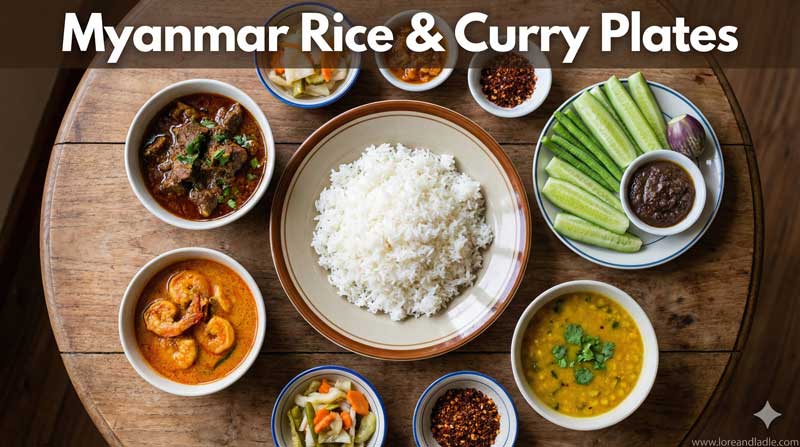
A traditional plate centers on these elements:
– Fragrant steamed rice, often jasmine rice, as the soft, comforting base.
– One or more curries for depth—fish, chicken, or a plant-based option—seasoned with aromatics, herbs, and a touch of heat.
– A lentil or bean-based component for protein and texture.
– Vegetables that bring color and brightness, such as greens, squash, eggplant, or okra.
– Pickles or a tangy relish to wake the palate.
– Fresh herbs, lime or lemon wedges, and crispy fried onions or garlic for finishing notes.
This collection creates a balanced, multi-sensory experience. Each bite can pair the tenderness of rice with a spoonful of curry, complemented by a crisp pickle and a hint of fresh herb. The result is a plate that feels substantial yet bright, comforting yet lively.
Techniques and Flavor Building
The flavor in these plates comes from layering with care:
– Start with a light saffron-tinged or turmeric-hued rice, then add curries that simmer slowly to meld onions, garlic, spices, and fish or meat.
– Use a mix of aromatics—garlic, shallots, ginger, and fresh chilies—to build warmth without overwhelming the palate.
– Balance is key: bright acidity from lime, a touch of salt, a hint of sweetness from caramelized onions, and a savory depth from roasted spices.
– Finishes often include fresh herbs like cilantro or coriander, which lift the dish and add a clean, herbaceous lift.
– Textural contrast matters: soft curry, crisp pickles, and tender vegetables all on one plate invite varied bites.
These techniques honor a home-cooked approach. The same plate can be adapted with seasonal produce or family preferences, while preserving the bold, confident flavor that defines the dish.
Regional Flavors and Seasonal Variations
Myanmar’s regions bring their own twists to the classic plate. Coastal areas emphasize fish curries, lighter coconut notes, and bright citrus. Inland regions may rely more on lentil-based components and earthy spices. In hill regions, herbs and greens from local markets contribute vibrant greens and peppery accents. Across the country, the core idea remains steady: a plate that is generous, colorful, and full of character. Seasonal produce—fresh greens, peppers, radishes, or squash—finds a home on the plate and keeps the flavors lively and relevant year round.
The Social Moment: Sharing and Tradition
Sharing a rice-and-curry plate is a gathered experience. Dishes are often laid out family-style, with an unspoken rhythm of passing bowls, refilling sides, and making sure everyone has a taste of their favorites. The act of sampling multiple curries fosters conversation, memory-making, and a sense of belonging. The dish embodies everyday hospitality—the simple joy of feeding one another well and savoring the moment together.
How to Enjoy at Home
If you want to bring this plate into your kitchen, start with these ideas:
– Choose a dependable jasmine rice as your base for perfume and softness.
– Prepare one hearty curry and a second, lighter option to offer contrast.
– Add a bright vegetable side and a tangy pickle to wake the flavors.
– Finish with fresh herbs and a squeeze of citrus for a lift that echoes the vibrant finish of a Burmese meal.
– Serve on a single platter or in a cluster of small bowls around the rice. Allow everyone to mix and match bites as they wish.
This approach keeps the dish approachable while preserving its bold, confident character. It also invites cooks to use local ingredients and adapt to what’s freshest in their market.
Sourcing and Sustainability
Local produce and sustainable seafood or poultry enhance both flavor and responsibility. Seek fresh-cish vegetables, responsibly sourced fish or chicken, and high-quality spices in the pantry. Simple, mindful sourcing helps the dish shine while supporting farmers and markets. A focus on seasonal ingredients keeps the plate vibrant and ensures memorable meals that reflect a place and time.
Closing Thoughts
Classic Myanmar Rice & Curry Plates with Big, Bold Flavor are more than a meal. They are a celebration of daily life, a tapestry of textures and aromas, and a doorway to the cuisine’s warm, welcoming spirit. Through the careful balance of rice, curries, vegetables, and tangy accents, the dish communicates cultural values of hospitality, abundance, and shared pleasure. It invites cooks and eaters alike to slow down, savor bold flavors, and honor the beauty of Burmese food culture with every bite.