
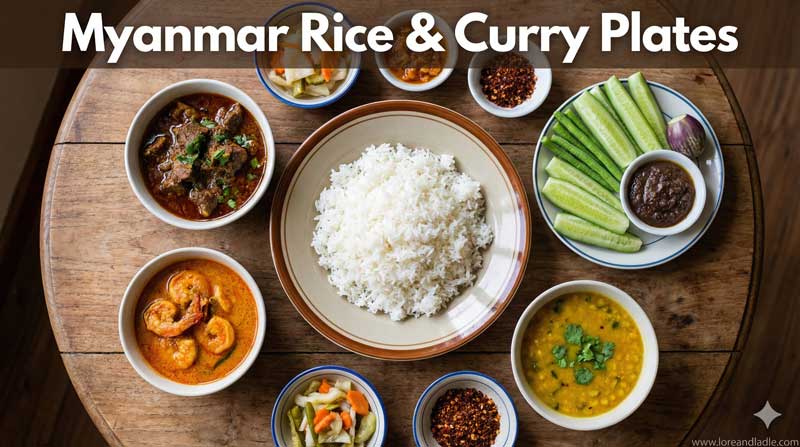
Flavorful Myanmar Rice & Curry Plates Ideas with Simple Spices
This dish invites you to explore the warmth of Myanmar’s everyday meals. The plate centers on rice and a collection of simple, vibrant curries. The spices are easy to find, yet they carry a depth that feels timeless. Each bite reveals a balance of comfort and brightness. You’ll sense care in the way flavors are layered and presented. The result is welcoming, nourishing, and full of character. This dish celebrates food as a shared ritual, a daily joy passed from cook to guest. It is both practical for home kitchens and meaningful for family meals.
A Cultural Canvas: Rice in Myanmar Homes
Rice is more than a staple; it is a gentle rhythm in daily life. In Myanmar homes, a pot of steaming rice accompanies small bowls of curry, vegetables, and pickles. The arrangement is simple, yet it conveys generosity and hospitality. Hosts learn to balance aroma, texture, and color to please the eye and palate. Fresh herbs, bright citrus, and crisp vegetables often accompany the curry plates, adding a spark of seasonal life. This practice shows how a single grain can anchor a colorful, varied table. It highlights the joy of sharing and the care that goes into every serving.
Core Flavors: The Simple Spices that Define the Dishes
The heart of these plates lies in a few approachable spices, used with intention. They unlock aroma, warmth, and brightness.
- Turmeric: adds a golden glow and earthy warmth.
- Garlic and shallot: build a mellow, savory base.
- Lemongrass and ginger: give a fresh, citrusy lift.
- Cumin and coriander seeds: provide nutty, balanced warmth.
- Chili and black pepper: offer gentle heat and sparkle.
- Optional: lime zest or juice for a final zing.
These spices are often toasted in oil to wake their perfumes, then combined with onions, tomatoes, or coconut milk. The result is a curry that feels bright and approachable, even with modest ingredients. The same spice set can flavor fish, chicken, or chickpeas, creating harmony across the plate.
A Guide to the Plate: Combinations and Balance
A Myanmar rice plate typically blends several elements. Start with a fluffy bed of rice. Add a small bowl of curry—meat, fish, or a vegetable version. Include a seasonal vegetable side, such as greens or a lightly pickled dish. Finish with a tangy pickle, fresh herbs, and a squeeze of lime if you like. The textures vary: creamy curry, crisp vegetables, and the soft bite of rice. The flavors work together to feel complete yet flexible enough to adapt to what’s on hand. This adaptability is part of the dish’s charm and cultural value. It teaches balance: mellow, spicy, sour, and fresh notes all have a place.
Cooking Techniques that Honor Tradition
The cooking steps honor tradition while remaining accessible.
- Toast spices gently in oil to release aroma.
- Build a base with onions, garlic, and shallots, then add lemongrass and ginger.
- Add your chosen protein or vegetables and simmer with a light broth or water.
- Introduce turmeric for color and warmth; finish with fresh herbs if available.
- Prepare the rice so it steams lightly and remains separate, never clumpy.
- Plate with a bright pickle and a fresh herb garnish for contrast.
These techniques keep the dish simple, yet they create depth that feels thoughtful. The result is a meal that tastes like home, made with care and common ingredients.
Regional Variations and Plate Ideas
Across Myanmar, you’ll find small twists that reflect local markets and seasonal fruits and vegetables. In river delta towns, you might see fish curries with a delicate sweetness from coconut milk. Inland regions may favor chicken curries with a sharper herb note from lemongrass. Vegetarian plates can center on chickpeas or lentils, paired with crisp greens and pickled vegetables. Rice varieties vary too, with fragrant jasmine rice commonly chosen for its light, fragrant profile. The core idea remains the same: a simple spice blend transforms humble ingredients into plates that feel celebratory and grounded. Each region adds its own voice, but the overall harmony of rice, curry, and sides stays constant.
Practical Ideas for Home Kitchens
You can recreate these plates with ease at Home. Start with one curry and one vegetable to begin. Use pantry staples to craft depth rather than relying on heavy sauces. Prepare a small batch of spice toast to keep for quick meals. Cook rice fresh or reheat gently so it remains fluffy. Assemble the plate by layering rice, curry, vegetables, pickles, and herbs. Taste and adjust with lime or a pinch of salt to brighten the flavors. This approach makes the dish approachable for weeknights and special occasions alike.
The Social Joy of Sharing Plates
These rice and curry plates thrive in shared meals. They invite conversation, compliment the senses, and honor the cook’s skill. A simple plate becomes a small celebration when passed around the table, inviting guests to experience a spectrum of tastes in one sitting. The beauty lies in how quickly a few ingredients can become something memorable through thoughtful preparation. This is the heart of Myanmar dining culture: warmth, balance, and generosity expressed through food.