
Introduction
Comforting Bowls Featuring Myanmar Rice & Curry Plates invites you into a warm and welcoming corner of Burmese food culture. At the heart of these bowls lies a simple, faithful pairing: fragrant rice and gently spiced curry. This duo creates a canvas for color, texture, and aroma that celebrates everyday meals and the care people bring to preparing them. Each bowl becomes a small ceremony of nourishment, shared among family and friends, and enjoyed for its comforting familiarity as well as its bright, evolving flavors.
Core Components of Comforting Bowls
A well-made Myanmar rice and curry plate rests on thoughtful balance and fresh ingredients. The core components include:
– Fragrant jasmine rice: long-grain, softly aromatic, steamed to a glossy, fluffy finish.
– Curry base: a simmered sauce that blends onion, garlic, ginger, turmeric, coriander, cumin, and chili with a smooth, savory backbone.
– Protein or vegetables: options range from chicken or fish to tofu and hearty vegetables. Each choice absorbs the curry’s warmth while keeping the dish light and approachable.
– Vegetables: potatoes, tomatoes, carrots, greens, or seasonal picks add texture and sweetness.
– Creamy texture: coconut milk or yogurt can round the heat and add gentle richness.
– Condiments and accompaniments: lime wedges, pickles, crispy shallots or garlic, and fresh herbs brighten the plate and invite personal customization.
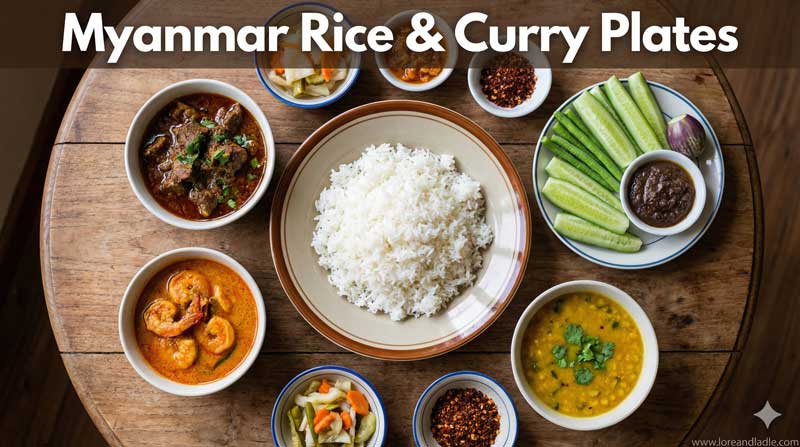
– Presentation: a neat lay of rice, a generous ladle of curry, and a small, colorful array of vegetables or sides create visual harmony and accessibility.
Cultural Significance and Shared Table Traditions
Myanmar rice and curry plates are more than sustenance; they are an expression of hospitality and daily life. In many homes, the dish appears at meals as a reliable comfort, prepared with patience and shared with gratitude. The bowls invite conversation and connection, as everyone gathers to add a touch of lime, a pinch of salt, or a final swirl of curry. Markets and kitchens influence the plate as seasons shift, bringing in fresh greens, peppers, or root vegetables that illuminate the curry’s brightness. The ritual of serving and receiving a portion from a single pot reinforces a sense of belonging. In this way, the dish anchors moments of everyday life in warmth, care, and togetherness.
Flavor Journey: Aromatics, Spices, and Techniques
The flavor profile of Myanmar rice & curry plates combines gentle heat with bright aromatics. Key notes include:
– Aromatic base: ginger, garlic, and onion provide a savory foundation that carries through the curry.
– Warm spices: turmeric, coriander, and sometimes cumin give depth without overwhelming sweetness.
– Fresh brightness: lime or lemon juice, and fresh herbs lift the dish and balance richness.
– Coconut touch: coconut milk adds velvety texture and a subtle sweetness that complements vegetables and protein.
– Balance in technique: slow simmering allows flavors to meld; a quick simmer keeps vegetables tender; finishing with a quick fry of shallots adds texture and aroma.
This careful layering creates a curry that is comforting yet lively, suitable for everyday meals and special gatherings alike.
Serving Rituals and Visual Appeal
A Myanmar rice and curry plate is a feast for the eyes as well as the palate. A steaming bowl of rice forms a pale bed for a rich, glossy curry. The curry color—amber or golden—contrasts with the vivid greens, reds, and yellows of fresh vegetables or pickles. A squeeze of lime, a sprinkle of crispy shallots, and a handful of fresh herbs complete the dish. The steam rising from the bowl invites you to inhale the aroma first, then savor the first spoonful. The minimalist yet colorful presentation makes the dish accessible to both Home Cooks and guests and emphasizes the beauty of simple ingredients treated with care.
Practical Guide: Cooking Myanmar Rice & Curry Plates at Home
To recreate the comforting bowls at Home, consider these practical steps:
– Start with the rice: rinse jasmine rice until the water runs clear, then cook until each grain is separate and fluffy.
– Build the curry: sauté onion, garlic, and ginger, then add turmeric, coriander, and a touch of chili. Pour in tomatoes and a protein or vegetables, then simmer with coconut milk or a light stock until tender.
– Layer flavors: season gradually, tasting as you go. A splash of lime juice at the end brightens the dish.
– Choose accompaniments: pickles, fresh herbs, and fried shallots add texture and contrast.
– Plate mindfully: place rice as a foundation, spoon curry over or beside, and arrange vegetables or pickles for color and balance.
– Customize and savor: adjust heat, acidity, and sweetness to your preference. The dish thrives on personalization within a respectful, classic framework.
The Place of These Bowls in Burmese Food Culture
These comforting bowls reflect a cultural emphasis on balance, seasonality, and hospitality. They demonstrate how a simple combination—rice plus curry—can carry a wide range of flavors, textures, and memories. The dish invites everyone to participate: to choose a preferred protein or vegetable, to adjust seasoning, and to share in a meal that is both nourishing and uplifting. In this way, the bowls become ambassadors of Burmese culinary artistry, highlighting regional varieties, family recipes, and the quiet joy of a well-prepared plate.
Final Thoughts: A Warm Welcome to Myanmar’s Comfort Bowls
Comforting Bowls Featuring Myanmar Rice & Curry Plates celebrate nourishment, community, and the beauty of everyday cooking. They honor tradition while inviting creativity, making each bowl a personal expression of care. If you seek a dish that is inviting, deeply satisfying, and rich in flavor and cultural meaning, these bowls offer a welcoming doorway into Burmese culinary heritage.