
Introduction
Meet the dish collection titled the Ultimate Guide to Myanmar Salads & Tea Leaf Dishes for U.S. Home Cooks. This offering invites you to taste a vibrant side of Myanmar cuisine. It celebrates how fresh ingredients, tart tang, and crunchy textures work together. The goal is to honor the dish’s cultural value while guiding you to create these Flavors in a home kitchen.
A Bridge Between Flavors and Traditions
Myanmar salads and tea leaf dishes are built to be shared and enjoyed in good company. They show how seasonality, herbs, and careful seasoning can tell a story in every bite. The collection emphasizes balance: tangy, salty, nutty, and spicy notes all meeting in harmony. In gatherings, these dishes become moments of connection, conversation, and delight. This guide invites U.S. home cooks to experience that same warmth in their own kitchens.
Core Elements of Myanmar Salads and Tea Leaf Dishes
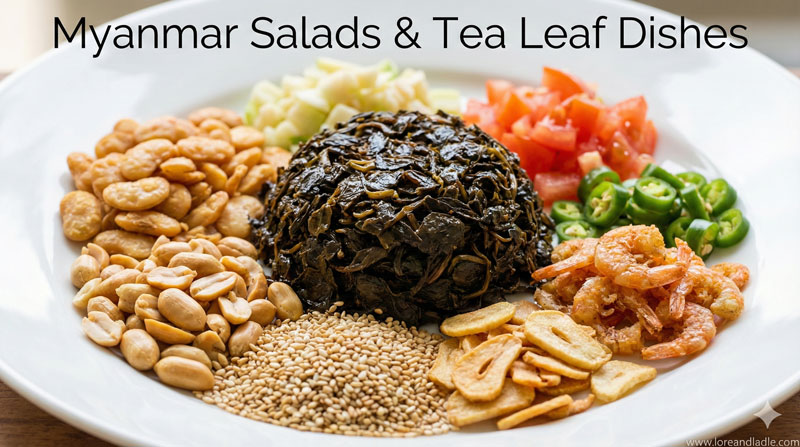
The heart of these dishes lies in fresh vegetables, herbs, and well-chosen textures. Crunch from roasted nuts or fried garlic contrasts with soft pickled ingredients. Fermented elements, such as tea leaves, bring a distinctive savor. A squeeze of lime or a dab of hot chili finishes the balance. This combination creates dishes that feel bright, comforting, and distinctly Myanmar.
Signature Dishes in the Tea Leaf Family
Tea leaf preparations anchor the collection. The tea leaf salad, often featuring fermented tea leaves with cabbage, peanuts, sesame, and citrus, stands as a crown jewel for many meals. Dishes in this family vary by region and season, yet they share a common love for bold flavor and crisp texture. Expect a lively mix of textures, from tender greens to crunchy nuts, all brightened by tangy or lime-kissed notes. Each version invites you to taste an essential part of Myanmar’s culinary language.
The Role of Salads in Everyday Myanmar Food Life
Beyond special occasions, salads accompany everyday meals with care and flexibility. They serve as a counterpoint to warm bowls of rice and savory stews. The salads showcase how herbs, fruit, and vegetables can sing together in a simple, satisfying way. They also demonstrate how a few pantry staples—peanuts, sesame, citrus, and chilies—can transform ordinary ingredients into something memorable. This versatility is a notable strength of the guide for U.S. home cooks.
Preparing for U.S. Home Kitchens: Accessibility and Substitutions
This guide recognizes that pantry access can vary. It offers substitutions that keep the spirit of the dishes intact. If fermented tea leaves are hard to find, you can approximate the character with shredded cabbage, pickled greens, a touch of miso, or tangy lime and a hint of sesame. For crunchy elements, roasted peanuts or sesame seeds do the job beautifully. The aim is to preserve the dish’s bright balance while making it feasible in a typical home kitchen.
Techniques to Elevate Flavor and Texture
Key techniques include toasting nuts for depth, finely shredding vegetables for even texture, and balancing sour, salty, and spicy elements. Gentle folding rather than aggressive mixing preserves crisp pieces. Finishing with a squeeze of fresh lime or a drizzle of citrusy oil brings brightness at the final moment. Following these steps helps you capture the essence of Myanmar’s salads and tea leaf dishes with clarity and confidence.
Plating, Pairing, and Serving Moments
Presentation emphasizes color and contrast. Place greens and vegetables as a base, then scatter nuts and sesame for sparkle. A bright citrus drizzle or a small amount of fresh herbs can lift the dish’s aroma. These salads pair beautifully with steamed rice, herbal teas, or light, refreshing beverages. The serving moment is about inviting guests to explore layers of flavor.
Cultural Moments and Everyday Joy
These dishes shine at gatherings that celebrate everyday life and shared meals. Their preparation invites mindful attention to ingredients, timing, and balance. The result is a dish that feels both familiar and exciting. By exploring these salads, you honor a culinary tradition that values community, seasonal produce, and thoughtful seasoning.
How to Use This Guide in Your Weekly Menu
Begin with one or two approachable salads to build confidence. Pair a tea leaf-inspired dish with a simple protein and rice to create a complete meal. Rotate herbs and vegetables to reflect what’s fresh at the market. Use the substitutions when a pantry item isn’t available, and trust your senses to adjust tang and heat to your liking. This approach makes the guide a practical companion for weeknight cooking and weekend experimentation alike.
Final Thoughts: A Warm Welcome to Myanmar Flavors
The Ultimate Guide to Myanmar Salads & Tea Leaf Dishes for U.S. Home Cooks invites you to savor the beauty of Myanmar’s culinary world. It emphasizes texture, brightness, and balance, presented in clear steps that respect both tradition and Home Cooking creativity. With curiosity and care, you can bring these vibrant salads and tea leaf dishes into your kitchen, sharing them with friends and family as a celebration of flavor, culture, and community.