
Welcome to Better Lunches at Home with Myanmar Noodle Favorites
This post invites you to savor the beauty and craft of Myanmar noodle dishes. By celebrating flavor, technique, and everyday joy, we explore how these bowls enrich home lunches. Each bite reveals a rhythm of textures, aromas, and memories shared around the table. The aim is simple: show how Myanmar noodle favorites can elevate ordinary lunches into moments of connection and delight.
A Range of Myanmar Noodle Favorites
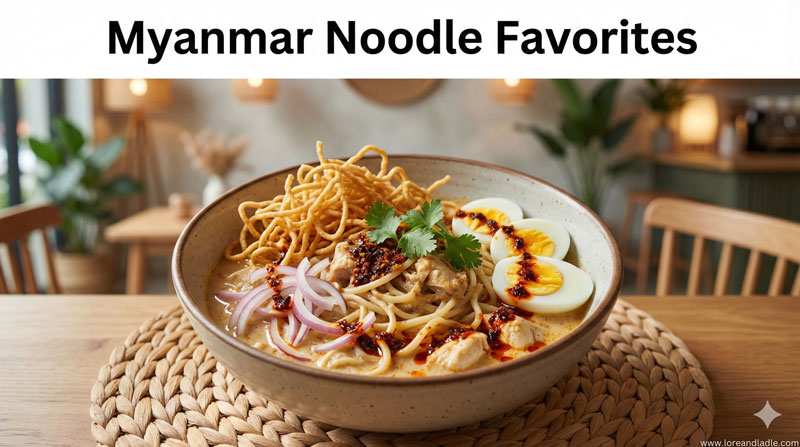
Myanmar offers a rich tapestry of noodle dishes, each with its own personality. Mohinga, the beloved fish broth with rice noodles, greets many kitchens as a warming, upright start to the day or a comforting lunch. Ohn no khao swè, a coconut chicken noodle soup, pairs creamy sweetness with bright lime and herbs. Shan noodles feature flat egg noodles in a clear, savory broth, topped with roasted sesame, garlic oil, and fresh greens. Nan gyi thoke brings thick rice noodles with a tangy peanut-chili sauce, shredded chicken, crisp onions, and lime — a lively, satisfying bowl. Each dish speaks of place and season, yet they share a common love for balance: a broth that carries aroma, a starch that threads the bite, and toppings that sing with color and texture. These favorites are more than meals; they are daily celebrations that travelers and Home Cooks alike carry into their kitchens.
The Craft Behind the Broth
At the heart of these bowls lies broth crafted with care. A good Myanmar noodle broth builds depth from slow simmered stock, gentle aromatics, and a touch of spice. Fish-based broths glow with gentle brine and lemongrass, while chicken or vegetable bases offer warmth and clarity. Aromatics such as garlic, shallots, ginger, and turmeric unfold in layers, then settle into a comforting, not-too-heavy foundation. The broth acts as the unifier, inviting noodles and toppings to join in a harmonious chorus. This technique rewards patience and attentiveness, turning a simple pot into a vessel of home flavor and tradition.
Textures and Toppings that Sing
The beauty of Myanmar noodle dishes often lies in textures. Silky noodles meet a bright squeeze of lime and a fresh chew of herbs. Crispy elements — fried garlic, shallot rings, or chickpea fritters — add crackle and contrast. Nutty roasted sesame or crushed peanuts bring warmth, while slices of chili or chili oil provide a welcome spark. Fresh cucumber ribbons, cilantro, or pickled greens offer cool, crisp counterpoints. When these toppings assemble just before serving, they create a bowl that balances smooth, crunchy, sour, and sweet notes in every bite. The toppings are not decorative; they are essential flavor players that elevate the dining experience.
Ingredient Sourcing and Prep at Home
Home cooks can bring these flavors to the table with accessible ingredients. Look for rice noodles or flat rice sheets, depending on the dish. For Mohinga, a bright fish stock or store-bought fish sauce plus a simple stock can work well, with lemongrass, garlic, shallots, and a touch of turmeric for aroma. Ohn no khao swè benefits from a coconut milk base, chicken, and a soft, fragrant spice mix. If fresh banana stems or ngapi paste are hard to find, try accessible substitutes such as vegetarian fish sauce or a light miso for depth, and rely on lime, garlic, and herbs to carry the brightness. Fresh herbs, lime, and green vegetables are easy to source and instantly lift the bowl. The result is a meal that feels rooted in place, yet approachable for home kitchens.
Lunch Rhythm: Making Noodle Classics Everyday
Better lunches begin with planning and a little mise en place. Set up a broth pot ahead of time, or prepare a batch of toppings while noodles cook. Slice meats, shred chicken, and chop herbs so assembly is quick at noon. Noodle dishes adapt beautifully to varied schedules: they can be light starters or heartier bowls, depending on portions and toppings. The beauty of these meals is their versatility; you can tailor each bowl to what’s fresh in the market or what your day calls for. In homes across Myanmar, families often build a small repertoire of favorites, rotating bowls through the week to keep lunches exciting and satisfying.
Cultural Value in Every Bowl
Noodle bowls in Myanmar embody daily life, hospitality, and shared meals. They are approachable yet refined, offering a quick route to nourishment without sacrificing nuance. The practice of placing a bowl on the table, inviting others to add toppings, and share from common plates reflects a spirit of community and generosity. The dishes honor seasonal ingredients, local markets, and regional flair, while maintaining a familiar comfort that makes lunch feel special. By cooking these bowls at Home, you participate in a living food culture that values craft, balance, and the joy of gathering around a table.
Quick Tips for Home Cooks
- Start with a clear stock as your base; it anchors the bowl and brings out depth.
- Toast spices lightly to unlock aroma before combining with liquids.
- Keep toppings fresh and vibrant; add them just before serving for contrast.
- Balance salty, sour, and sweet with lime, a pinch of sugar, and a touch of fish sauce.
- Use a mix of noodles for texture variety; try thin rice noodles in one bowl and flat noodles in another.
- Don’t rush the finish; a few fresh herbs and lime juice brighten the dish instantly.
Conclusion
Better Lunches at Home with Myanmar Noodle Favorites invites you to discover the cultural richness and culinary precision of Burmese noodle bowls. These dishes illuminate how everyday lunches can become meaningful rituals of flavor, texture, and togetherness. By embracing the diverse noodles, slow-simmered broths, and thoughtful toppings, you can create meals that honor tradition while fitting modern life. In every bowl, you taste a story of place, craft, and care — a delicious reminder that home cooking can be a warm bridge between past and present.