
Introduction
Weekend brunch is a moment to savor, share, and discover. Featuring Myanmar noodle favorites invites you to explore vibrant textures, fragrant broths, and careful balance of flavors. This approach highlights cultural value and culinary significance without rushing the senses. You’ll find the dishes come from kitchens that honor tradition while inviting creative home cooks. The result is a brunch that feels both rooted and welcoming.
A Brief Look at Myanmar Noodle Culture
Noodles thread through daily life in Myanmar. They appear early in morning markets, at family tables, and in lively street stalls. Each region adds its own touches, so the same noodle can wear many flavors. Fresh herbs, lime, fried onions, and sesame seeds provide seasonal brightness and texture. At weekend gatherings, noodle dishes become a shared experience. They invite conversation, laughter, and connection as everyone assembles bowls with care. The culture around these dishes emphasizes hospitality, balance, and a love of nuanced aroma.
Mohinga: The Brunch Classic
Mohinga stands as a brunch favorite for many households. A warming fish broth forms the base, enriched with lemongrass, shallots, garlic, and a hint of turmeric. Rice noodles swim in the fragrant soup, and the dish is crowned with toppings that sparkle in a bright, peppery finish. A squeeze of lime, fresh cilantro, and crispy shallots offer contrasting textures. Mohinga’s beauty lies in its simplicity and its ability to welcome both hurried mornings and slow, lingering afternoons. It teaches that comfort can be profound and deeply regional at the same time.
Ohn No Khao Swè: Coconut Comfort
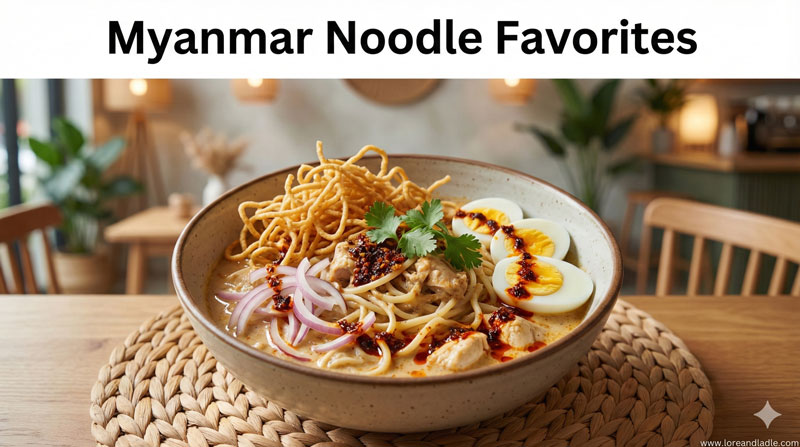
Ohn No Khao Swè presents a creamy, coconut-forward noodle experience. A silky coconut milk broth carries tender chicken and soft noodles. Chickpea fritters add a delicate crunch, while a shower of fried onions, lime, and fresh herbs brightens every bite. This dish speaks to coastal influences and the warmth of home kitchen flavors. Its sweetness and spice mingle gracefully, making it an inviting centerpiece for a weekend brunch. The dish shows how Burmese cuisine blends smooth textures with lively accents to create balance.
Nan Gyi Thoke: Noodle Salad for Sharing
Nan Gyi Thoke offers a hearty, communal vibe. Thick rice noodles rest in a rich chicken curry, then are topped with shredded chicken, chickpeas, sesame seeds, and crisp onions. A touch of lime and fresh herbs lifts the sauce without overpowering it. The presentation is generous, inviting diners to mix and taste in stages. This dish demonstrates the social aspect of Burmese brunches: everyone participates, textures vary, and the plate becomes a shared tableau of flavors.
Shan Noodles: A Mountain Region Favorite
Shan Noodles celebrate the highland palate with a bright, tangy profile. Noodles mingle with a tomato-based sauce, often enriched by ground meat, peanuts, and fresh greens. The dish is finished with lime, chili, and sesame, adding brightness and a gentle kick. Shan Noodles reflect regional pride and the blending of cultural influences that travel through borders. They remind us that a single bowl can carry stories of place, land, and season.
Building a Weekend Brunch Table
To craft a welcoming brunch around Myanmar noodle favorites, think variety and rhythm. Start with Mohinga for aroma and warmth. Follow with Ohn No Khao Swè for creamy comfort, then Nan Gyi Thoke for a lively shareable moment. Finish with Shan Noodles for a lighter, tangy note. Pair these dishes with gentle beverages and fresh herbs. Offer lime wedges, fried onions, crunchy sesame seeds, and chopped cilantro for bright finishing touches. Create a small station where guests can customize spice levels, acidity, and textures. This approach highlights hospitality and the ceremonial joy of a well-assembled meal.
The Flavors and Their Pantry
Stock a few pantry staples to keep weekend sessions smooth. Coconut milk and stock are essential for creamy broths. Fresh lemongrass, garlic, and shallots offer bright bases. Rice noodles and thicker Burmese noodles provide texture variety. For toppings, keep lime, cilantro, fried onions, sesame seeds, and crushed peanuts handy. A touch of fish sauce adds depth without overpowering delicate flavors. With these, you can recreate the harmony of a Myanmar-inspired brunch at Home.
Concluding Thoughts
Myanmar noodle favorites bring culture to the table through aroma, texture, and balance. They invite curiosity and shared enjoyment, turning a simple weekend meal into a celebration of place and craft. By presenting Mohinga, Ohn No Khao Swè, Nan Gyi Thoke, and Shan Noodles together, you honor the beauty of Burmese food culture. The result is a brunch that feels respectful, inviting, and deeply satisfying.