
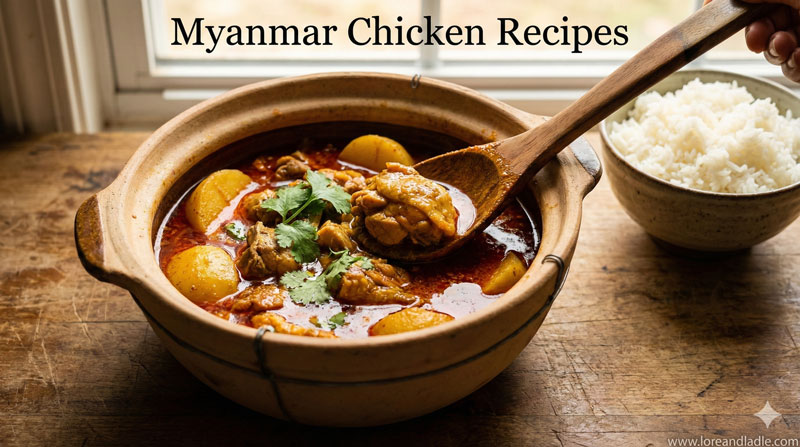
Introduction
Beginner’s Roadmap to Cooking Myanmar Chicken Recipes at Home invites you into a warm, fragrant kitchen world. This guide highlights the cultural value and culinary significance of Myanmar chicken dishes. It celebrates how Home Cooks transform simple ingredients into memory-filled meals. The tone is respectful, inviting, and steady in its focus on flavor, technique, and shared tables.
The Roadmap in Context
This roadmap is a gentle invitation for beginners. It centers on Myanmar chicken recipes that are easy to start with, yet rich in tradition. You will learn how a few fresh herbs, a splash of fish sauce, and careful simmering can create dishes that feel deeply rooted in everyday life. The emphasis stays on approachable methods, clear steps, and the beauty of cooking as a personal expression of culture.
The Cultural Value of Myanmar Chicken Recipes
Myanmar chicken dishes reflect a culture that values balance, aroma, and hospitality. Food is a daily way to connect with family, friends, and neighbors. Aromatics such as garlic, shallots, lemongrass, and turmeric tell a story of regional flavors meeting shared tables. The dishes often blend salty, sour, and aromatic notes, inviting more than just taste—they invite memory and conversation. When families cook these recipes at home, they pass along little techniques, tips, and sensory cues that define the experience of a meal. The result is a pantry of familiar flavors that can be adapted across kitchens while keeping a distinct Myanmar essence.
Core Flavors and Techniques
Myanmar chicken recipes often emphasize bright, fresh contrasts. Expect a backbone of garlic and shallots, with lemongrass lending citrus brightness and turmeric adding warmth. Coconut milk or a light broth can provide a creamy counterpoint, while fish sauce or fermented pastes add depth and a savory edge. The cooking technique tends to honor gentle simmering, quick sears, and careful seasoning, so chicken stays tender and fragrant. The cultural value here is in honoring balance: the dish tastes lively without shouting, allowing the natural chicken flavor to shine through with aromatic support.
A Beginner-Friendly Roadmap: Steps to Start Cooking at Home
Step 1: Gather accessible ingredients. Choose fresh garlic, shallots, lemongrass, a small piece of turmeric or turmeric powder, chicken thighs or breasts, and a bottle of light fish sauce. Step 2: Prepare a simple marinade. Combine minced garlic, shallots, salt, a splash of fish sauce, and a touch of lime juice. Step 3: Sear the chicken to develop color and aroma. Step 4: Add aromatics and simmer gently with a small amount of coconut milk or water. Step 5: Taste and adjust. A squeeze of lime or a pinch of sugar can bring balance. Step 6: Serve with plain jasmine rice and a bright side of picked vegetables. Step 7: Reflect on the dish and its place in daily life, then try variations with herbs you enjoy.
Pantry Essentials and Ingredient Spotlight
- Garlic and shallots: foundational aromatics for depth and sweetness.
- Lemongrass: bright, citrusy note that lifts the dish.
- Turmeric: warmth and color that ties flavors together.
- Fish sauce or ngapi-style paste: adds savory backbone.
- Coconut milk or light stock: creates a gentle, creamy counterpoint.
- Fresh lime and cilantro: finish with brightness and freshness.
These basics make many Myanmar chicken recipes approachable in a home kitchen.
Techniques in the Home Kitchen
- Searing for aroma: a quick, high-heat step to wake the spices.
- Gentle simmering: keeps chicken tender and sauces cohesive.
- Balancing flavors: adjust salt, acidity, and a touch of sweetness to taste.
- Fresh finishing: a final squeeze of lime and a handful of herbs to brighten the dish.
These techniques are friendly to beginners and reinforce the cultural emphasis on harmony of flavors.
Sharing Meals and Everyday Life
Cooking Myanmar chicken recipes at home is more than preparing supper. It becomes a simple ritual of hospitality. The act of serving warm bowls of rice with a fragrant chicken dish invites conversation, smiles, and a sense of place. Even small changes—using a favorite herb or a preferred spice level—make the dish feel personal while honoring its cultural roots. This is how food preserves memory and fosters connection in everyday life.
Conclusion
The Beginner’s Roadmap to Cooking Myanmar Chicken Recipes at Home offers more than recipes. It opens a window into a cuisine that blends aroma, balance, and community. By starting with approachable techniques and essential ingredients, you can experience the cultural value and culinary significance of Myanmar chicken dishes in your own kitchen. Embrace the process, savor the flavors, and let each homemade meal reflect the beauty of Myanmar’s food culture.