
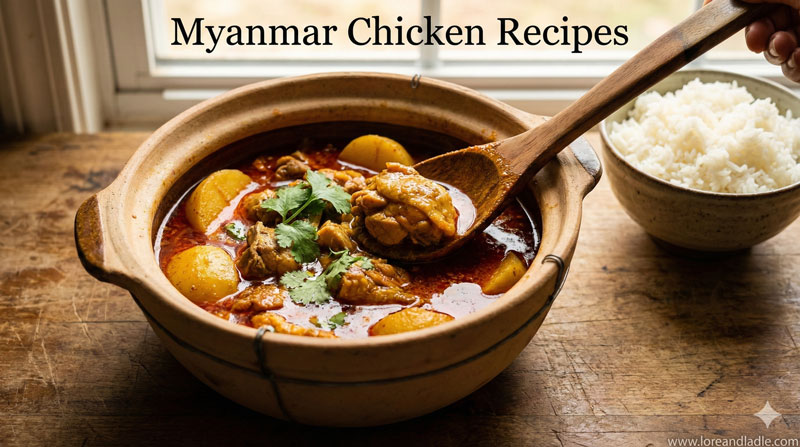
Introduction: A Guide to Pairing Myanmar Chicken Recipes with Rice, Noodles, and Sides
This post invites you to savor the beauty of Myanmar chicken meals. It highlights how simple chicken dishes become remarkable when paired with rice, noodles, and thoughtful sides. The focus is on cultural value and culinary significance—how flavors, textures, and seasonal ingredients come together at the table. You’ll discover why these pairings feel natural in Myanmar dining and how they elevate everyday meals into small celebrations of taste and tradition.
Core Flavors in Myanmar Chicken Dishes
Myanmar chicken dishes often balance bright aromatics with warmth and depth. Fresh garlic and ginger open the aroma, while lemongrass adds a citrusy lift. Turmeric and chili bring color and gentle heat. Fish sauce or fermented elements contribute a savory backbone, while coconut milk or lime juice can introduce smooth richness or a clean tang. The result is a versatile pantry of flavors that invites both comforting familiarity and curious exploration. Understanding these core notes helps you choose the right partner—rice, noodles, or side dishes—that highlight the dish rather than overwhelm it.
Pairing with Rice
Rice is the natural stage for Myanmar chicken flavors. A fragrant, steamed rice acts like a clean palette that carries spice without competing with it. For many households, jasmine rice provides a soft, floral backdrop that highlights herbs and subtle sweetness in the chicken. In some preparations, slightly slipperier or oilier textures from coconut milk-based dishes find balance when served with plain steamed rice, letting the sauce cling gently to each grain. Tender chicken with herbs and a bright finish often shines when paired with rice, creating a harmonious, easy-to-savor plate. Add a squeeze of lime or a handful of fresh coriander to lift the aroma and finish the meal with clarity and cheer.
Pairing with Noodles
Noodles offer a different kind of conversation with Myanmar chicken. Thin rice noodles or firmer egg noodles work well, depending on the dish’s sauce and texture. When the chicken carries a light, citrusy or herby profile, noodles carry it forward with a supple bite. For richer, creamier preparations, noodles provide a comforting counterbalance that allows the dish to feel cohesive rather than heavy. In all cases, a bright splash of lime, a handful of crisp herbs, or a light chili oil can weave the noodles and chicken into a single, satisfying thread. This pairing celebrates the versatility of Myanmar flavors across grain and texture.
Sides That Elevate the Meal
Sides serve as thoughtful accents that complete the plate. Crisp cucumber slices or a fresh tomato salad bring cooling contrasts to spicy or strongly seasoned chicken. Pickled vegetables add a tangy brightness that wakes the palate between bites. Fresh herbs like cilantro or mint introduce aromatic lift, while lime wedges offer an everyday brightness that brightens the entire meal. Simple avenues like light sesame-spiked vegetables or a sesame-scented oil drizzle can tie the dish together without overpowering the main flavors. Thoughtful sides transform a good meal into a well-rounded feast.
Building a Balanced Plate
To craft a memorable Myanmar chicken plate, start with a center of properly cooked chicken seasoned to taste. Choose your starch as the base—rice for purity or noodles for a softer, woven texture. Add one or two sides that provide crunch, acidity, and freshness. Finally, finish with a bright herb, lime, or pickled touch to bring the flavors into balance. This approach mirrors traditional cooking values: clarity of taste, harmony of textures, and a welcoming aroma that invites sharing and conversation.
Cultural Value and Shared Tables
Myanmar chicken meals carry cultural value through everyday dining and family gatherings. The act of cooking for others, selecting complementary grains and sides, and presenting a complete plate expresses care and hospitality. These pairings reflect a culture that celebrates the harmony of ingredients and the joy of gathering around a table. The simple joy of a well-paired meal speaks to a shared sense of table etiquette, seasonal ingredients, and the beauty of mindful eating. By exploring these pairings, you honor the tactile memory of cooking passed from kitchen to kitchen.
Conclusion: Celebrate the Flavor, Celebrate the Table
Pairing Myanmar chicken recipes with rice, noodles, and sides is more than a dining choice—it is a celebration of flavor, texture, and tradition. With thoughtful combinations, you can bring out the dish’s natural beauty and invite others to enjoy a meal that feels both comforting and bright. Enjoy the process, and let the table tell its own story through aroma, balance, and shared satisfaction.