
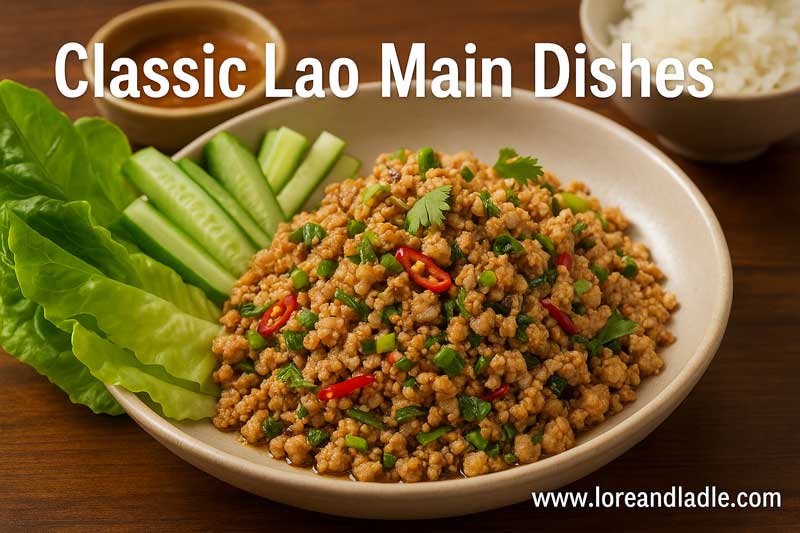
Introduction: Authentic Classic Lao Main Dishes You Can Make at Home
Lao cuisine shines in its balance of bright herbs, gentle spice, and the comforting pull of rice. These authentic main dishes reveal how flavor and technique travel from market stalls to family kitchens. Each dish carries a story of gatherings, shared plates, and careful preparation. When you cook them at Home, you honor a long tradition of care, seasonings tuned to taste, and the beauty of simple ingredients transformed through skill. This guide offers approachable, at-home ways to enjoy Lao main dishes, with tips that respect the culture and celebrate the food’s distinctive character.
Larb: The Heart of Lao Flavors
Larb is a celebrated Lao dish that centers on minced meat brightened with lime, fish sauce, and fragrant herbs. The texture—meaty but light—comes from finely chopped meat and a sprinkle of roasted rice powder for a subtle nutty bite. Fresh mint, cilantro, and green onions lift the dish, making every bite feel electric and fresh. Larb pairs beautifully with sticky rice and crisp vegetables, turning a simple plate into a confident, palate-pleasing experience. In home cooking, you can tailor heat and acidity to your liking, while preserving the dish’s clean, herb-forward profile. The dish is a vivid example of how Lao cooks balance sour, salty, and herbal notes to create a meal that feels lively and communal.
Mok Pa: Aromatic Steamed Fish in Banana Leaves
Mok Pa showcases Lao fragrance through steam and leaf-wrapped tenderness. Fish is seasoned with lemongrass, dill, garlic, and chili, then wrapped in banana leaves and steamed until silky and aromatic. The banana leaf carries and concentrates flavors, while helping to keep the fish moist. At home, use any firm white fish and substitute leaves with foil or parchment if needed. The result is a delicate, herb-forward main that invites slow, attentive cooking. Serving Mok Pa with steamed jasmine rice lets the aromatic steam mingle with green herbs and citrusy notes, creating a refined yet comforting centerpiece for a family meal.
Or Lam: Slow-Cooked Comfort from the North
Or Lam is a slow-simmered Lao stew that layers meat with vegetables and a tapestry of herbs. Typical ingredients include eggplant, dill, lime leaves, lemongrass, and chili, along with tender chunks of meat. The sauce grows richer as it simmers, drawing in the herbaceous aroma and a gentle warmth. Or Lam embodies homey satisfaction: each spoon carries the memory of a kitchen warmed by afternoon light and a pot that has cooked slowly, enabling every flavor to harmonize. In home cooking, you can adjust the balance of dill and chili to create a comforting dish that tastes like a timeless family recipe.
Khao Poon: Fragrant Lao Vermicelli Curry
Khao Poon is a fragrant Lao vermicelli curry that brings together coconut milk, a mild curry paste, and a bright array of herbs. The dish shines with color—from pale noodles to green herbs and shredded vegetables on top. A spoon of lime, fish sauce, and coconut creates a silky, layered sauce that clings to the noodles. Served hot, it becomes a nourishing main with a lively aroma and a comforting, silky mouthfeel. Home preparation invites customization: you can adjust coconut richness, add more lime for brightness, or vary herbs for a personal touch while preserving the dish’s characteristic warmth and depth.
Sticky Rice and the Lao Table
Sticky rice is the anchor of many Lao meals. Its gluey texture is perfect for scooping, tearing, and sharing, and its mild flavor enhances the flavors of the main dishes without overpowering them. At table, friends and family gather around a central basket of rice, using fingers to pinch small portions and dip into sauces or stews. This practice highlights the social element of Lao dining—eating is an act of togetherness. If you are new to sticky rice, start with the softer, slightly warm grains and progress to the precise balance that your family or guests enjoy.
Practical Tips for Making Lao Dishes at Home
- Stock up on fresh herbs: mint, cilantro, dill, lemongrass, and lime leaves bring Lao dishes to life.
- Use fish sauce and lime for the signature sour-salty balance; adjust to taste.
- Toast and grind rice powder for larb to add texture and depth.
- Keep a steady simmer for stews like Or Lam to allow flavors to meld.
- If banana leaves are hard to find, foil or parchment can work as a substitute for Mok Pa, with careful steam technique.
- Prepare a simple side of fresh vegetables and herbs to brighten each plate.
These authentic Lao main dishes offer a doorway to a culture rich in flavor and technique. With thoughtful preparation and respect for tradition, you can recreate the beauty of Lao home cooking in your own kitchen.