
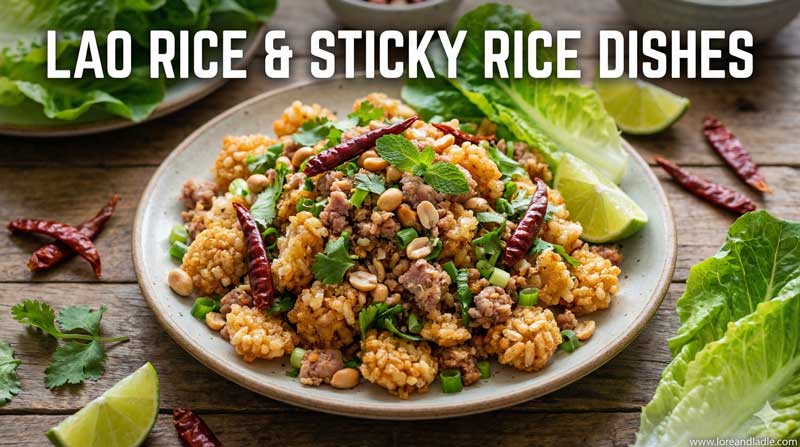
Introduction
Balanced Lao Rice & Sticky Rice Dishes Ideas with Veggies and Grains reveals how Lao kitchens blend two rice traditions with fresh vegetables and wholesome grains. In Lao culture, rice is more than food; it is daily ritual, shared moments, and a canvas for color, aroma, and balance. The concept invites Jasmine rice and glutinous rice to stand side by side, while veggies and grains add texture, nutrition, and heart. The result is a plate that feels calm, respectful, and inviting.
The unique role of rice in Lao cuisine
In Lao cuisine, rice anchors every meal. Jasmine rice brings light fluff and clean sweetness, while sticky rice offers gentle chew and grounding heft. Together, they create a harmony that lets herbs, citrus, and chilies shine. Cooks treat rice as a companion to vegetables and grains, never a mere side note. This emphasis on rice as a flexible base explains why a balanced plate can feel both simple and deeply satisfying.
The balance of Jasmine rice and sticky rice
A well-balanced Lao dish often uses both rice types to achieve contrast. Fluffy Jasmine rice carries delicate sauces and bright herbs with ease. Sticky rice gathers sauces and bits, delivering plump bites and a comforting finish. When served together, they guide the meal’s pace: light bites followed by richer, chewier mouthfuls. The balance honors technique and patience, turning everyday eating into a small celebration of texture.
Vegetables and grains: fresh and hearty
Colorful vegetables bring brightness to the plate: cucumber, cabbage, green beans, peppers, carrots, and leafy herbs. Fresh herbs such as cilantro, mint, and dill lift the aroma. Wholesome grains—millet, barley, mung beans, corn, or quinoa when available—add protein and fiber. Together, vegetables and grains create a vibrant rainbow on the plate, inviting the senses to explore each bite.
Techniques that elevate flavor and texture
Steam and gentle stir-fry are common paths to perfect texture. Cook the Jasmine rice until it is light and separate, then let the sticky rice stay soft and cohesive. Toss vegetables briefly to keep their crispness, then dress with a light vinaigrette of lime juice, fish sauce, and a touch of chili. Fresh herbs finish the dish, releasing fragrance as you eat. These methods preserve natural flavors while building depth.
Food and family: shared meals and meaning
Laotian meals often invite sharing and togetherness. A bowl or platter holds both rice types, with vegetables arranged in a way that each bite offers balance. Everyone gathers around, senses open to aroma and color, and savor the harmony of textures. The practice honors hospitality, patience, and the joy of cooking for loved ones.
Seasonal ideas and regional variations
markets and seasons shape what greens and grains appear on the table. In cooler months, heartier vegetables join the mix; in rainy seasons, plump beans and fresh herbs brighten the plate. Different regions add their own touches, lending unique herb blends, fruit chutneys, or local fish sauces. This adaptability keeps the dish alive and continually evolving within Lao culinary culture.
Presenting the dish: color, aroma, and harmony
Arrange the Jasmine rice and sticky rice in separate mounds, then place vegetables and grains around them like a living palette. Use bright greens, orange carrots, and pale cucumber to create visual balance. A light squeeze of lime and a final sprinkle of herbs add aroma. The presentation heightens anticipation and invites mindful tasting.
Respectful traditions and culinary heritage
This balanced concept honors skill passed through generations. Cooks learn to respect moisture, heat, and timing; families teach fiddle-free methods that keep flavors clear and bright. The result is a dish that feels timeless yet fresh, inviting every eater to slow down, notice the colors, and appreciate the craft behind each bite.
Conclusion
Balanced Lao Rice & Sticky Rice Dishes Ideas with Veggies and Grains offers a graceful approach to Lao cuisine. It celebrates two rice traditions, vibrant vegetables, and nourishing grains within a single, harmonious plate. The dish invites exploration, fosters appreciation for technique, and honors the beauty of sharing a thoughtfully prepared meal. Try this balanced concept at Home to experience the gentle depth and cultural richness of Lao cooking.