
Introduction
Balanced Lao Vegan & Vegetarian Dishes Ideas with Veggies and Grains invites you into a cuisine that honors farmers, markets, and the simple beauty of fresh produce. This concept highlights how Lao cooking blends vegetables, grains, herbs, and careful techniques to create meals that feel complete and comforting. The focus is on flavor harmony, texture, and the warmth of sharing food with family and friends. Through these ideas, you can savor the cultural value and culinary significance of Lao plant-based dishes that celebrate veggies and grains in a balanced way.
The Balance at the Heart of Lao Plant-Based Cuisine
In Lao food, balance is both a flavor map and a sense of well-being. Sour, salty, spicy, sweet, and bitter notes mingle effortlessly. Vegetables and grains form the canvas, while herbs and aromatics add brightness and depth. This balance often appears in everyday meals, where a simple plate centers on sticky rice and a colorful mix of vegetables. When you prepare vegan or vegetarian Lao dishes, you practice a culinary rhythm that respects seasonality, local produce, and thoughtful combinations. The result is meals that taste vibrant, feel nourishing, and invite lingering at the table.
Staples and Their Shape in Dishes
Certain ingredients and techniques define Lao plant-based plates. Sticky rice (khao niaw) remains the beloved base, offering a satisfying, slightly chewy texture that complements vegetables and dips. Fresh herbs such as cilantro, mint, dill, Thai basil, and scallions brighten every bite. Common vegetables include eggplant, pumpkins or gourds, green beans, okra, cucumbers, bamboo shoots, and leafy greens. For flavor, cooks use lime juice, chilies, shallots, garlic, lemongrass, and dill—often in balanced contrasts rather than overpowering heat.
Fermentation and bright sauces also play a role. Vegan-friendly dips (jeow) made with chilies, herbs, and tomato or roasted vegetables provide tang and depth without animal products. Toasted ground rice or peanuts adds texture and a subtle nutty note that harmonizes with greens and grains. Together, these staples enable plant-based Lao dishes to be flavorful, comforting, and true to local Pantry Staples.
Techniques that Elevate Flavor in Plant-Based Lao Dishes
- Stir-fry with aromatics: Quick sizzling of vegetables with lemongrass, garlic, and herbs preserves color and crunch.
- Fresh and raw contrasts: Crisp salads and raw herb greens balance cooked, soft textures.
- Simmering and soft folds: Vegetable stews and coconut-milk-based pots meld flavors gently, creating cozy meals.
- Toasted nut and seed crunch: A sprinkle of crushed peanuts or sesame seeds adds aroma and bite.
- Jeow dips and assembly: Layering a tart, spicy dip with herbs under a bed of rice elevates the plate.
- Rice-powder finishing: A hint of rustic, toasted rice powder brings savor and body to laab-inspired dishes.
These techniques help vegan and vegetarian Lao dishes feel complete, even without meat or fish sauces.
Dishes and Ideas: Balanced Plant-Based Lao Concepts
Here are inviting ideas that fit the theme of Balanced Lao Vegan & Vegetarian Dishes Ideas with Veggies and Grains. Each idea centers on vegetables and grains, with clear steps to keep the flavors bright and harmonious.
-
Tam Mak Hoong-inspired Papaya Salad with Veggies
A vibrant papaya salad built with shredded green papaya, tomatoes, carrots, herbs, lime juice, and chilies. Add toasted peanuts and a touch of palm sugar for balance. Use soy or mushroom sauce as a vegan alternative to fish sauce. This version remains fresh, zesty, and perfect with sticky rice. -
Or Lam-Inspired Vegetable Pot
Or lam Is a Lao dish known for its aromatic herbs. Create a vegetable-forward version with mushrooms, pumpkin, baby corn, green beans, dill, lemongrass, and coconut milk. Simmer gently until the vegetables are tender. Serve with a side of sticky rice and extra herbs. -
Sticky Rice Bowls with Seasonal Greens and Tofu
Build a bowl with warm sticky rice, sautéed greens (bok choy, spinach, or kale), mushrooms, and tofu. Finish with lime juice, chopped herbs, and a drizzle of a light soy-based sauce. The result is wholesome, colorful, and satisfying. -
Lao Laab-Inspired Tofu or Mushroom Salad
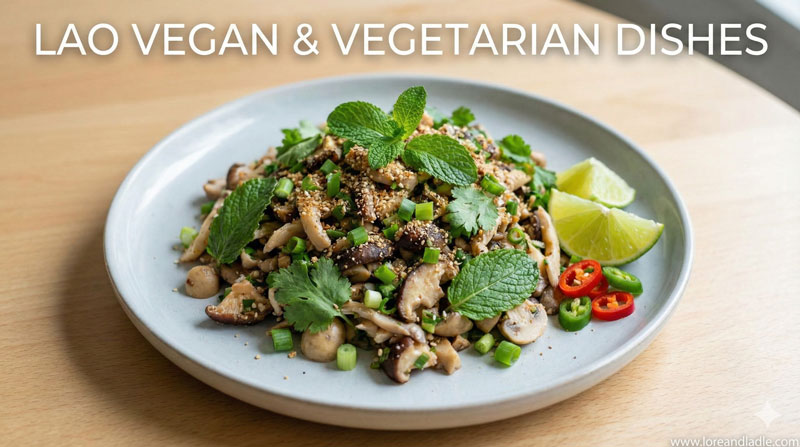
Prepare a chopped herb salad featuring crumbled tofu or finely sliced mushrooms, toasted rice powder, lime juice, chili, cilantro, and mint. This dish captures the bright acidity and herb-forward aroma Lao cuisine loves, while staying fully plant-based. -
Jeow Dips Trio with Fresh Vegetables
Create three vegan jeow dips (for example, tomato-pepper, herb-chili, and roasted garlic) to accompany fresh cucumber, carrot sticks, cabbage, and herbs. Use lime, garlic, and cilantro to keep each dip lively and balanced. This setup emphasizes communal tasting and light snacking with a nutritive crunch. -
Dill-Forward Green Bean and Eggplant Stir-Fry
A quick stir-fry of green beans and eggplant with garlic, dill, and a splash of coconut milk. Pair with sticky rice and a squeeze of lime. The dill fragrance adds a uniquely Lao touch, brightening the plate. -
Coconut Lemongrass Soup with Vegetables
A gently spiced broth enriched with coconut milk, lemongrass, mushrooms, and seasonal greens. This comforting soup warms the palate while keeping the dish light and vegetal-centered. -
Fresh Herb Salad with Pepitas and Rice Crumbs
Toss sliced cucumbers, tomatoes, herbs, and greens with toasted seeds and a light rice-cracker crumble. This crisp, refreshing plate accompanies any main dish and highlights the herbal profile of Lao cooking.
Each idea celebrates vegetables and grains, with clear steps to keep the flavors vibrant, the textures varied, and the dining experience welcoming and balanced.
Serving Traditions and Cultural Value
Lao meals often center on a shared table, with rice and multiple side dishes presented for everyone to sample. In this setting, balanced plant-based dishes take on cultural significance as expressions of hospitality, seasonality, and mindfulness. The practice of combining herbs, vegetables, and grains mirrors a respect for the land and the daily rhythms of Lao life. Serving these dishes in a family-style way reinforces a sense of community and care for one another. The beauty lies in how simply prepared ingredients can create deep, memorable flavors when balanced thoughtfully. Associations with seasonal markets and home kitchens deepen this cultural meaning, making each plate a small celebration of Lao culinary identity.
Practical Tips for Home Cooks
- Start with sticky rice as a foundation. It anchors the plate and aligns with Lao eating patterns.
- Use fresh herbs generously. A bright bouquet of cilantro, mint, dill, and Thai basil elevates any veggie-forward dish.
- Balance sauces with acidity and sweetness. Lime juice, a touch of palm sugar, and a light soy-based substitute keep flavors lively without overpowering vegetables.
- Make vegan-friendly substitutes for traditional fish sauce. Soy sauce, a splash of lime, and a bit of mushroom powder can mimic depth without animal products.
- Add texture with toasted seeds, chopped peanuts, and rice powder. These elements create the familiar Lao crunch and aroma.
- Focus on seasonal produce. Fresh vegetables at their peak deliver better color, flavor, and nutrition.
- Keep portions harmonious. The goal is balance between grains, vegetables, and herbs, not heaviness from a single component.
Why This Concept Matters in Everyday Life
Balanced Lao Vegan & Vegetarian Dishes Ideas with Veggies and Grains reveals how a culture can celebrate plant-based cooking without sacrificing depth or tradition. It shows how Home Cooks can interpret classic Lao flavor profiles through vegetables and grains, keeping meals satisfying and culturally respectful. The approach invites curiosity and respectful tasting, encouraging people to explore Lao food with a focus on texture, aroma, and shared meals. By embracing these ideas, you participate in a culinary practice that honors farmers, markets, and families who cook with care.
Conclusion
This collection highlights the cultural value and culinary significance of Lao plant-based cooking. The dishes emphasize balance, freshness, and community. With veggies, grains, herbs, and thoughtful techniques, you can build meals that feel both traditional and contemporary. Balanced Lao Vegan & Vegetarian Dishes Ideas with Veggies and Grains is an invitation to explore Lao flavors in a gentle, welcoming way. Embrace the bright herbs, crisp vegetables, and comforting rice as you cook, share, and savor.