
Introduction
This post invites you to explore Beginner-Friendly Myanmar Noodle Favorites to Make at Home. The focus is on cultural value and culinary significance. You will discover how these noodle dishes express everyday life, seasonal ingredients, and shared meals. The aim is to celebrate flavor, texture, and craft in a warm, practical way.
The cultural heartbeat of Myanmar noodles
Noodles are a steady thread in Myanmar kitchens. They appear at breakfast, lunch, and supper, adapting to the moment and the pantry. Each bowl tells a simple story: care in the broth, patience in the simmer, and generosity in the toppings. Markets, home kitchens, and small eateries all contribute to a living tradition of fast, comforting, and flavorful meals. This is a cuisine built around balance—bright acidity, gentle sweetness, and a savory depth that lingers. Preparing noodles at home makes that story personal: you invite neighborhood flavors into your own kitchen and honor a broader culinary family.
Beginner-friendly picks for home cooks
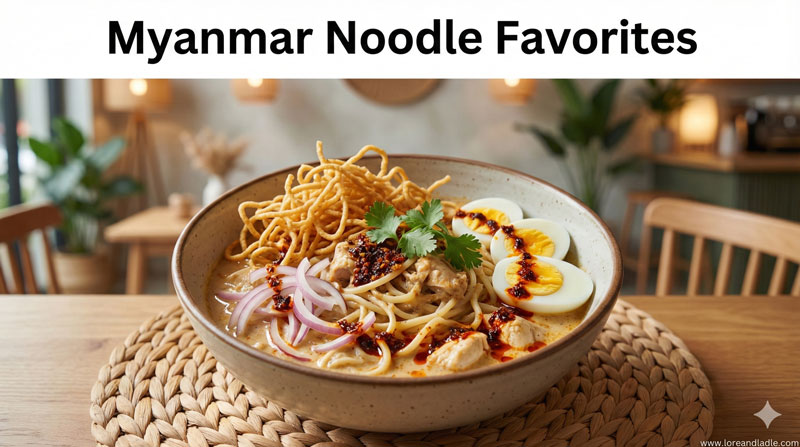
Mohinga, Nan Gyi Thoke, and Ohn No Khao Swe stand out as approachable yet meaningful choices. Mohinga centers on a fragrant fish broth with lemongrass and onions, ladled over rice noodles and finished with herbs and crispy toppings. Nan Gyi Thoke uses thick rice noodles with a creamy fish curry sauce, then brightens the dish with fresh vegetables and boiled egg slices. Ohn No Khao Swe is a coconut-milk-based chicken noodle soup, offering gentle richness and a comforting finish. Each dish showcases a distinct mood—morning warmth, bowlful comfort, or a creamy, soothing meal—while remaining approachable for home cooks.
How these dishes express culinary significance
- Flavor building: These noodles teach how a simple stock, herbs, and a few seasonings can create a complex, satisfying bowl.
- Texture harmony: Soft noodles pair with crisp onions, crunchy fritters, or fresh herbs. The contrast is a signature feature across Myanmar noodle bowls.
- Freshness and versatility: The toppings invite seasonal greens, lime, chili, and roasted seeds. This flexibility keeps the dishes lively and personal.
- Shared rituals: Collecting ingredients at a market, preparing components together, and presenting a bright, fragrant bowl embodies the communal spirit of Myanmar cooking.
Techniques that honor tradition while staying home-friendly
- Layering flavors: Start with a clear broth or curry base, then add bright notes with lime, cilantro, and fresh herbs.
- Noodle timing: Cook noodles just until tender, then rinse lightly to keep texture lively. This preserves the chew that defines the dish.
- Finishing touches: A splash of fish sauce or light soy, a handful of fried shallots, and a squeeze of lime lift the bowl instantly.
- Toppings as storytelling: Sliced hard-boiled eggs, crushed peanuts, sesame seeds, or crispy chickpea crisps echo regional tastes and provide textural variety.
Practical tips for shopping and pantry staples
- Noodles: Choose rice noodles of varying thickness for different dishes. Fresh or dried options both work with proper cooking.
- Proteins: Fresh fish fillets, chicken thighs, or a light fish paste can form a strong base for broth or curry sauce.
- Aromatics: Lemongrass, garlic, shallots, turmeric, and ginger are foundational. Fresh herbs like cilantro and dill add brightness.
- Condiments: Lime juice, chili, and a touch of toasted sesame or peanut powder enrich the final notes.
- Substitutions: If a traditional ingredient is hard to find, use a light fish sauce or a mild curry paste to capture the intended depth.
Crafting your Myanmar noodle meal at home
- Start with one dish as your anchor, then build out with toppings and variations.
- Keep a simple stock on hand. A gentle simmer with onion, garlic, and lemongrass pays off in multiple bowls.
- Taste as you go. Small adjustments to acidity, salt, and heat help you align the dish with your palate.
- Create a small topping bar: herbs, lime wedges, crisp shallots, and chopped nuts. That makes the meal feel festive and personal.
Regional notes and gentle variations
Different regions bring slight twists to noodle bowls, usually in the sauce base or toppings. Some places favor a richer coconut finish; others lean toward a sharper acidity from lime or tamarind. At home, you can honor these regional echoes by adjusting the balance to your kitchen’s rhythms while keeping the core appeal: bright, comforting, and deeply satisfying bowls.
Closing thoughts
Beginner-Friendly Myanmar Noodle Favorites to Make at Home invites you to savor a culture-friendly approach to noodle dishes. The focus stays on flavor, technique, and shared meals. By honoring the textures, aromas, and simple joys of preparation, you can enjoy a meaningful culinary practice in your own kitchen. This is more than cooking; it is a doorway to appreciation, patience, and the pleasure of a well-made bowl.