
Introduction
Beginner-Friendly Myanmar Rice & Curry Plates to Make at Home invites home cooks to explore a comforting, colorful kitchen tradition. This dish celebrates simple ingredients and patient technique, turning everyday meals into a meaningful, flavorful experience. By focusing on rice paired with gently spiced curries and fresh accompaniments, it offers a welcoming way to enter Burmese flavors without rigid rules. The result is a plate that feels both familiar and exciting, a reminder that good food can be straightforward and deeply satisfying.
The cultural heartbeat of Myanmar rice and curry
In Myanmar, the daily meal often centers on rice, prepared with care and served with a variety of curries, vegetables, and small condiments. A plate like this mirrors a rhythm of home cooking that many families cherish: balance, aroma, and a sense of sharing. The rice rests as a neutral stage, while the curry provides warmth and character. Fresh herbs, tangy pickles, and a touch of brightness from lime or lime leaves bring life to the meal. This approach emphasizes hospitality—meals are a chance to gather, to enjoy each other’s company, and to savor the way flavors harmonize across components. The beauty lies in how a few well-chosen elements come together to create a cohesive, comforting experience.
Core components of the plates
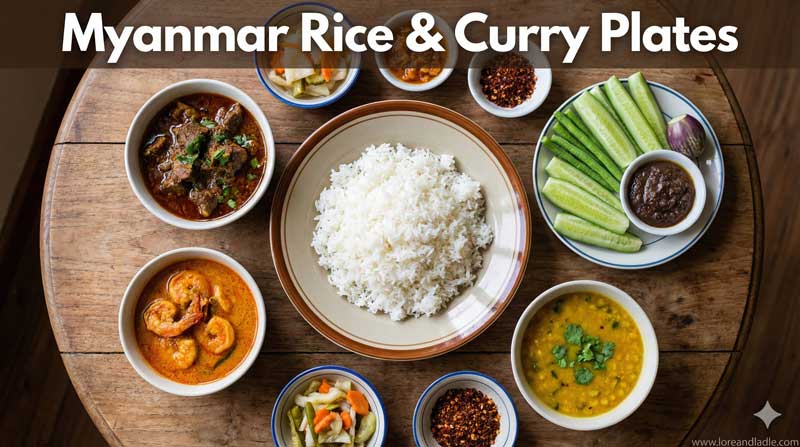
The centerpiece is steamed rice, usually jasmine or another long-grain variety, cooked to be light and fluffy. The curry component can feature chicken, fish, or vegetables simmered in a gentle sauce. Common flavor notes include garlic, shallots, ginger, turmeric, coriander, and chili, often softened with coconut milk or tomatoes. Sides may include a crisp salad or slaw, a small portion of pickled vegetables, and a dab of fermented seasoning such as ngapi or a milder substitute like a touch of miso or fish sauce. A squeeze of lime or a scattering of fresh herbs adds brightness. Together, these parts create a plate that is colorful, fragrant, and balanced—hot, sour, salty, and slightly sweet all at once.
The balance of flavors and textures
This dish thrives on contrast. The rice offers a clean, starchy base; the curry delivers warmth and depth; the fresh vegetables add crunch and brightness. Coconut milk can round out the curry’s richness, while a tangy pickle or pickle-like relish brings a crisp counterpoint. Texture matters as well: the softness of the rice, the tenderness of the curry, and the crispness of a fresh salad or pickle create a satisfying overall bite. The result is a plate that feels complete and comforting, yet dynamic enough to hold interest through repetition and small variations.
Techniques for beginners: building flavor, step by step
Start with the rice, rinsing it briefly to remove excess starch, then cooking it with a gentle steam until each grain is separate. For the curry, begin with a mild base of chopped onion, garlic, and ginger. Sweat these aromatics until they are fragrant but not browned. Add spices in a quick toast to wake their oils, then introduce the main ingredient (meat, fish, or vegetables) and a liquid such as coconut milk or tomatoes. Simmer gently until the flavors mingle and the sauce coats the pieces. Finish with a splash of lime juice or a pinch of sugar to balance acidity and sweetness. Keep salt in mind as you go, tasting at the end and adjusting. Finally, arrange the plate by layering a fluffy bed of rice, topping it with curry, and surrounding it with fresh accompaniments. This method is approachable, reliable, and forgiving for beginners.
A meal that feels at home in daily life
In daily life, this type of plate becomes a comforting ritual. Families prepare components ahead and assemble plates as needed, turning the act of eating into a shared moment. The curry’s warmth and the rice’s calm provide a cozy balance after a long day. Fresh herbs and tangy pickles invite guests to customize each bite, making the meal interactive and personal. The dish’s beauty lies in its accessibility and its ability to showcase seasonally available produce, turning local ingredients into a harmonious, well-rounded plate.
Pantry tips and substitutions
If you cannot find a traditional ingredient, there are friendly substitutes that keep the dish true to its spirit. Instead of ngapi, try a small amount of miso or fish sauce for a savory depth. If coconut milk isn’t available, a light dairy cream or a splash of vegetable stock with a touch of coconut extract can offer similar richness. For the curry base, any protein or vegetable you enjoy works well; the key is to maintain a gentle simmer so the sauce thickens and the flavors blend. Fresh lime or lemon juice at the end brightens the dish, while chopped cilantro or Thai basil can add a fresh herbal note. These substitutions help keep the dish approachable without sacrificing the core character of Burmese-inspired flavors.
Savoring the experience: serving and enjoying
To savor, take a small bite of rice with a spoon of curry, then add a few greens or pickles for contrast. Notice how the richness of the curry plays with the light, aromatic rice. The interplay of textures—soft grains, smooth sauce, crisp vegetables—enhances the sense of balance that makes this plate so inviting. Pair the dish with a warm, comforting drink or a chilled beverage to highlight the spices. As you eat, you’ll find the plate mirrors the everyday warmth of Burmese home cooking: generous, considerate, and crafted to please both the palate and the heart.
Closing reflection
Beginner-Friendly Myanmar Rice & Curry Plates to Make at Home offers more than a meal; it presents a doorway into a cuisine that values harmony, hospitality, and everyday delight. By focusing on a few essential components and friendly techniques, you can create a plate that feels culturally grounded, deeply satisfying, and easy to repeat. This approach invites you to explore, taste, and enjoy the beauty of Burmese flavors in your own kitchen.