
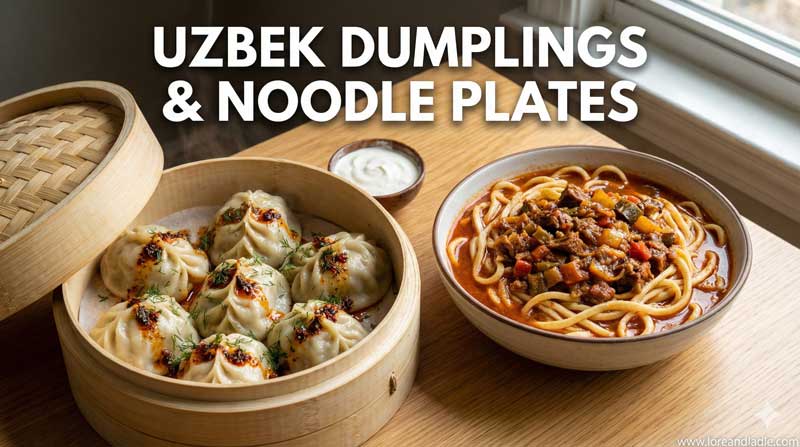
Must-Try Beshbarmak – Uzbekistani Dumplings & Noodle Plates Flavor You’ll Love
Introduction
Beshbarmak shines as a dish that invites conversation, sharing, and delight. In Uzbekistan, families gather around the table and welcome guests with warmth and generous portions. This dish, built from simple ingredients, flourishes through care, timing, and respect for tradition. It is more than food; it is a reflection of daily life, hospitality, and the patient craft of generations.
What Is Beshbarmak?
Beshbarmak is a platter of two main stars: tender boiled meat and soft, ribbon-like noodles swaddled in a light, savory broth. The meat—often beef or lamb—is cooked until it is silky and hearty. The noodles are wide and delicate, made from flour and water, sometimes with a touch of eggs. A fragrant onion broth is ladled over the top, and fresh herbs complete the plate. Each bite blends meat sweetness, meaty depth, and the gentle lift of onion sweetness. The dish is deliberately balanced, with no single element overpowering another.
The Craft Behind the Dish
The magic lies in patience and precision. The noodles must be rolled thin and cut into generous strips. They simmer briefly in a clear stock so they stay tender without turning mushy. The meat is pulled from the bone or sliced thinly, then arranged over the noodles. The broth, enriched by meat juices and onions, is poured at the table to bring everything together. The timing is communal and shared, with cooks guiding the flow of meat, noodles, and broth to achieve harmony on the plate.
Flavor and Texture: A Symphony on a Plate
Expect a comforting, savory profile. The meat gives a rich, lingering flavor; the noodles offer soft chew and delicate grain. The broth adds depth and brightness from onions and herbs. Fresh parsley or dill may garnish the dish, releasing a burst of herbal aroma. Together, these elements create a comforting, satisfying sensation that lingers in memory. The dish is generous in texture and generous in spirit, inviting slow savoring and mindful eating.
Cultural Value: Hospitality Through Food
Beshbarmak embodies hospitality. The act of sharing a large bowl or platter signals welcome and abundance. The table becomes a space for conversation, stories, and warmth. In Uzbek culture, food is a bridge between generations, a way to honor ancestors and celebrate everyday life. Beshbarmak, with its simple toolkit of meat, noodles, and broth, demonstrates how a few honest ingredients can express care, respect, and togetherness. The dish teaches patience, as cooks refine the balance of meatiness, noodle texture, and broth clarity over time. It also underscores gratitude—toward the cooks, the farmers who raised the animals, and the cooks’ own families who pass the recipe down.
Regional Variations Within Uzbekistan
Across regions, small differences color the dish. In some places, the meat choice leans toward lamb for a distinct aroma, while others favor beef for a cleaner, milder taste. Noodle thickness and cut size may vary, producing a slightly different mouthfeel. Some cooks add a touch of pepper or caraway to the broth for a subtle kick. Garnishes can include fresh herbs or fried onions for extra aroma. These variations celebrate local farms, seasonal ingredients, and family preferences, all while preserving the core idea: a shared, comforting bowl meant for togetherness.
Serving Traditions and Rituals
Serving Beshbarmak is an act of presentation and care. The meat is laid over the noodles, and the broth is poured at the table, inviting guests to witness the dish’s transformation from dry ingredients to a steaming, unified plate. Diners often fold a portion of noodle with meat in a single bite, savoring the interplay of textures and flavors. The act of eating with hands—five fingers guiding each bite—echoes the dish’s name and its emphasis on natural, communal eating. The ritual strengthens bonds and turns a meal into a moment of shared joy.
Why This Dish Remains Relevant Today
In a fast-paced world, Beshbarmak offers a pause that feels generous and grounded. It reminds us that food can be nourishing in more ways than one: it feeds the body and also nurtures social connection. The dish’s simplicity invites Home Cooks to experiment with ingredients while staying true to tradition. It stands as a symbol of careful preparation, seasonal awareness, and a culture that values family meals and open hospitality.
How to Enjoy Beshbarmak: A Traveler’s Guide
- Look for balance: the best bowls balance meat tenderness, noodle softness, and broth brightness.
- Savor the broth first: a few spoonfuls awaken the flavors and invite the rest of the dish to sing.
- Cut and fold: use your knife and fork to combine meat with noodles, then lift a bite with broth.
- Pair thoughtfully: plain yogurt, a light herb salad, or fresh pickles can complement without overpowering.
- Savor slowly: let each mouthful carry the textures and aromas, and enjoy the warmth of the moment.
A Dish for All Seasons
Beshbarmak adapts to many settings. It can shine as a celebratory centerpiece at family gatherings or as a comforting weeknight meal when cooked with care. Its flexibility makes it approachable for cooks who wish to explore Uzbek Flavors in home kitchens, restaurants, or food markets. The dish invites curiosity and offers a doorway to a rich culinary landscape.
Tips for Home Cooks
- Start with good stock: a clear, well-seasoned broth anchors the flavors.
- Roll the dough evenly: even thickness helps noodles cook uniformly.
- Don’t overboil: short simmer times keep noodles silky and meat tender.
- Use fresh herbs: a bright finish lifts the entire dish.
Conclusion: An Invitation to Taste Culture
Must-Try Beshbarmak welcomes you to a world where food is a bridge between hands, hearts, and homes. Its enduring appeal lies in simple ingredients elevated by patient technique and shared care. Through its flavors, textures, and rituals, you glimpse a culture that treasures hospitality, family, and the quiet joy of a well-made meal. Whether you encounter it in a bustling kitchen or a quiet home setting, Beshbarmak offers a warm invitation to slow down, savor, and celebrate the beauty of Uzbek food culture.