
Introduction: Embracing the Best Classic Lao Main Dishes
Welcome to a celebration of Lao culinary artistry. The post titled Best Classic Lao Main Dishes to Try in the U.S. This Year invites you to explore dishes that carry deep cultural meaning and bright, memorable flavors. Lao cuisine centers on balance: sour, salty, spicy, and savory notes harmonize with fresh herbs and the comfort of sticky rice. These main dishes reveal how Lao cooks shape textures, aromas, and seasonal ingredients into meals that feel both ancient and alive today. In the United States this year, these classics connect kitchens, tables, and neighborhoods through shared meals and joyful hospitality. The dishes highlighted here are chosen for their enduring appeal, craftsmanship, and the way they honor ingredients, technique, and time.
Larb: The fragrant heart of Lao dining
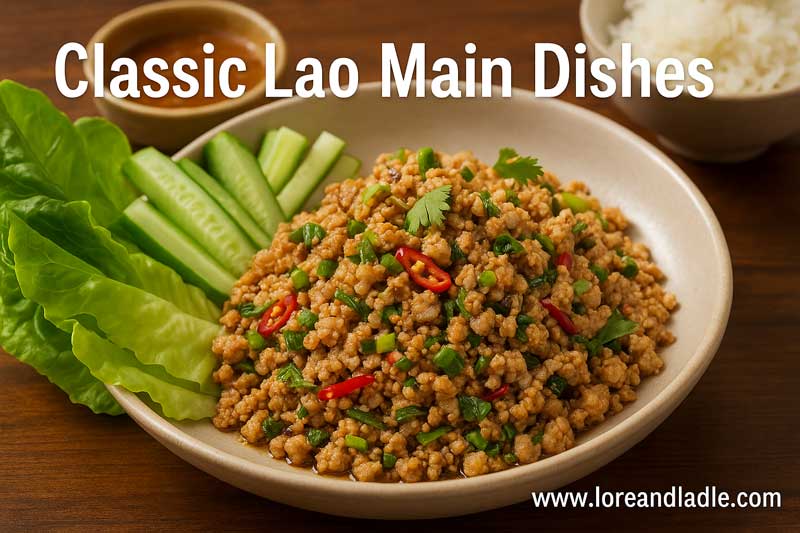
Larb stands as a vibrant testament to Lao culinary philosophy. Finely minced meat or fish shines when bright with lime juice, fish sauce, mint, cilantro, and toasted rice powder. Each bite delivers a crisp ring of texture, a lively chorus of herbs, and a balancing tang. Traditionally served at room temperature with a generous bed of sticky rice, larb encourages guests to mix, taste, and adjust together. Culturally, larb marks gatherings big and small, from family meals to festive occasions, where sharing and harmony guide the feast. In the U.S. this year, chefs and home cooks are rediscovering larb’s clean, bright profile as a fresh centerpiece that pairs beautifully with crisp vegetables and peppery greens. Larb embodies precision and generosity: precise chopping, careful seasoning, and a generous handful of herbs that lift the dish without overpowering it.
Mok Pa: Steamed fish in banana leaves, a fragrant staple
Mok Pa is a classic Lao main that brings a gentle warmth to the table. A whole fillet or large portion of fish rests in banana leaves, seasoned with lemongrass, dill, kaffir lime leaves, garlic, and chilies, then steamed to tender perfection. The banana leaf adds a subtle sweetness and a signature citrus aroma that perfumes the air as it arrives at the table. Served with sticky rice and fresh herbs, Mok Pa offers a comforting, communal experience. Culturally, it honors careful preparation and the artistry of aroma, where layering herbs and leaf-wrapped technique elevate simple ingredients into something memorable. In American kitchens and Lao restaurants across the U.S., Mok Pa presents a welcoming entry point into Lao main cooking, inviting guests to savor the balance between delicate fish and bold seasonings.
Or Lam: A hearty Lao stew that speaks of season and family
Or Lam is a warming, deeply nourishing stew that showcases the Lao love of layering flavors. Its base blends herbs, vegetables, and aromatic spices, often including eggplant, wood ear mushrooms, lemongrass, dill, chilies, and coriander roots. The dish may feature beef, chicken, or pork, simmered until the meat becomes tender and the vegetables release their sweetness. Or Lam is traditionally served with sticky rice, allowing diners to scoop up spoonfuls of stew and meat with a dab of rice. The cultural value of Or Lam lies in its ability to bring varied textures and vibrant greens into one comforting bowl. In the United States this year, Or Lam has been embraced by home cooks and restaurants that seek a soulful, rustic main that still feels refined and celebratory.
Khao Poon: Vermicelli in coconut curry, a festival of textures
Khao Poon is a celebrated Lao main that arrives with a shower of colors and textures. Rice vermicelli sit in a coconut curry broth, often enriched with chicken or fish, and layered with vegetables, herbs, and a bright squeeze of lime. The sauce carries a gentle heat and a velvety depth that invites deeper tasting as fresh herbs are added. Khao Poon is more than a dish; it is a social experience, often shared during gatherings where family and friends line up to ladle portions into bowls. In the U.S., this dish showcases Lao cuisine’s sophistication in a familiar form. It invites curiosity, invites careful timing of additions like herbs and lime, and rewards attention with complex perfume and comfort.
Sai Ua: Aromatic Lao sausage, a flavorful main
Sai Ua, the Lao sausage, offers a bold, aromatic bite. Coarsely ground pork is seasoned with lemongrass, kaffir lime peel, galangal, garlic, and a chorus of spices. Grilled or pan-seared, the sausages yield a crisp exterior and juicy interior, releasing a bouquet of citrus and herbs with every slice. When served with sticky rice and fresh greens, Sai Ua becomes a lively centerpiece for a meal, inviting conversation about texture, spice, and aroma. Culturally, it celebrates the craft of spice blending and the care that goes into curing meat for flavorful, approachable enjoyment. In U.S. kitchens and Lao eateries, Sai Ua’s inviting scent and confident flavors make it a standout main that pairs well with bright sauces and herb salads.
Kai Yang: Grilled chicken with Lao seasoning
Kai Yang, Lao-style grilled chicken, embodies the technique and balance Lao cooks prize. Marinaded with garlic, cilantro root, lemongrass, and fish sauce, the chicken takes on a smoky charm when grilled. The result is juicy meat, slightly charred edges, and a perfume that invites tasting with a simple herb relish or a tangy jeow dipping sauce. Kai Yang fits naturally as a main dish on a table shared with sticky rice and fresh greens. Its presence in the U.S. reflects how Lao flavors travel with technique, offering a straightforward yet expressive experience of Lao grilling traditions and the joy of a well-seasoned, well-cooked bird.
A shared experience: Savoring Lao mains in the U.S.
Together, these dishes reveal a cuisine that values balance, freshness, and thoughtful technique. In the United States this year, Lao main dishes are thriving in both restaurant menus and home kitchens. They teach patience, as heat, timing, and the quality of herbs matter. They teach generosity, as meals are often built around communal eating and shared bowls. They teach celebration, as each dish invites guests to savor gradual, attentive tasting. By exploring Larb, Mok Pa, Or Lam, Khao Poon, Sai Ua, and Kai Yang, you glimpse a food culture that honors ingredient quality, seasonal herbs, and the artistry of traditional methods adapted with care to modern tables.
How to enjoy Lao mains with authenticity and ease
To honor these dishes, start with the basics: sticky rice as a unifying accompaniment, fresh herbs for brightness, and a few Pantry Staples like fish sauce, lime, lemongrass, and chili. When tasting, begin with a small bite, then adjust with herbs or lime as desired. Seek a balance of textures—crunch from herbs, tenderness from the meat or fish, and a gentle lip of heat. In the U.S., many markets now carry Lao ingredients and ready-to-use pastes or spice blends that echo traditional flavors. Cooking at home becomes a doorway to the broader Lao culinary world, while dining out offers a chance to explore regional twists and chef-driven interpretations.
Closing reflection: The beauty and significance of Lao main dishes
The Best Classic Lao Main Dishes to Try in the U.S. This Year invites you to slow down and savor meals that tell stories of land, season, and skill. Each dish—Larb’s bright balance, Mok Pa’s aromatic steam, Or Lam’s comforting depth, Khao Poon’s vibrant curry, Sai Ua’s spicy aroma, Kai Yang’s grilled glow—holds a distinct place in Lao food culture. They remind us that food can be a shared ritual of hospitality, a bridge between kitchens, and a celebration of ingredient craft. As you explore these mains this year, you may find that Lao cooking offers both a refined technique and a welcoming sense of warmth at every table.