
Introduction
Myanmar’s classic main dishes offer a vivid window into a cuisine built on balance, seasonality, and care. in the United States today, these dishes are loved for their comforting aromas, precise textures, and thoughtful contrasts of sweet, sour, salty, and spicy. This post highlights the cultural value and culinary significance of the best classic Myanmar main dishes that are gaining appreciation right now. It is a celebration of how meals become stories shared at the table, across kitchens and communities.
The flavor fabric of Myanmar main dishes
Myanmar cooking centers on clarity of aroma and harmony of flavors. Fresh herbs like cilantro and firmer greens add brightness, while spices such as turmeric, garlic, lemongrass, and shallots bring depth. Fish sauce and dried shrimp paste lend a gentle umami that ties dishes together. Rice acts as a quiet stage for bolder elements, allowing textures to shine—silky noodles, tender meat, and crisp garnishes all have their moment. This balance makes Myanmar dishes inviting to new palates and comforting to familiar ones.
Mohinga: a bowl that speaks of daily life
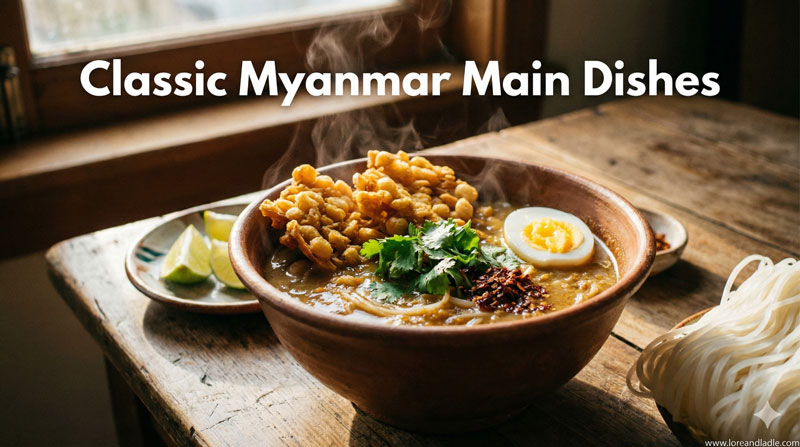
Mohinga is more than a dish; it is a rhythm of daily life and family gatherings. The broth blends fish stock with lemongrass, garlic, shallots, and a kiss of lime. Rice noodles float in the warm, fragrant soup, often crowned with crispy shallots and fresh herbs. Its humble ingredients come together with precision, creating a comforting, awakening flavor. In the United States, Mohinga is enjoyed as a nourishing main that invites slow savoring and conversation.
Nan Gyi Thoke: the satisfying noodle bowl
Nan Gyi Thoke presents a striking balance of texture and color. Thick rice noodles form a sturdy base for a saucy chicken curry, then are layered with sliced eggs, onions, and sesame oil. The dish rewards careful mixing, as the curry coats every strand for a cohesive bite. Its visual appeal—bright whites, rich yellows, and fresh greens—makes it a centerpiece on the table. In American diners and homes, Nan Gyi Thoke embodies comfort food with an elegant, contemporary twist.
Ohn No Khao Swè: coconut richness with brightness
Ohn No Khao Swè blends coconut milk with chicken, creating a creamy, fragrant broth. The dish is light enough to drink with a spoon, yet substantial enough to serve as a main. Noodles soak in the coconut-laced soup, while toppings like lime, chili, and fried onions add brightness and spark. The result is a graceful interplay between smooth richness and crisp finishing notes. This dish travels well, inviting diners to explore Burmese flavor without sacrificing comfort.
Burmese curries: chicken and beef with rice
Classic Burmese curries offer depth without heaviness. Slow simmered meat, warm spices, and tomato-backed sauces create a comforting main when served with steamed rice. The spice profiles are approachable—gentle heat, aromatic spice blends, and a touch of sweetness—yet they hold their own against bright pickles and fresh herbs. These curries reflect a cooking philosophy that honors patience, technique, and the joy of a shared meal.
Condiments, textures, and table moments
A Burmese meal often features an array of small, bright accompaniments. Crisp fried garlic or shallots add a satisfying crunch. Fresh lime wedges, sliced chilies, and cilantro brighten the plate. Pickled vegetables provide tang, while sesame seeds or fried egg contribute subtle richness. These finishing touches invite diners to tailor each bite, making every meal a personal expression of flavor and care.
Why these dishes resonate in the United States
- Accessibility: ingredients like rice noodles, coconut milk, and fresh herbs are widely available, making home cooking feasible.
- Adaptability: spice levels and toppings can be adjusted to suit varying palates while preserving the dish’s identity.
- Comfort and curiosity: the warmth of these dishes invites familiar dining practices while inviting new experiences.
- Cultural storytelling: each dish carries memories of family kitchens, markets, and seasonal rhythms, enriching the dining experience for American guests.
Exploring these dishes at home and beyond
- Start with a core recipe and build confidence with the base broth or sauce.
- Pair with simple sides such as fresh herbs, lime wedges, and light vegetables to mirror traditional balance.
- Seek authentic ingredients in specialty markets or reliable online shops to capture the true aroma and texture.
- Try a tasting night: sample Mohinga, Nan Gyi Thoke, and Ohn No Khao Swè together to compare texture and flavor sets.
A note on the beauty of Myanmar meals
Myanmar main dishes exemplify hospitality in a bowl. They invite slow enjoyment, careful preparation, and generous sharing. Each bite reveals layers of tradition, technique, and care that have been refined over generations. The dishes celebrate community, seasonality, and the skill of cooks who honor simple ingredients through thoughtful methods. By savoring these meals, diners partake in a living culinary culture that values presence, balance, and mutual appreciation at the table.