
A Warm Welcome to Classic Taiwanese Main Dishes
Welcome to a culinary journey through the collection titled “Best Classic Taiwanese Main Dishes for Family Dinners in America.” This guide celebrates dishes that nourish both body and spirit. Each main course speaks to a careful balance of savory, sweet, and aromatic notes. The textures invite conversation at the table, and the flavors invite a sense of home wherever the meal is shared. These dishes are built on fond memories of family meals, simple ingredients, and techniques passed down with care. The aim here is to honor the beauty of Taiwanese cooking and its thoughtful approach to meals that bring people together.
Cultural Value at the Family Table
Taiwanese main dishes often center on harmony. A well-planned plate blends protein, vegetables, and starch to create a complete meal in one pot or one serving bowl. This approach mirrors a culture that values balance, patience, and attention to detail. At the table, cooking becomes a form of hospitality. Small acts—marinating pork, simmering broth, or crisping vegetables—convey welcome and generosity. In America, these dishes travel well, inviting families to slow down, share dishes, and savor togetherness. The cultural value rests not just in taste, but in how a meal supports conversation, memory, and a sense of belonging around the dinner table.
Signature Dishes and Their Stories
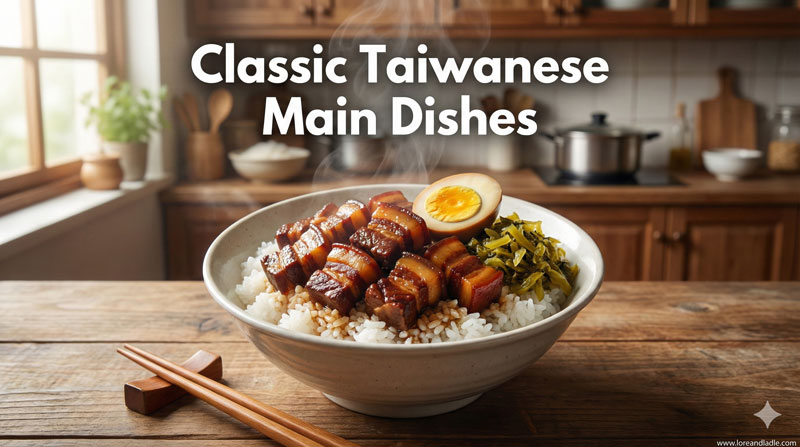
Three pillars illuminate the collection: Lu Rou Fan (Braised Pork Belly with Rice), San Bei Ji (Three-Cup Chicken), Beef Noodle Soup, and Gu Lao Rou (Sweet and Sour Pork). Lu Rou Fan marries tender pork with soy, brown sugar, and spices until the meat glistens. The dish rests on a warm bed of steaming rice, inviting the family to scoop and savor. San Bei Ji uses a trio of ingredients—soy sauce, sesame oil, and rice wine—to create a glossy, deeply fragrant chicken dish. Beef Noodle Soup offers a comforting broth, slow-simmered beef, and spring greens that invite slurps and sips between stories. Gu Lao Rou balances crispy pork with a bright tang, yielding a dish that’s both lively and satisfying. Each dish carries a story of technique, patience, and family warmth, making them enduring favorites at the American dining table.
Techniques that Shine in Taiwanese Main Dishes
Skillful technique elevates these classics. Braising slowly develops depth and tenderness in Lu Rou Fan, letting fat and meat melt into a glossy glaze. Three-Cup Chicken relies on the rhythm of a quiet simmer, allowing the aroma of garlic, ginger, and fresh herbs to bloom with each release of steam. Beef Noodle Soup depends on a rich, clear broth built from simmered bones, aromatics, and a hint of tomatoes or star anise to brighten the bowl. The Sweet and Sour Pork achieves a crisp exterior and a glossy sauce through a brief fry and a balanced glaze. Across these dishes, balance matters: sweetness is gentle, saltiness is present, and acidity keeps the flavors lively. The technique and the timing together tell a story of restraint and care.
Pairings, Textures, and Table Traditions
These main dishes thrive when paired with rice, fresh greens, and simple pickles. A plate of blanched bok choy or steamed chard adds color and a crisp counterpoint to the richness of braised pork or pork-crisp contrasts. A light cucumber salad can brighten the palate between bites of savory depth. Tea—green or oolong—accompanies the meal, refreshing the senses and completing the dining experience. The beauty lies in contrasts: tender meat against crisp vegetables, a glossy sauce against plain rice, and quiet simmering against the moment’s lively table chatter. Such pairings reaffirm how Taiwanese cooking values balance, freshness, and a sense of shared joy.
Bringing Taiwan to Family Dinners in America
In America, these dishes invite Home Cooks to adapt while preserving essence. Substitutions are natural and practical: pork cuts available locally, or chicken when needed; store-bought soy sauces and rice wines streamlined for home kitchens. Slow cookers or pressure cookers can help reproduce the gentle braise of Lu Rou Fan or the simmer of San Bei Ji. The collection encourages thoughtful planning—prepping aromatics ahead of time, then letting slow heat finish the flavor development. The result is meals that feel authentically Taiwanese in spirit, yet comfortable for family dinners in diverse kitchens. The aim is to make these classic dishes approachable, delicious, and memorable.
A Final Note on Flavor, Balance, and Hospitality
Ultimately, these Best Classic Taiwanese Main Dishes offer more than taste. They convey a cultural value of hospitality, balance, and shared delight. They celebrate the craft of cooking and the joy of gathering. Whether you’re cooking for relatives, neighbors, or new friends, these dishes help capture the beauty of Taiwanese cuisine in a way that feels welcoming and warm. May your family dinners in America be flavored with the same generosity and care that define these timeless classics.