
Best Classic Taiwanese Main Dishes Ideas Perfect for Busy Weeknights
Taiwanese cuisine shines in the way simple ingredients come alive with balance and care. The dishes that fit busy weeknights carry a quiet dignity. They show how flavor, color, and aroma can comfort a family after a long day. This collection highlights the cultural value and culinary significance of classic Taiwanese main dishes that are practical yet deeply rooted in tradition.
Cultural Value in Taiwanese Home Cooking
Taiwanese meals center on togetherness. A family gathers around a pot or a steaming bowl, sharing portions that reflect seasonality and regional preference. The kitchen becomes a place of memory, where soy, garlic, ginger, and sesame oil carry stories of farmers, markets, and small stalls. These dishes honor that heritage by using dependable methods—braising, quick stir-fry, or a gentle simmer—that fit a modern weeknight rhythm.
Tradition here embraces balance. A well-made main dish often pairs savory depths with gentle sweetness, and it often includes a green vegetable or two to bring color and freshness. The flavor is steady, not loud, so conversations can flourish while the food nourishes the body. In this way, classic Taiwanese main dishes are more than meals; they are rituals of care and welcome.
Culinary significance comes from technique as well. Braising transforms tougher cuts into tender bites, while searing in a hot wok seals flavor quickly. The use of pork, chicken, seafood, tofu, and mushrooms shows how flexible Taiwanese cooking can be. Each ingredient is respected, chosen for its texture and aroma, then married with a modest array of seasonings. The result is food that feels of the land and of home.
Core Techniques That Shape These Dishes
Three techniques anchor these weeknight-friendly dishes. First, braising or slow simmering deepens flavor and softens textures, producing comforting, rack-of-heat meals. Second, quick stir-frying in a hot wok creates bright edges and release of aroma in minutes. Third, layering ingredients—garlic first, then soy and a touch of sugar—builds a multi-dimensional taste without complicating steps. Together, these methods honor tradition while fitting busy lives.
Common pantry staples help sustain these dishes. Soy sauce provides umami and color. Rice wine adds depth without heaviness. Sesame oil lends a toasted finish. Fresh ginger and garlic wake the palate. The result is a reliable, delicious lineup that cooks quickly and travels well to the table.
Three Cup Chicken (Sanbeiji) — A Harmonious Simmer
Three Cup Chicken is a warm and fragrant classic. The method relies on equal parts soy sauce, sesame oil, and rice wine, with garlic and ginger as aromatics. The sauce reduces slowly, coating chicken pieces with a glossy, caramelized glaze. This dish embodies balance: savory depth, a hint of sweetness, and a bright fragrance that lingers. It is a staple in many homes because it scales up or down easily and invites simple greens on the side. Cultural note: families often cook this when they want comforting flavors that feel timeless and true to home cooking.
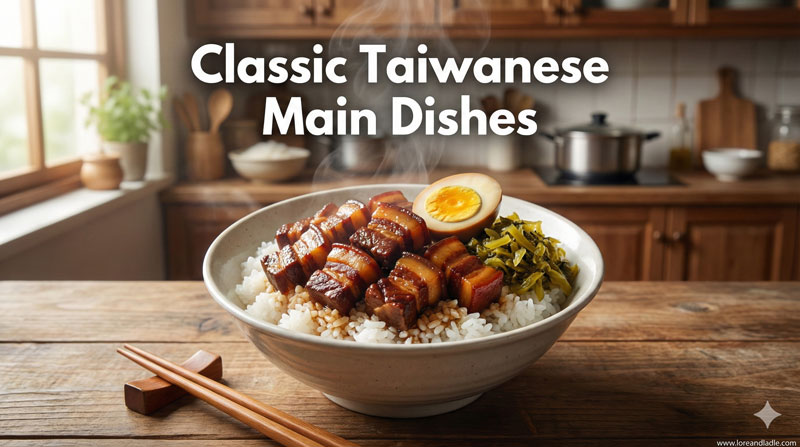
Lu Rou Fan — Braised Pork Belly Over Rice
Lu Rou Fan is a gentle masterclass in patience and flavor. Pork belly becomes velvety through slow braising in soy, sugar, and aromatics. The meat absorbs a lacquer of sauce that clings to each grain of rice. The Dish Is small-room theater in a bowl: a soft chorus of fat and umami, balanced by steamed greens. Its culinary significance lies in how it showcases everyday tenderness. It is a reminder that good meals come from steady heat, careful timing, and respect for ingredients.
Oyster Omelette — A Humble Yet Bright Favorite
The Oyster Omelette is a beloved fusion of briny seafood, egg, and starch that yields a glossy, crispy exterior and a tender interior. The dish delights with texture: crisp edges meet a mellow center, while a light sauce binds flavors together. In culture, this omelette is a bridge between market freshness and home cooking. It teaches balance between minerals from the oysters and the softness of the egg, yielding a dish that feels celebratory yet approachable on a weeknight table.
Beef Noodle Soup — Comfort in a Bowl
Beef Noodle Soup centers on a sturdy broth, tender beef, and springy noodles. The flavor builds through slow simmering, aromatics, and a touch of soy. It offers warmth and nourishment, which makes it a frequent choice for families winding down after a busy day. Culinary significance comes from its ability to bring a crowd together; everyone finds their preferred slurp, and the shared bowls become a social ritual that reinforces togetherness.
Braised Tofu with Mushrooms — Gentle and Cozy
For a lighter main that still carries depth, braised tofu with mushrooms shows how vegetarian options can be satisfyingly fragrant. The tofu soaks up soy and spice, while mushrooms add a meaty texture and earthy aroma. This dish honors plant-based versatility within Taiwanese cuisine and underscores how everyday ingredients can become comforting, heartful centerpieces during a hectic week.
Pairing and Pantry Tips for Weeknights
- Stock a small pantry with soy sauce, a mild rice wine, sesame oil, garlic, and ginger. These essentials unlock most of the weeknight dishes.
- Keep a few greens on hand—bok choy, spinach, or Chinese broccoli—that cook quickly to brighten plates.
- Use a pot of stock or a quick, pre-made broth to speed up soups without sacrificing depth.
- Plan a simple sequence: braise a protein on the stove, then fold in a quick vegetable side while noodles or rice finish cooking.
These habits help maintain the cultural essence of Taiwanese meals while making weeknights easier. The dishes remain connected to tradition through technique and flavor, yet they adapt to a modern rhythm with grace.
A Final Note on Flavor, Craft, and Family
The beauty of classic Taiwanese main dishes lies in their quiet confidence. Each dish speaks with a clear voice: flavor is grounded in simple ingredients, yet skillful technique transforms them into something memorable. These meals teach patience, balance, and respect for what is in the pantry. They invite families to gather, share stories, and savor the way food connects everyday life with culture. In short, the best classic Taiwanese weeknight dishes are not only delicious; they are daily celebrations of home, craft, and slow-simmered wisdom.