
Welcome to Best Lao Noodle Favorites for Lao Food Beginners in the U.S.
Best Lao Noodle Favorites for Lao Food Beginners in the U.S. invites you into a world where soft rice noodles meet fragrant herbs and slow-simmered broths. In Lao kitchens, noodles carry memory, craft, and welcome. This post highlights the cultural value and culinary significance of Lao noodle dishes, while offering approachable Ideas for beginners living in the United States. You will discover how these bowls reflect farming life, seasonal harvests, and patient technique.
The Cultural Heartbeat of Lao Noodles
Noodles appear at markets, family meals, and festive gatherings. They invite a sense of community and belonging. In Lao cooking, ingredients travel from field to bowl: rice, herbs, fish, and chilies. Bowls vary by home, yet share core flavors: fish sauce, lime, dill, cilantro, and warm aromatics. These dishes teach balance—salt, sour, and a gentle sweetness all working together. For beginners, Lao noodles offer a welcoming path into Southeast Asian flavors that are bright, comforting, and deeply human.
Khao Piak Sen: The Comfort in a Bowl
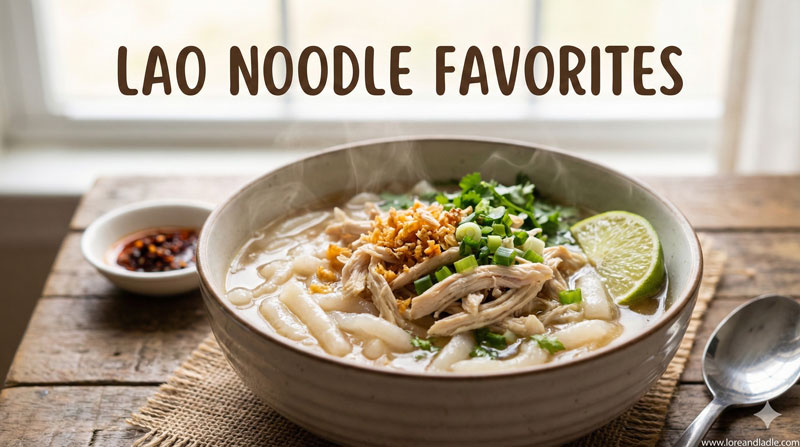
Khao Piak Sen stands as a cornerstone of Lao noodle cuisine. The broth is silky and cloud-like, often enriched with chicken or pork. Noodles drift through the soup, joined by herbs, scallions, and a drizzle of sesame or fried shallots. The act of ladling a steaming bowl becomes a moment of care—shared among family, friends, and neighbors. This dish embodies hospitality, patience, and the joy of a simple, nourishing meal that speaks to both daily life and celebrations.
Fresh Herbs, Bright Flavors, and Texture
Fresh herbs elevate Lao noodles with aroma and balance. Dill, cilantro, mint, and green onions mingle with lime and chilies for a bright finish. The crunch of fried shallots or peanuts adds texture, while the smooth noodles provide a gentle canvas. Each bite teaches restraint and harmony: a few herbs can lift the broth; a squeeze of lime can heighten the sour note. For beginners, this is where intuition and small adjustments create genuine Lao character in a bowl.
Padaek and Fermented Flavors
Padaek is a traditional Lao fermented fish sauce that adds depth, smokiness, and a touch of salt. It is used sparingly, often as a finishing note or in a light simmer. For newcomers, padaek offers a gateway to a distinctive Southeast Asian savor. If per chance padaek isn’t on hand, a small amount of fish sauce with a touch of umami-rich seasoning can echo its effect without overpowering the dish. The key is balance and patience as flavors unfold.
Making Lao Noodle Dishes in the United States
In the United States, you can find rice noodles, fresh herbs, and natural seasonings at many Asian markets. Specialty Lao or Thai markets are ideal, but broader Asian grocers also provide essentials. If a traditional ingredient isn’t available, you can substitute with thoughtful equivalents—rice noodles for texture, fresh herbs for brightness, and a light touch of fish sauce to preserve the savory backbone. The goal is to preserve the spirit of Lao noodles while making them approachable in home kitchens.
A Simple Tasting Path for Beginners
Start with Khao Piak Sen to feel the soul of Lao noodles. Next, try a noodle bowl that highlights fresh herbs and lime. Then explore a version with padaek for depth, using it sparingly at first. Finally, finish with a light, herb-forward bowl to savor the balance. Taste in stages: broth first, then noodles, then herbs. This sequence helps you appreciate how each element shapes the whole dish.
Closing Thought: Food as Culture and Welcome
These Lao noodle favorites illuminate how food carries culture through everyday meals and shared tables. They celebrate careful technique, seasonal ingredients, and generous hospitality. For beginners in the United States, Lao noodles offer a graceful invitation to explore aroma, texture, and balance. With curiosity, you can savor a cultural practice that is warm, precise, and endlessly inviting. Enjoy the journey, one comforting bowl at a time.