
Introduction
Welcome to a gentle exploration of Best Lao Rice & Sticky Rice Dishes for Lao Food Beginners in the U.S. This guide invites you to savor the cultural harmony found in Lao rice traditions. You will discover how rice stitching together daily meals creates a warm, inviting table. You will also learn how sticky rice, herbs, and balanced flavors tell a story of care, craft, and shared meals. The focus here is culinary value, texture, aroma, and the way a simple bowl of rice can anchor a whole meal.
The Central Role of Rice in Lao Culture
Rice is more than food in Lao lands. It is daily life. It marks meals, gatherings, and celebrations. Sticky rice, or khao niaow, is especially beloved. It is cooked to a glossy, tender texture that holds its shape when picked up with the fingers. This rice invites a hands-on approach to eating, which many Lao people appreciate as a tactile, communal experience. The rice itself becomes a canvas for bright herbs, zesty dips, and savory bites.
In Lao cooking, many dishes start with a small bowl of sticky rice. From there, flavors expand. A simple bite pairs the rice with a fresh herb salad, a chili-lime dip, or a gently steamed fish. The result is a meal that feels balanced and grounded. The rice teaches patience in preparation and mindfulness in sharing. It remains a steady thread that connects cooks with tradition, season, and seasonality.
Core Sticky Rice Dishes for Beginners
-
Khao Niao (Sticky Rice) on its own: Start with the basics. Ripe, warm sticky rice offers a delicate sweetness and a cushion for other flavors. The texture is soft yet slightly chewy. Shape a palm-sized portion, pinch off a bite, and enjoy its quiet silkiness.
-
Sticky rice with jeow (Dips): Jeow is a family of fresh chili-based dips, often bright with herbs and lime. Pair sticky rice with jeow to awaken the palate. The contrast between cool rice and spicy dip creates a memorable balance. Begin with a mild jeow and build toward bolder flavors as you grow comfortable.
-
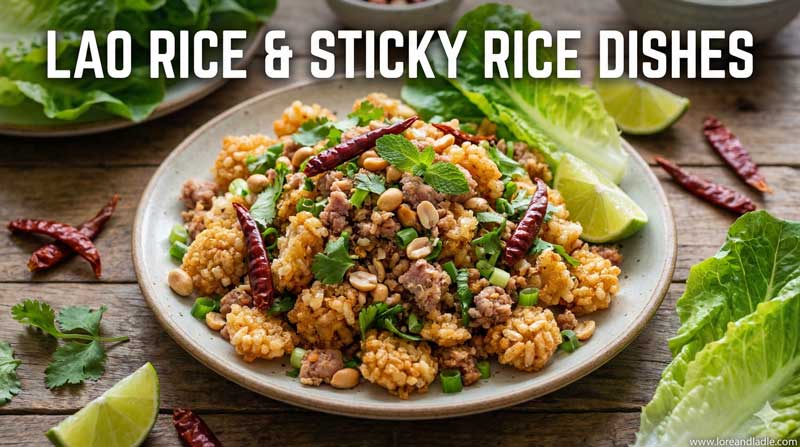
Larb with sticky rice: Larb is a minced meat salad brightened with lime, herbs, and sometimes mint or cilantro. Serve it alongside sticky rice. The rice helps temper the heat and adds a gentle sweetness that rounds out the salad’s tang.
-
Mok Pa with sticky rice: Mok Pa is steamed fish wrapped in banana leaf with fragrant herbs. It showcases Lao aromas and gentle buoyant textures. A small portion of sticky rice complements the fish and herbs beautifully, making a harmonious plate.
-
Lao sausage (Sai Oua) with sticky rice: Sai Oua offers a savory, peppery bite that pairs well with the soft starch of sticky rice. A simple slice and a bite of rice can feel comforting and festive at once.
-
Tam Mak Hoong (Spicy Green Papaya Salad) with sticky rice: This salad brings crunch, herbs, and a lively heat. When served with sticky rice, it becomes a bright, refreshing pairing that cleanly follows the richness of meat or fish on the plate.
-
Optional greens and herbs: Fresh herbs, cucumber, and herbs like dill or cilantro can brighten any Lao rice dish. A little crunch from fresh vegetables adds balance and color.
Each of these combinations highlights how rice supports a spectrum of textures and flavors. The dishes emphasize harmony: heat, sour, salty, and sweet all present in careful balance. This balance is a cornerstone of Lao culinary approach.
How Rice Shapes Flavors: Dips, Salads, and Proteins
Rice acts as the stage where flavors meet. A hot, fluffy bed of sticky rice invites a generous scoop of larb or a spoonful of jeow. The result is a bite that feels complete. The rice’s mild sweetness allows chilies, lime, and herbs to shine without being overwhelmed. In this way, rice becomes a versatile partner in every dish.
Herbs play a crucial supporting role. Fresh mint, cilantro, Thai basil, and scallions add aroma and brightness. They lift the dish and create a lively finish. The combination of rice, herbs, and a bold dip or salad captures the essence of Lao cooking: fresh, balanced, and deeply comforting.
Dishes like mok pa or sai oua demonstrate how cooking methods and seasonings can elevate rice. The steam, banana leaf aroma, and gentle fish flavors mingle with the rice’s texture. The result is a cohesive plate where each element celebrates the others.
Techniques for Perfect Khao Niao at Home
-
Soak and rinse: Rinse the glutinous rice once or twice to remove surface starch. Soak it for several hours, ideally overnight. Soaking helps the grains absorb water evenly and cook to the right tenderness.
-
Steam with care: Steam the rice in a sturdy basket or lined steamer. Keep the heat steady. Steam until the grains are glossy and sticky but not mushy.
-
Rest and fluff: Let the rice rest briefly after steaming. Gently fluff with a broad spoon or paddle. This keeps the grains separate and glossy.
-
Serve warm: Sticky rice is best when warm. Keep a small cloth nearby to cover and keep it soft while you finish the rest of the meal.
-
Storage tips: Store leftover sticky rice in a covered container in the refrigerator. Reheat gently with a light splash of water to restore moisture.
-
Subtle adjustments: If your rice feels too sticky, reduce the soaking time a bit. If it’s a touch dry, add a splash of hot water and re-steam briefly.
These steps help beginners produce consistent, satisfying khao niaow that truly expresses Lao culinary craft.
Sourcing and Substitutions in the U.S.
In the United States, you can find glutinous rice (sweet rice) at many Asian markets or online. Look for varieties labeled “glutinous” or “sticky rice.” If you cannot locate a true glutinous rice, you can still explore Lao flavors with high-quality jasmine or short-grain rice for certain pairings. However, for the classic sticky texture, glutinous rice is the best choice.
Tips for shopping and cooking:
– Check the bag for aroma and grain appearance. Quality sticky rice looks slightly opaque and clean.
– Store rice in a cool, dry place to keep it fresh.
– When soaking, use clean water and a wide bowl to give grains room to expand.
– If you are new to Lao flavors, start with milder jeow and gradually try more peppers and citrus notes.
This approach helps you enjoy Lao rice dishes with confidence and curiosity, even when you are cooking far from the Lao home region.
Final Thoughts: Embracing Lao Rice with Warmth
The best Lao rice dishes invite you to slow down a little. They celebrate the texture of sticky rice, the brightness of herbs, and the warmth of shared meals. Whether you begin with a simple bowl of khao niaow or a complete plate of larb with rice, the experience is about more than eating. It is a quiet ceremony of care, skill, and cultural expression.
As you explore Best Lao Rice & Sticky Rice Dishes for Lao Food Beginners in the U.S., you will find that rice becomes a bridge. It links technique to taste, tradition to today, and home to a broader table of friends and family. Start with the essentials, savor the balance, and let the flavors guide you toward new Lao dishes with confidence and delight.