
Best Takeout-Inspired Lao Seafood Specials to Recreate in the U.S.
Cultural Value of Lao Seafood
Lao seafood cooking centers on bright balance, fresh ingredients, and warm hospitality. In Lao kitchens, fish and river herbs guide the day, from markets to family meals. The dishes honor the river’s bounty while inviting friends and neighbors to share. You will notice a calm rhythm in the food: crisp textures, vibrant herbs, and a chorus of citrus, heat, and salt. This harmony reflects a philosophy that every meal should feel alive, generous, and complete.
Takeout-inspired Lao seafood specials bring this philosophy into home kitchens. They translate the restaurant or street-style experience into something you can recreate with care, precision, and heart. The result is not just a tasty plate but a moment of cultural exchange. A well-made Lao seafood dish invites you to slow down, enjoy balance, and savor the interplay of textures and aromas. It also celebrates skill passed down through generations—how a simple fish becomes a memory shared around a table.
Core Flavors and Techniques
Lao seafood flavors lean on four anchors: bright acidity, savory depth, gentle sweetness, and a touch of heat. Lime juice or tamarind adds sour lift. Fish sauce contributes salt and depth. Chilies deliver warmth, while garlic and shallots provide aromatic richness. Fresh herbs—mint, cilantro, dill, and lemongrass—shine and brighten every bite. Jeow, a family of dipping sauces, ties the dish to the table with a sharp, glossy finish.
Techniques emphasize aroma and tenderness. Steaming in banana leaves seals flavor and keeps the fish moist. Spices and herbs are folded in for a fresh, herb-forward profile. Grilling concentrates natural sweetness and creates a subtle char. Minced fish dishes, like laab, rely on texture and a quick, bright dressing to wake the palate. Taken together, these methods produce seafood that feels both light on the tongue and satisfying to the senses.
Signature Dishes to Recreate at Home
Here are four takeout-inspired Lao seafood specials you can recreate with accessible ingredients and smart home kitchen steps.
-
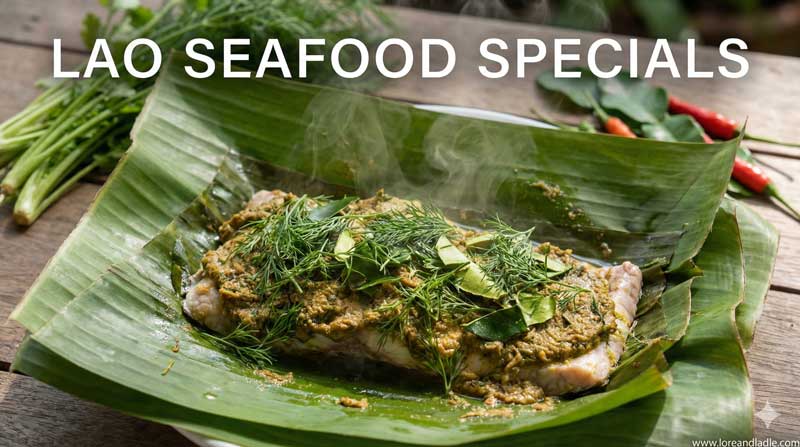
Mok Pa: Banana Leaf Steamed Fish with Herbs. Choose a firm white fish and marinate with fish sauce, lime juice, garlic, and shallots. Pack with lemongrass and dill, wrap in banana leaf (or parchment if needed), and steam until just cooked. Serve with sticky rice and a crisp jeow dipping sauce. The steam and leaf wrap perfume the fish, delivering a restaurant-like aroma at Home.
-
Larb Pla Duk (Fish Laab): Minced fish tossed with lime juice, fish sauce, chilies, and shallots. Fold in fresh mint and cilantro, plus toasted rice powder for texture. Serve on lettuce cups with herbs and a side of sticky rice. This dish celebrates herbaceous brightness and a clean, lively mouthfeel.
-
Tom Yum Pla Lao Style: A bright, sour-spicy fish soup. Simmer a broth with lemongrass, kaffir lime leaves, galangal, chilies, and mushrooms. Add slices of fish and finish with lime juice and fish sauce to balance. This dish offers a comforting, fragrant bowl that pairs well with rice and a quick platter of fresh herbs.
-
Grilled Lemongrass Fish with Jeow Dip: Marinate fillets in a mixture of lemongrass, garlic, chilies, and lime zest. Grill to a light char and serve with a zesty jeow-style dipping sauce that combines lime juice, fish sauce, garlic, and chili. This dish travels well as a centerpiece for a casual takeout-inspired meal at home.
Practical Tips for the U.S. Kitchen
You can capture Lao seafood flair even if you don’t have a Lao market nearby. Start with fresh or well-frozen fish, mint, cilantro, dill, lemongrass, lime, and a reliable fish sauce. If banana leaves are hard to find, use parchment paper as a substitute for steaming. A steamer basket or a covered pan works well, too.
For texture and ease, prepare a small batch of jeow or dipping sauce in advance. It will brighten every dish and connect the flavors across courses. If you cannot find certain herbs, substitute with similar greens: Thai basil or cilantro can carry the aromatic lift. Keep chili scales adjustable, adding heat gradually so the dish remains balanced.
Serve these dishes with sticky rice or jasmine rice, plus a simple cucumber and herb salad for freshness. The aim is to create a table that feels generous and inviting, with clear, vivid flavors that echo Lao culinary values.
Sourcing and Substitutions
When shopping, look for fresh fish options such as snapper, grouper, tilapia, or catfish. If you prefer shellfish, shrimp works beautifully in laab or grilled preparations. For sauces and dressings, fish sauce, lime juice, and chili paste bring essential depth and brightness. If lemongrass is scarce, substitute with a small amount of lemon zest plus a pinch of zest from another citrus, and rely more on lime juice for the signature zing.
Herbs form the heart of Lao flavor. If dill or mint isn’t available, cilantro and Thai basil provide bright, aromatic alternatives. Toasted rice powder adds texture to laab and similar preparations; you can make a small batch by dry-roasting sticky rice until fragrant, then grinding it coarsely.
A Final Word on Hospitality and Flavor
These Lao seafood dishes are more than recipes. They are invitations—an easy way to share careful flavors, celebrate the river’s bounty, and honor traditional techniques. Recreating them in the U.S. lets friends and Family experience a culture through scent, sound, and taste. With thoughtful sourcing, steady technique, and a light hand with heat and acidity, you can create a takeout-inspired Lao seafood feast that feels fresh, respectful, and deeply satisfying. Each bite reveals the beauty of Lao culinary culture: balance, generosity, and a love of good food shared aloud.