
Introduction
The dish titled Best Myanmar Salads & Tea Leaf Dishes for Sharing with Friends is a celebration of togetherness. It invites everyone to the table to savor bright flavors, varied textures, and the bright energy of Burmese hospitality. This collection is not just about food; it is about how food helps people connect. Each bite carries a note of local markets, home kitchens, and community gatherings. The result is a vibrant platter that feels both comforting and adventurous. The aim is clear: to show how Myanmar’s salads and tea leaf dishes shine when shared with friends.
The spirit of sharing in Myanmar food culture
Myanmar meals often center on sharing. A table is arranged with small bowls, inviting guests to mix and mingle flavors. Fresh herbs, crunchy toppings, tangy dressings, and a touch of spice come together in a friendly rhythm. The practice is simple: grab a fork or chopstick, pass the bowl, and add your own balance of sour, salty, sweet, and bitter. This approach makes food more than sustenance; it becomes a way to tell stories, celebrate neighbors, and welcome guests. In this context, the best salads and tea leaf dishes act as a bridge between generations and tastes. They are easy to adapt for gatherings, yet they carry deep meaning about sharing, care, and communal joy.
A tour of key dishes: salads and tea leaf specialties
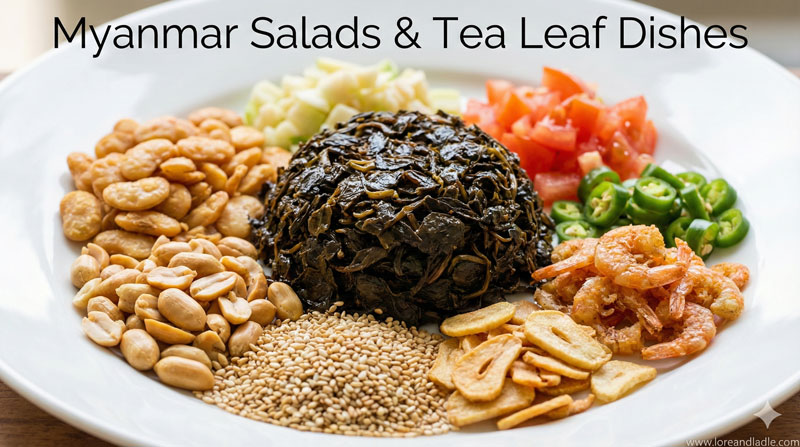
At the center of this collection is lahpet, the beloved tea leaf dish. Lahpet Thoke blends fermented tea leaves with a lively mix of ingredients: crunch from nuts and seeds, bright acidity from lime or lemon, a touch of sweetness, and a gentle heat from chili. Dried shrimp or a crisp fried garlic note often join the mix, giving depth and a savory aroma. The result is a salad that invites you to taste and then explore each layer, from the tea leaf base to the final sprinkle of fresh herbs.
Beyond lahpet, the set explores a range of fresh Burmese salads that complement the tea leaf centerpiece. Think of crisp cabbage or lettuce as a canvas, tossed with herbs like cilantro and mint, and finished with sesame, peanuts, or toasted chickpeas for a satisfying crunch. Bright vegetables—tomatoes, cucumber, or shredded carrot—offer color and juiciness, while citrus or tamarind dressings bring a bright lift. These salads emphasize balance: sour, salty, and nutty notes mingle with delicate greens and herbs to create refreshing, crowd-friendly dishes.
To highlight texture, the collection often features toppings that add crunch: roasted sesame seeds, crushed peanuts, or crisp fried onions. This attention to texture makes the dishes engaging from first glance to last bite. The result is a menu that feels both homely and refined, suitable for a casual gathering or a more prepared celebration with friends.
The harmony of flavors and textures
A key strength of Best Myanmar Salads & Tea Leaf Dishes for Sharing with Friends is how it blends contrasts. The slight bitterness of tea leaves can meet the brightness of lime juice. Nutty sesame and peanut characters provide warmth beside fresh herbs that lift every bite. Spices offer gentle flames that come and go, never overwhelming the palate. This choreography of flavors—savory, sour, sweet, and salty—creates a sensorial journey that feels balanced and elevating.
Texturally, the mix moves from crisp and crunchy to soft and succulent. The crisp bite of cabbage and herbs contrasts with the tender, marinated greens and the smooth, creamy notes from certain dressings. This textural variety keeps a shared meal lively and satisfying, encouraging guests to sample, compare, and discuss flavors as the dishes pass around the table.
Culturally, the dishes honor a principle of hospitality: take care with the ingredients, present them thoughtfully, and invite everyone to contribute. When friends gather, each person can add a personal touch—extra lime, a handful of sesame, or an extra dash of chili—making the experience uniquely collaborative. This collective artistry is a hallmark of Myanmar’s eating experience and a gentle reminder that food is best shared.
How to prepare for a gathering
Hosting this kind of spread is about planning with warmth and practicality. Begin with a bright centerpiece platter that features lahpet as the star, surrounded by complementary salads. Offer a few light dressings on the side so guests can adjust flavors to their liking. Keep bowls, spoons, and small tails of herbs ready for Easy garnishing.
Practical tips to enhance the experience:
– Set out a variety of fresh herbs for guests to sprinkle on their plates.
– Provide toasted nuts or seeds in small bowls for quick crunch additions.
– Offer lime wedges or tamarind paste so guests can tailor tanginess.
– Create a simple tea station with hot water, a couple of green or black teas, and a few citrus slices to echo the dish’s brightness.
– Use shallow platters to encourage easy sharing and easy conversation about the flavors.
The goal is a relaxed, welcoming table where everyone feels comfortable trying a little of everything. Preparation can begin a few hours ahead, with lahpet kept fresh in a cool area and salads dressed just before serving to maintain crispness.
Etiquette and storytelling for respectful enjoyment
As guests gather, a gentle rhythm of conversation enhances the tasting experience. Encourage people to share what flavors stand out and which textures surprise them. Simple rituals—passing bowls clockwise, offering a fresh herb sprig to the next person, or describing a favorite bite—help create a warm, inclusive mood.
Storytelling can also elevate the meal. A short note about a market visit, a grandmother’s kitchen technique, or a local herb’s aroma adds depth without demanding long explanations. Keep the mood light and curious, and invite questions about ingredients or methods. The dish set becomes a doorway to curiosity and connection, reminding everyone that food is a shared journey.
A respectful closer: celebrating beauty and culinary value
Best Myanmar Salads & Tea Leaf Dishes for Sharing with Friends is more than a tasting collection. It is a small, vibrant tradition that honors ingredients, technique, and community. The dishes celebrate the beauty of fresh produce, the warmth of a shared table, and the joy of conversation sparked by flavor. When friends gather around this kind of feast, they don’t just eat; they learn, they connect, and they smile together. True to its spirit, the dish invites you to savor, share, and remember that meals are happiest when enjoyed with others.