
Welcome to the Best Taiwanese Desserts And Sweet Treats Ideas Perfect for Busy Weeknights
This post introduces the Best Taiwanese Desserts And Sweet Treats Ideas Perfect for Busy Weeknights. It explores how these desserts carry cultural meaning and culinary craft. The focus stays on flavor, technique, and the joy of sharing sweets after a day’s work. You will find a gentle journey through textures, ingredients, and the everyday use of these treats in Taiwan’s food culture. The tone is warm, inviting, and respectful of tradition.
The Core of Taiwanese Desserts: Texture, Balance, and Seasonal Feeling
Taiwanese desserts celebrate balance. Sweetness meets lightness, creaminess meets chew, and warm notes accompany cool textures. Silky douhua, bright fruity syrups, and chewy taro or sesame treats all tell a story of local harvests and a careful kitchen. In busy weeknights, the appeal lies in simple preparation that yields comforting results. The cultural value shows in the way desserts are layered with toppings, shared with family, and enjoyed as a mindful end to a busy day.
Aiyu Jelly and Grass Jelly: Refreshing Reflections of Summer
Aiyu jelly comes from fig seeds and brings a cool, jelly texture that refreshes on hot evenings. Grass jelly offers a gentle, herbaceous bite. Both are usually served with a splash of citrus, honey, or syrup. Their popularity reflects a tradition of balancing cooling foods with bright flavors. They invite a moment of respite and conversation after a long day, making them ideal for weeknights.
Mango Shaved Ice and Mango Sago: Bright, Fruit-Forward Treasures
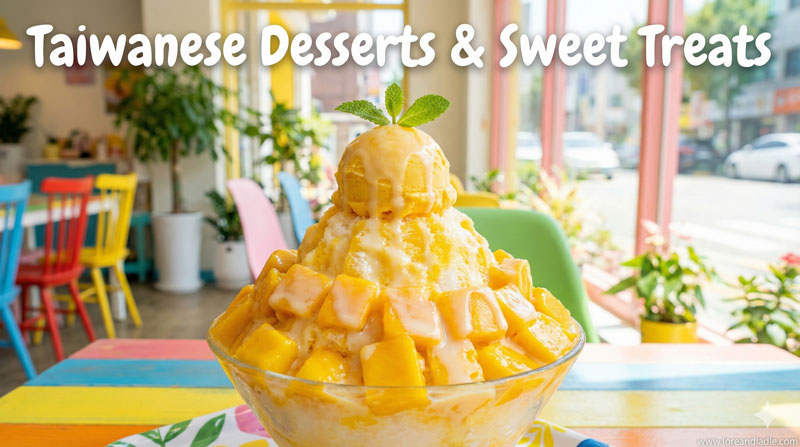
Mango shaved ice is a celebration of fresh fruit and light sweetness. The snow-like ice carries tender mango chunks on top. Mango sago blends chewy tapioca pearls with mango and coconut milk. These options highlight Taiwan’s access to delicious mangoes during peak season. They embody generosity, seasonal respect, and shared pleasure, which are central to Taiwanese dessert culture.
Douhua, Toppings, and Everyday Comfort
Douhua is a silky tofu pudding that can become a small ceremony of choice. It is often served with toppings such as red beans, mung beans, peanuts, or a hint of syrup. The beauty lies in its adaptability: a plain bowl can become a personalized treat with a few toppings. This flexibility mirrors the culture’s love for careful balance and honest ingredients.
Taro Balls, Sesame Desserts, and Chewy Joy
Taro balls are chewy morsels made from taro and starch. They appear in warm sweet soups or cooled bowls. Sesame desserts bring a toasty, nutty depth that grounds sweeter notes. These treats showcase how root vegetables, grains, and seeds are crafted into comforting sweets. The result is a deeply comforting texture that resonates with family meals and shared desserts.
Quick Assembly for Busy Weeknights: Practical and Respectful
For busy weeknights, these desserts can be prepared with minimal fuss. Use ready-made taro balls or mochi, keep a can of coconut milk, and set out a few toppings. Layering a few ingredients creates a satisfying dessert in minutes. The approach respects the culture’s love for simple, well-balanced flavors.
Night Markets, Tea, and Community: A Living Food Culture
Taiwanese desserts are often part of night markets, family gatherings, and tea culture. They are shared with friends and welcomed guests. The act of offering a bowl or a cup expresses hospitality and care. This social dimension is a timeless part of dessert meaning in Taiwan.
Seasonal Emphasis and Sourcing: Freshness Matters
Seasonality shapes these sweets. Fresh mangoes in summer, ripe beans and herbs in other seasons guide the flavor choices. Good ingredients elevate even quick preparations. The cultural value here is clear: respect the land, celebrate the harvest, and savor what is at hand.
A Gentle Conclusion: Beauty in Everyday Sweets
The Best Taiwanese Desserts And Sweet Treats Ideas Perfect for Busy Weeknights reveal a cuisine that values texture, balance, and communal joy. They are accessible, comforting, and deeply cultural. By enjoying these desserts, you participate in a long-standing tradition of hospitality, seasonal celebration, and careful craft.