
Introduction: A Bright Window into Taiwan’s Sweet Traditions
Taiwan’s desserts invite the senses to pause and savor. They blend bright fruit, creamy textures, and careful balance. This guide highlights the best Taiwanese desserts and sweet treats that have won fans across the United States. It shines a light on cultural value, culinary craft, and the happy moments these dishes create. Each bite tells a story of hospitality, seasonality, and shared joy.
Cultural Value and Culinary Significance
Desserts in Taiwan celebrate daily life and family gatherings. Chefs and Home Cooks honor seasonal produce, local ingredients, and time‑honored methods. The dishes often pair well with tea, a daily ritual that encourages conversation and calm. The textures are deliberate: chewy taro balls, silky tofu pudding, crisp pastries, and cool jellies. These desserts invite all ages to gather, taste, and remember. In cafés and markets across the U.S., these treats become welcoming bridges to Taiwanese flavors.
Pineapple Cake: A Symbol of Hospitality
Pineapple cake offers a buttery crust crowned with a smooth pineapple jam. The balance is gentle: a warm crumb with bright fruit filling. It travels well, making it a popular gift and a friendly outdoor snack. In Taiwan, sharing pineapple cake signals warmth and good cheer. in the United States, bakeries feature it in gift boxes and café cases. The dessert remains both familiar and novel, inviting curious tasters to linger over the aroma and texture.
Sun Cake: Flaky Charm From Taichung
Sun cake is a crisp, pale pastry with a maltose filling that glows golden when baked. The outer layers melt in the mouth, while the interior stays subtly sweet. Taichung, a city known for this treat, gives it a sense of place and pride. Tea pairs beautifully with sun cake, heightening the malt sweetness. Across the U.S., sun cake speaks to travelers and tea lovers alike. Its light, crumbly bite makes it approachable at any gathering.
Douhua: Silky Comfort in Syrup
Douhua is a silky tofu pudding that feels cloudlike on the tongue. It can be served warm with ginger or sweet syrup, or cold with syrup and toppings. Common toppings include crushed peanuts, sesame seeds, or a drizzle of brown sugar. The dish offers gentle richness rather than heaviness. It fits as a breakfast indulgence, a dessert, or a comforting finish after a meal. In many American dessert shops, douhua bottles or cups invite a quiet moment of sweetness.
Grass Jelly: Cooling Refreshment
Grass jelly delivers a cooling, herbal note that softens the palate. It is usually served in small cubes with syrup, fruit, or milk. The flavor is light, the texture slightly wobbly, the experience refreshing. In hot weather, grass jelly becomes a beloved cool-down treat. In U.S. cafés, you may find it as a topping for desserts or as a standalone cup. The versatility makes it a staple in many Taiwanese‑style desserts.
Mango Shaved Ice: Bright Summer Joy
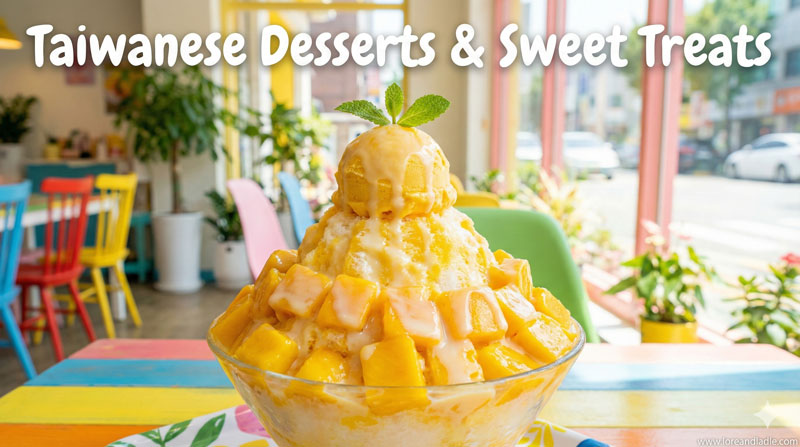
Mango shaved ice is a bright, sunny bowl of joy. Fresh mango chunks crown a mound of finely shaved ice. A drizzle of condensed milk or a sugar syrup completes the experience. The dish shines in mango season and resonates with fans of refreshing sweets. It travels well in bowls or cups at pop‑ups and dessert shops. The result is a playful, satisfying end to a warm day.
Taro Balls in Shaved Ice: Chewy Delights
Taro balls are chewy morsels built from taro and starch. They are often purple, a signature visual cue. Served over shaved ice or with sweet milk tea, they bring texture and substance. The combination of chewiness and cold sweetness delights many palates. In the United States, chefs fold taro balls into dessert bowls and bubble tea menus. This harmony of flavors and textures is a hallmark of Taiwanese dessert design.
Across American Tables: How These Treats Travel
These desserts travel through bakeries, cafés, and home kitchens across the United States. They adapt to local ingredients while retaining core flavors. American cooks discover new techniques by watching skilled Taiwan‑born pastry chefs and home bakers. The result is a growing, welcoming scene where friends share plates of pineapple cake or mango shaved ice. The cultural value remains strong: food as a simple, joyful bridge between people.
Quick Tips for Home Cooks: Recreating Taiwanese Desserts at Home
- Pineapple cake: Use a buttery shortcrust pastry and a bright pineapple jam. Cook the jam slowly until it coats a spoon. Chill before filling and shaping.
- Sun cake: Look for maltose or honey to mimic the filling. Keep the crust flaky but not too thick.
- Douhua: Use silken tofu or soft tofu. Serve with a light syrup and toppings like peanuts or sesame for variety.
- Grass jelly: Buy ready-to-use grass jelly cubes or make a simple herbal jelly. Add syrup or milk for balance.
- Mango shaved ice: Shave ice finely, layer with fresh mango, and top with condensed milk. Finish with a mint leaf if available.
- Taro balls: Mix taro with a touch of sugar and starch until smooth. Roll into balls, boil until just firm, then cool in syrup or in shaved ice.
Conclusion: A Shared, Gentle Celebration of Flavor
Taiwanese desserts offer more than sweetness. They express care, technique, and a love of seasonal ingredients. In the United States, these treats invite new friends to explore a warm culinary culture. They are not only foods to eat, but stories to share. By enjoying them, we celebrate craft, community, and the quiet joy of a well-made dessert.