
Introducing the Best Classic Taiwanese Main Dishes Recipes for Taiwanese Food Lovers in America
This collection centers on the heart of Taiwan’s home cooking. It honors the everyday meals that flavor family time, market visits, and joyful gatherings. The Best Classic Taiwanese Main Dishes Recipes for Taiwanese Food Lovers in America showcases dishes that are both familiar and comforting. It invites readers to explore a living tradition baked into every pot and pan. The result is a clear, delicious map of Taiwanese culinary culture for kitchens across America.
What makes these main dishes so meaningful
Taiwan’s meals are built on balance and brightness. Umami comes from soy, mushroom, and carefully braised ingredients. Sweetness and saltiness weave together with a gentle heat. Fresh vegetables, tender meats, and aromatic herbs sing in harmony. These qualities are not just flavors; they reflect a mindset of nourishment, sharing, and care. In America, where many kitchens welcome new flavors, these dishes offer a direct line to Taiwan’s pantry and its seasonal heart. The collection celebrates that bridge—honoring tradition while inviting modern Home Cooks to participate.
Core techniques that carry cultural flavor
At the center of classic Taiwanese main dishes you’ll find patient braising, precise wok work, and careful seasoning. Braising transforms pork, beef, and tofu into silky, deeply flavored morsels. Soy sauce, star anise, garlic, and ginger add warmth and depth. Stir-frying with a hot wok releases “wok hei,” a fragrant shimmer that signals skill and fresh ingredients. These methods create textures that linger—creamy pork, yielding noodles, crisp-tender greens. The techniques are approachable, yet they connect cooks to a long lineage of home kitchens and neighborhood eateries.
A guided look at representative recipes in the collection
-
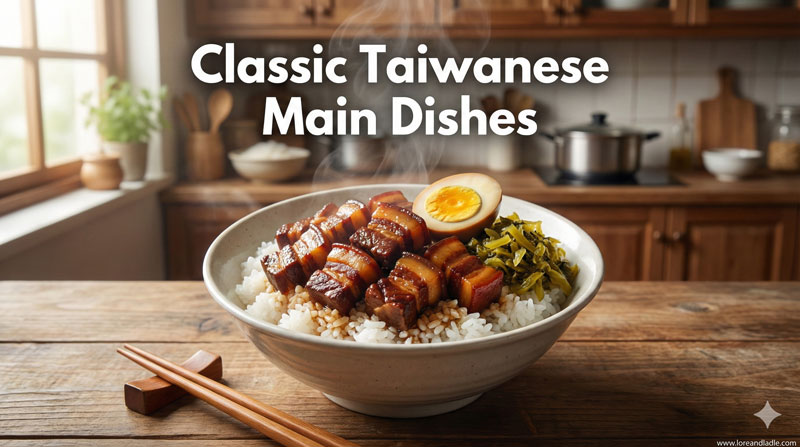
Lu Rou Fan (Braised Pork Belly with Rice) — This dish centers on a glossy sauce and tender pork. It is a daily comfort in many Taiwanese homes. The meat’s melt-in-your-mouth texture sits on top of steaming rice, creating a simple, satisfying meal. Its cultural value lies in the way it brings families together around a shared pot and a common bowl of rice.
-
Beef Noodle Soup (Niu Rou Mian) — A soulful bowl that balances beef, broth, and noodles. Each sip carries the aroma of spices and long-simmered meat. The dish honors patience and precision, two hallmarks of traditional cooking. In America, it becomes a warm invitation to explore Taiwanese flavor with a comforting, restaurant-quality finish at home.
-
Three Cup Chicken (San Bei Ji) — A fragrant dish that relies on a trio of ingredients: soy, rice wine, and sesame oil. The name hints at the total amount of each element used, yet the balance is what matters: a rich, aromatic sauce that clings to tender chicken and absorbs into rice when served with it. This recipe highlights the beauty of reduced sauces and careful timing.
-
Oyster Omelette (Hai Liu Jian) — A beloved main-dish favorite in many night markets. The eggs, starch, and briny oysters come together with crisp edges and a soft center. Its texture contrasts and bright flavors capture the playful, social side of Taiwan’s food culture. When enjoyed in America, it evokes memories of lively stalls and family meals.
How to approach these recipes in American kitchens
These dishes were designed for home cooks with accessible ingredients. When needed, substitutions respect the spirit of the original. For example, pork belly offers the traditional richness in Lu Rou Fan, but leaner cuts can still deliver a satisfying finish. In Beef Noodle Soup, store-bought broth can be enriched with spices, garlic, and aromatics to mimic a slow simmer. Three Cup Chicken welcomes substitutions for sesame oil and soy to suit your pantry. Oyster Omelette adapts with common shellfish substitutes or vegetarian options without losing its character.
The key is to keep the technique steady. Slow braising, careful heat, and the layering of flavors create the depth these dishes are known for. As you cook, taste, adjust, and savor the evolving sauce. This approach ensures the final plate reflects both tradition and personal touch.
Celebrating cultural value through shared meals
The Best Classic Taiwanese Main Dishes Recipes for Taiwanese Food Lovers in America centers on gatherings, not just ingredients. Each dish asks for a table where stories and smiles travel with the steam rising from a hot pot or a fragrant skillet. By preparing these recipes, you participate in a culinary conversation that spans generations. The act of cooking becomes a way to honor family, friends, and neighbors who share meals. The result is not only nourishment but also a memory-making ritual that enriches American kitchens with Taiwanese warmth.
Practical tips for pantry and planning
- Build a small, adaptable pantry: soy sauce, rice wine or dry sherry, sugar, five-spice powder or star anise, garlic, ginger, and a good stock or bouillon base. These essentials support multiple dishes in the collection.
- Fresh greens, mushrooms, and scallions brighten dishes and add texture. Seasonal vegetables keep flavors bright and costs reasonable.
- Plan a multi-dish meal to experience the full range of flavors. A broth-based noodle dish can be followed by a braised pork plate, then a savory omelette. This progression mirrors a traditional table, where courses flow and flavors evolve.
The cultural value of Taiwanese main dishes in America
These recipes carry a sense of home, craftsmanship, and seasonal awareness. They teach patience through long braises, precision in timing, and respect for ingredients. They also encourage social dining—sharing bowls, noodles, and comforting sauces with friends and family. In America, the collection becomes a bridge to Taiwan’s cooking heritage, inviting cooks to explore, learn, and showcase a refined, approachable style of home cooking.
How to read and use the collection effectively
- Start with a favorite base: Lu Rou Fan or Beef Noodle Soup. Master the technique, then expand to Three Cup Chicken or Oyster Omelette.
- Note the balance of flavors in each dish. You’ll often encounter a mix of sweet, salty, and savory that defines Taiwanese meals.
- Use the same kitchen tools for multiple recipes. A sturdy wok, a heavy-bottomed pot, and a sharp knife are your best friends here.
- Taste as you go. Small adjustments help you tune the dish to your pantry and preference while preserving the dish’s core character.
Final thoughts: embracing beauty and culinary significance
This collection invites you to see Taiwanese main dishes as living art. The flavors, textures, and aromas come together to celebrate care, craft, and community. In American kitchens, these dishes offer a warm invitation to explore a cuisine that values balance, patience, and shared meals. The Best Classic Taiwanese Main Dishes Recipes for Taiwanese Food Lovers in America stands as a respectful tribute to these traditions, inviting every cook to savor the beauty of Taiwan’s culinary landscape while making it their own.