
Best Classic Taiwanese Main Dishes Favorites to Try in the U.S.
Taiwanese cuisine offers a warm invitation to the senses. The best classic main dishes bring balance, depth, and a sense of home to every bite. This guide highlights culinary significance and cultural value, showing how these dishes find a welcome space in the United States. Each dish celebrates careful technique, rich aromas, and the joy of sharing a table.
Beef Noodle Soup: A Hometown Favorite in a Bowl
Beef Noodle Soup is more than a dish; it is a conversation between meat, broth, and noodles. The broth braises beef bones for hours, pulling deep flavors from soy, spices, and herbs. Star anise, cinnamon, and garlic mingle with long-simmered stock to create a comforting aroma that fills the room. The beef becomes tender and sweet, almost silky, yet still picks up a chew from the noodles. In Taiwan, this soup is a staple during gatherings and meals that honor season and craft. In the U.S., it acts as a bridge between kitchens, inviting cooks to explore layering flavors and patient simmering. The dish teaches the value of patience and the joy of a meal that grows richer with time.
Lu Rou Fan: Comfort in Braised Pork Rice
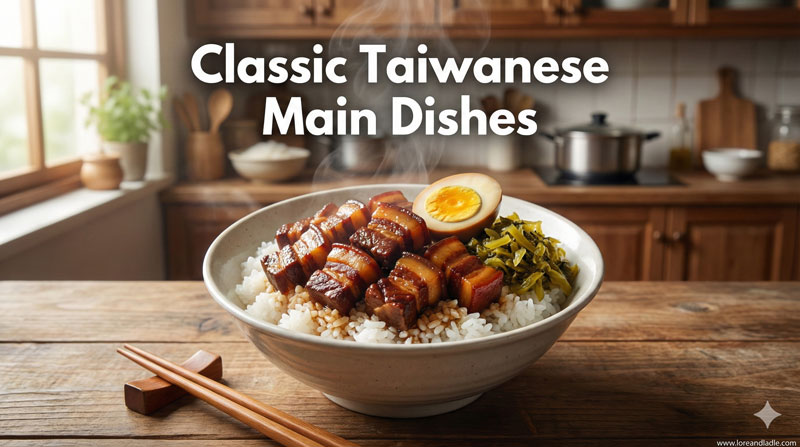
Lu Rou Fan, or braised pork rice, centers on a small square of meat transformed through slow braising. Pork belly meets soy, sugar, garlic, and aromatic spices. The result is a glossy, savory sauce that clings to each bite. Served over simple steamed rice, the dish becomes a humble, lasting comfort. Its cultural significance lies in its everyday accessibility and its celebration of aroma and texture: the melt-in-your-mouth pork, the soft grains of rice, and the glossy glaze that ties every bite together. In the United States, Lu Rou Fan often appears in home-style eateries and family-run shops, where cooks honor a tradition of practical, soulful cooking that nourishes both body and spirit.
San Bei Ji: The Three Cups of Fragrant Home Cooking
Three Cup Chicken embodies a philosophy of balance and aroma. The method centers on three precious ingredients—soy sauce, rice wine, and sesame oil—used in harmonious measure. Garlic and fresh ginger deepen the fragrance, while a handful of basil finishes the dish with bright herbaceous notes. The chicken cooks until it absorbs the sweet-salty glaze and develops a comforting caramelized edge. This dish reflects the careful, attentive home cooking that Taiwan cherishes. In American kitchens and eateries, San Bei Ji showcases how simple, thoughtful ingredients can create a vivid, lingering fragrance and a deeply satisfying main course.
Oyster Omelette: Sea Meets Earth in a Crispy-Egg Dish
Oyster Omelette is a study in texture and balance. A batter of starch lends a chewy, glossy bite, while plump oysters contribute oceanic savor. The pan sears the edges to a delicate crisp, contrasting with a soft, custardy interior. A light sauce, often mildly sweet and tangy, ties the dish together, allowing the shellfish, eggs, and starch to harmonize. Culturally, this dish celebrates the land-sea partnership that characterizes much of Taiwanese cooking. It is a favorite in night markets and family-style restaurants, where the aroma invites sharing and tasting as a communal experience. In the U.S., Oyster Omelette stands out as a memorable, approachable dish that introduces diners to the nuanced interplay of texture and seaside flavors.
Gua Bao: The Soft Bao, Bold Fillings, and Playful Comfort
Gua Bao presents a soft, steamed bun that folds around a filling with bold personality. The pork belly or braised pork is often seasoned with a sweet-salty glaze, then joined by pickled mustard greens, fresh cilantro, and crushed peanuts. Each bite delivers tenderness from the meat, brightness from the pickles, and a slight crunch from peanuts. Gua Bao embodies playful creativity in Taiwanese street food—portable, satisfying, and easy to love. In the United States, this dish has found a Home in casual eateries and pop-up kitchens, where chefs can experiment with fillings and toppings while preserving the essential harmony of light, fluffy bun and robust meat.
Savoring the Cultural Value and Culinary Significance
- Shared flavors and techniques: These dishes emphasize harmony among taste, texture, and aroma. The careful balance of sweet, salty, and savory notes reflects Taiwanese culinary philosophy—food that nurtures and delights without overwhelming the palate.
- Craft through patience: Many of these dishes rely on slow braising, gradual reduction, and attentive timing. The result is depth that comes from time, not shortcuts.
- Accessibility and universality: Though rooted in Taiwan’s kitchen, these dishes welcome Home Cooks and diners in the U.S. They translate well to different kitchens while preserving their distinctive character.
- Seasonal and social richness: From gatherings that celebrate family and friendship to meals that mark everyday life, these dishes highlight cooking as a social and cultural ritual, not just sustenance.
- Ingredient respect: The dishes honor core ingredients—pork, beef, seafood, eggs, tofu, and greens—allowing natural flavors to shine through careful seasoning and technique.
How to Experience These Davorites in the U.S.
- Seek authentic skill and fresh produce: Look for restaurants that emphasize technique and fresh ingredients. The warmth of a well-made broth, the sheen on braised pork, and the crisp edges of a fried omelette are signs of care.
- Try at-home practice: Start with Lu Rou Fan and Beef Noodle Soup. They can be approachable with well-chosen pantry staples and a dedicated simmer. These dishes offer quick wins and room to grow.
- Pair with complementary sides: Light pickles, fresh herbs, or simple greens can balance the richness of braises and the savoriness of main dishes.
- Explore regional twists: In the U.S., cooks may introduce local produce or adjust spice levels. These variations still honor the core flavors and techniques that define the classics.
In celebrating the Best Classic Taiwanese Main Dishes Favorites to Try in the U.S., we honor a cuisine that values craft, warmth, and sharing. These dishes invite us to slow down, savor patience, and welcome a vibrant culinary tradition into everyday life. They remind us that great food can be both comforting and exciting—a bridge between kitchens and a celebration of flavor, texture, and heartfelt hospitality.