
Discovering the Best Taiwanese Noodle And Soup Bowls Recipes to Try in the U.S.
Welcome to a journey through a beloved category in Taiwanese cooking. The Best Taiwanese Noodle And Soup Bowls Recipes to Try in the U.S. celebrate artistry in broth, texture, and balance. These bowls invite you to savor comfort, precision, and seasonality in every bite. They are accessible in many cities and can be recreated at home with care. Each bowl tells a story of technique, patience, and family craft. This post highlights their cultural value and culinary significance, inviting you to explore with curiosity and respect.
The Cultural Value of Taiwanese Noodle Bowls
Taiwanese noodle bowls honor the power of a well-made broth. Gentle simmering over hours gathers flavor depth from bones, aromatics, and seasonings. The result is a warm, fragrant foundation that carries meat, vegetables, and noodles with grace. These bowls are symbols of everyday hospitality. They are places where friends share a city’s flavors, where a street stall or a home kitchen becomes a gathering hub. Texture matters as much as taste. Chewy noodles, tender meat, crisp greens, and a glossy broth create a harmony that feels both comforting and refined. In Taiwan, noodle bowls blend regional ideas into a unified table experience. When you try them in the U.S., you’re tasting a living thread of culinary heritage. The bowls invite experimentation, yet they reward respect for tradition and seasonality.
Core Flavors and Techniques
A successful Taiwanese noodle bowl balances salt, sweetness, and umami. Common elements include a clear or deeply savory broth, soy-driven seasoning, and a kiss of aromatics like ginger and garlic. Star anise, cinnamon, and peppercorns may appear in richer broths. Noodles range from sturdy wheat varieties to delicate strands, chosen to hold up to the broth without becoming mushy. Toppings are where the personality shines: braised beef or pork, greens, mushrooms, pickled vegetables, scallions, and a touch of chili oil or sesame paste. The technique matters too. Braising meat slowly yields melt-in-your-mouth tenderness. A well-made broth is clarified and layered, not overwhelmed by one dominant note. The end result is a bowl that speaks softly yet clearly of patience, skill, and seasonality.
Iconic Bowls to Seek Out or Try at Home
Here are three or four classic bowls that showcase Taiwanese noodle culture and taste. Each brings a unique balance of broth, noodle, and topping.
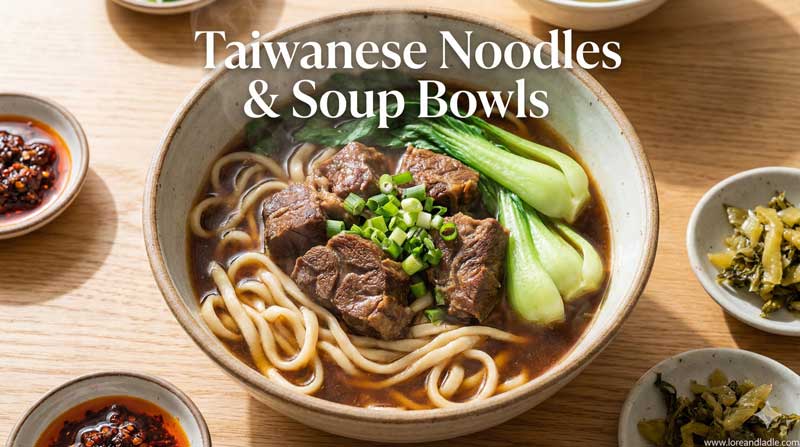
- Beef Noodle Soup: A flagship bowl with a hearty beef broth, tender chunks of beef, and thick noodles. The aroma invites you to slow down and savor. It pairs well with crisp greens and a light aromatics garnish.
- Dan Zai Noodles (Dan Zai Mian): A street-style treasure from Tainan. A flavorful broth with minced pork and dried shrimp, crowned with a spoonful of herbs and a comforting noodle bed. It blends simplicity with depth in every slurp.
- Oyster Noodle or Oyster Vermicelli: A briny, bright option that features fresh oysters and slender noodles in a savory broth or gravy. It highlights the ocean’s sweetness and the bright lift of greens or herbs.
- Braised Pork Belly Noodle Bowl: Layers of pork belly, slow braised in soy and aromatics, rest atop noodles with a crunchy or pickled counterpoint. The result is a comforting, indulgent bowl with a balance of fat and freshness.
In the U.S., many chefs adapt these bowls to local ingredients while preserving the core essence: thoughtful broth, tender protein, chewy noodles, and bright toppings. Seek bowls that feel balanced, with each component supporting the others rather than competing for attention.
How These Bowls Build Community and Skill
Noodle bowls are social foods. They invite sharing, conversation, and repeated tasting. Chefs continually refine broths and noodles, practicing patience and precision. Home Cooks learn to balance salt and sweetness, to judge noodle doneness, and to layer aromas with intention. In practice, making or ordering these bowls becomes a small ritual of care. The bowls bridge culinary curiosity and culinary craft, inviting newcomers to explore technique while honoring tradition. As you explore in the U.S., you’ll notice restaurants often offer variations that respect the core concept while celebrating local produce and tastes.
Pairings, Serving Styles, and Etiquette
A well-composed bowl invites complementary pairings. Fresh herbs or pickled vegetables add brightness. Chili oil or sesame paste can offer warmth and depth. A light, cold tea or a mild broth-based drink helps balance richness. Serving is typically straightforward: a steamy bowl, a side of crisp greens, and perhaps a small plate of pickles. Slurping is a natural part of the experience in many settings, signaling enjoyment and appreciating textures. Keep the focus on savoring the balance between broth, noodle, and toppings.
Practical Tips for Home Cooks
- Start with a strong broth base. Simmer bones, aromatics, and a few spices for depth. You can strain for a clear broth or keep it rustic and rich.
- Choose the right noodles. A sturdier noodle holds up to a richer broth; a thinner noodle suits lighter broths.
- Build toppings thoughtfully. Prepare a few options: braised meat or tofu, greens, mushrooms, and a bright pickle or herb.
- Taste and adjust. Salt gradually, tasting as you go. Aim for harmony, not dominance of any one flavor.
- Plan for texture. Ensure the noodles stay firm but tender. Add greens at the last moment for color and crunch.
- Adapt to what you have. Local ingredients can inspire new twists while keeping the core concept intact.
Final Thoughts: A Living Tradition in a Bowl
The Best Taiwanese Noodle And Soup Bowls Recipes to Try in the U.S. celebrate a kitchen craft that blends warmth, technique, and regional character. These bowls honor patience, balance, and hospitality. They invite cooks and diners to slow down, to observe how a few ingredients can sing together, and to share a table with friends and family. In every slurp, you taste care, culture, and a story that travels with time and taste. Whether you chase a classic beef noodle or explore a lighter oyster version, you’re participating in a living tradition that continues to evolve with love for good food and good company. Enjoy the journey, and let each bowl deepen your appreciation for the beauty of Taiwanese cooking in the American culinary landscape.