
Introduction
Best Taiwanese Noodle And Soup Bowls Favorites to Try in the U.S. invites readers to explore a cherished corner of Taiwan’s culinary landscape. These bowls pair warm, aromatic broth with slurping noodles and a chorus of toppings. In the United States, they become a welcoming way to discover comfort, craft, and community around a single, generous dish. The focus here is on cultural value and culinary significance—the ways these bowls express care, technique, and shared experience.
What makes Taiwanese noodle bowls special
Taiwanese noodle bowls celebrate balance. A single bowl blends a thoughtfully crafted broth, chewy or tender noodles, and toppings that offer texture and color. The broth carries depth from slow simmering and careful seasoning, while the noodles provide resilience and bite. Textures matter as much as flavor: a silky broth, springy noodles, crisp greens, and a soft egg or herb topping all play off one another. This harmony reflects a culinary philosophy that values patience, precision, and warmth. The bowls embody hospitality—food that invites people to gather, share, and linger over conversation and aroma.
Signature bowls to know
-
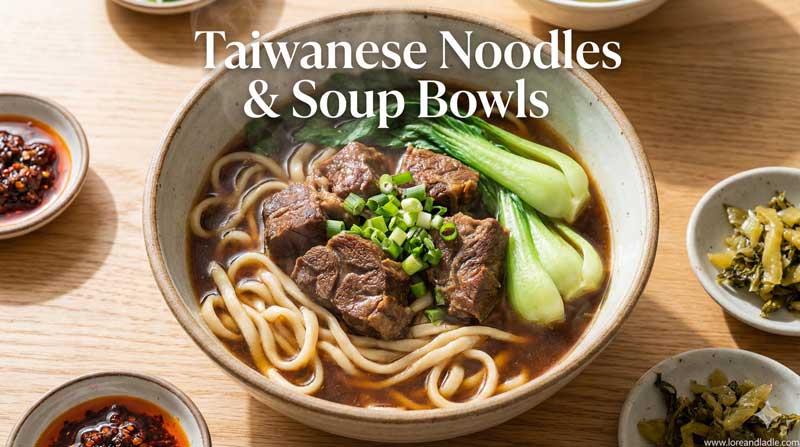
Beef Noodle Soup (Niu Rou Mian): A cornerstone of Taiwan’s noodle repertoire, this bowl centers on braised beef, a robust broth, and sturdy noodles. The meat becomes tender and rich, while the broth carries sweetness from aromatics and a savory backbone from soy. Interludes of greens and a touch of chili finish the balance. The result is a dish that feels familiar yet distinctly Taiwanese, at once comforting and adventurous.
-
Braised Pork Noodles (Liu Rou Mian): Known for its velvety pork belly and soy-sugar glaze, this bowl emphasizes a deep, multi-layered sauce that clings to the noodles. The pork carries a glossy, nearly lacquer-like sheen, and the soy notes weave with subtle spice. Served with hints of greens, minced scallions, and a clear broth, this bowl becomes an intimate portrait of home-style flavor and patient technique.
-
Danzai Noodles (Dan Zai Mian): This light yet deeply savory bowl comes from the port city sensibility of Taiwan’s tradition. Thin noodles meet a glossy, minimal broth and a topping of minced pork that’s gently perfumed with garlic and ginger. A small spoonful of chili oil or pickled greens offers bright contrast. The dish celebrates simplicity, allowing the purity of ingredients and the craft of seasoning to shine.
-
Seafood Noodle Soup: A nod to Taiwan’s abundant waters, this bowl layers briny seafood with a clean, fragrant broth. Shrimp, squid, and fish balls mingle with greens and noodles in a harmony of ocean and land flavors. The result is lively yet restrained, inviting a conversation about sea-fresh ingredients and the elegance of restraint.
Techniques that elevate flavor
-
Broth as the backbone: A clear, well-flavored broth anchors each bowl. Aromatics—garlic, ginger, scallions—are coaxed to release their perfume without overpowering the base. Slow simmering builds depth, while careful skimming keeps the broth bright.
-
Layering seasonings: Five-spice, star anise, soy, a touch of sweetness, and a splash of rice wine or marinade create a chorus in the sauce or broth. The trick is balancing sweetness, salt, and savoriness to avoid any single note shouting.
-
Texture craft: Noodles are chosen to match the broth—from springy, bouncy strands to silkier options—so they mingle rather than disintegrate. Toppings like blanched greens, crisp preserved vegetables, or lightly fried garlic add crunch and contrast.
-
Gentle braising and meat texture: When meat is involved, slow, patient braising yields tenderness and a melt-in-the-mouth experience. The cooking process itself becomes a study in patience and restraint, yielding layers of umami that circulate through the dish.
Cultural value in Taiwan’s food culture
Taiwan’s noodle bowls are more than meals; they are everyday rituals of care. Families share bowls for warmth after a long day, and friends gather at tables where conversation flows as freely as the broth. Street stalls and small eateries showcase a mastery of technique that’s approachable yet refined, inviting cooks of all levels to strive for the same balance. The bowls also tell stories of regional preferences—some places favor clearer broths, others a deeper, darker sauce for the pork, and still others celebrate seafood fresh from nearby waters. This variety reflects a culture that cherishes both tradition and personal expression in cooking. The act of serving these bowls—placing a steaming bowl in front of a guest, offering utensils, and inviting a first sip of broth—highlights hospitality as a living art.
A taste of Taiwan in the United States
Across the United States, Taiwanese noodle bowls stand as a flavorful doorway to Taiwan’s culinary sensibilities. Restaurants adapt thoughtfully to local markets, using available produce and embracing regional tastes without compromising core techniques. The bowls become a bridge for diners to experience comfort foods that carry a specific cultural signature: careful simmering, deliberate seasoning, and an emphasis on shared meals. In menus, these bowls often appear among other Asian-inspired offerings, yet the emphasis on balance, texture, and aroma makes them feel distinctly Taiwanese. The experience invites curiosity and appreciation, encouraging diners to savor the subtle differences between each version while recognizing the common language of broth, noodles, and toppings.
How to appreciate these bowls in daily life
-
Respect the broth: Take a moment to inhale the aroma and notice the balance of herbs and spices. This is where the culinary story begins.
-
Savor the noodles: The noodles provide texture and carry the broth’s flavor. Slurp or chew to savor their bite as it mingles with toppings.
-
Notice the toppings: Greens, pickles, herbs, and small crunch elements each add a punctuation mark to the overall flavor profile.
-
Observe the balance: A well-made bowl balances salt, sweetness, sour notes (where present), and aroma. Each element should support the others rather than compete.
-
Pair with a simple side: Light pickled vegetables or a small dish of greens can refresh the palate between bites, highlighting contrasts in flavor and texture.
Ingredient spotlight: what makes these bowls memorable
-
Noodles: Chewy or firm noodles provide a satisfying bite that holds up to the broth without becoming soggy.
-
Broth: A well-made broth speaks of patience and craft, carrying aromatics that rise with warmth.
-
Meat and toppings: Barn-fresh toppings or carefully braised meats offer tenderness, while greens and pickles bring brightness and crunch.
-
Aromatics and sauce: Garlic, ginger, sesame, and soy provide a fragrant foundation that anchors each bowl’s identity.
A note on accessibility and craft
These bowls invite home cooks to explore Taiwanese techniques with accessible ingredients. While professional kitchens showcase the full spectrum of flavors with expert patience, home cooks can begin with simple recipes that emphasize balance and technique. The beauty lies in recognizing that a single bowl can carry a cultural narrative—the care of preparation, the joy of sharing, and the pride in a dish that travels well and speaks warmly to a diverse audience.
Closing reflections
Best Taiwanese Noodle And Soup Bowls Favorites to Try in the U.S. celebrate more than taste. They honor a way of cooking that blends gentle artistry with practical nourishment. They invite us to slow down, listen to the simmer, and appreciate how a bowl can carry memory, hospitality, and craft into every bite. In the United States, these bowls continue to grow in popularity not only as meals but as cultural conversations—about technique, seasonality, and the joy of gathering around a shared table. If you seek a dinner that feels both familiar and new, consider a bowl that honors tradition while welcoming contemporary flavors.