
Welcome to a Warm Culinary Window
Discover the beauty of a bowl that nourishes both body and spirit. The Best Taiwanese Noodle And Soup Bowls Recipes for New Home Cooks in the U.S. invites you to explore a kitchen tradition built on balance, patience, and shared meals. In this guide, we celebrate the cultural value and culinary significance behind Taiwan’s beloved noodle bowls. You will see how a simple bowl becomes a story of flavor, technique, and everyday joy.
The Heart of Taiwanese Noodle Bowls
Taiwanese noodle bowls are more than food. They express care, craft, and generosity. Each bowl blends thoughtful technique with seasonal ingredients. The result is comfort that travels well—from bustling markets to family kitchens. The bowl’s charm lies in its ability to adapt. It welcomes your pantry finds and your preferred heat level. It remains welcoming to new home cooks in the U.S. who want to learn, taste, and share.
A Symphony of Broth, Noodles, and Aromatics
At the core are three partners: broth, noodles, and toppings. The broth carries the personality of a kitchen. It can be clear and bright or rich and deeply seasoned. Broth is built from simmered bones, aromatics, and a gentle balance of salt and sweetness. Noodles bring texture, from springy wheat strands to silky flat varieties. Toppings add color, protein, and brightness. The balance among these three elements creates a bowl that feels complete and inviting.
Noodles That Tell a Texture Story
Noodles are more than carriers of flavor. They are essential to the dining experience. In Taiwanese bowls, you may encounter chewy braised pork noodles, slender wheat noodles, or thicker hand-cut styles. Each noodle type offers a different bite and mouthfeel. The act of lifting a long, livened noodle and tasting its slip and chew is part of the ritual. For new home cooks, experimenting with noodles is a joyful way to learn how texture and time shape a dish.
Toppings: Color, Contrast, and Comfort
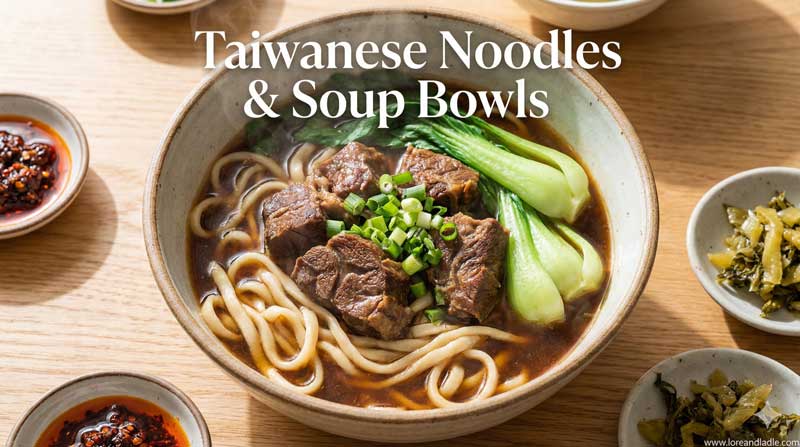
Toppings in Taiwanese noodle bowls are a canvas. A glossy slice of braised pork, a soy-marinated egg, bright green scallions, crisp pickled vegetables, and a handful of fresh herbs bring variety. Chili oil or fresh chilies add warmth. A final drizzle of sesame oil or a splash of vinegar can lift the flavors. These finishing touches reveal cultural preferences for balance and brightness, and they invite you to make the bowl your own.
The Home Kitchen as a Cultural Bridge
For new home cooks in the U.S., these bowls become a bridge to Taiwan’s food culture. You can honor traditional methods while adapting to your pantry and local markets. The process teaches patience, attention to detail, and respect for ingredients. It also opens doors to conversation, shared meals, and a sense of belonging around the table. The result is not only a meal but a reminder of how cooking connects people.
Core Techniques: A Gentle Path to Mastery
You will find a few core techniques that carry most of the flavor. First, simmering. A gentle, slow simmer draws out depth from bones, meat, and aromatics. Second, balancing salt, sweetness, and savory notes. Third, timing the noodles to the correct chewiness. Finally, layering toppings to create contrasts in texture and color. You can adopt these techniques gradually, building confidence with each batch you prepare.
A Practical Guide for New Home Cooks in the U.S.
If you are starting with the Best Taiwanese Noodle And Soup Bowls Recipes for New Home Cooks in the U.S., begin with a simple broth, then add a familiar protein like sliced beef or chicken. Gradually explore braised pork, tofu, or mushrooms for variety. Taste often. Adjust seasonings with soy, salt, a hint of sugar, and a touch of acidity. Let the noodles be the right match for your chosen broth. Finally, assemble with toppings you enjoy. This approach makes the experience rewarding and accessible.
Sourcing Ingredients in the United States
Many Asian markets in the U.S. carry essential items for Taiwanese noodles, such as soy sauce, rice wine, ginger, garlic, star anise, and cinnamon. If certain ingredients are hard to find, look for close substitutes that preserve the dish’s balance. Fresh herbs, greens, and crisp vegetables play important roles too. When in doubt, choose items you can source locally and still savor with confidence. Your kitchen can become a small, reliable archive of flavors.
Serving and Celebrating Together
Serving a Taiwanese noodle bowl is an act of hospitality. Present the bowls with confidence, and invite others to customize their toppings. Slurping is a natural part of enjoying the aroma and texture for many diners, and it invites relaxed, joyful eating. The bowl becomes a shared moment where everyone can taste and comment, learn, and appreciate the craft behind each component.
The Cultural Value of Craft and Care
Across Taiwan’s noodle bowls, you feel the emphasis on craft, balance, and care. The dishes honor the time spent layering flavors, choosing ingredients, and refining techniques. This care translates into how families gather, how stories are told through food, and how cooks, new and seasoned, grow their skills. The Best Taiwanese Noodle And Soup Bowls Recipes for New Home Cooks in the U.S. acts as a gentle guide to invite more people into that practice—one bowl at a time.
A Gentle Invitation to Explore
If you are new to this cuisine, start with a simple bowl and a friendly attitude. Observe how the broth changes as it simmers, how the noodles pick up flavor, and how toppings bring freshness. Notice how a single bowl can carry memory, skill, and ongoing experimentation. With patience and curiosity, you will discover a living tradition that welcomes your own touches.
Final Thoughts: Beauty in the Everyday
Taiwanese noodle bowls celebrate everyday beauty: a warm broth, a playful bite, a colorful topping, and a moment of shared eating. They remind us that food can be both comforting and thrilling. For new home cooks in the U.S., these bowls offer a respectful, practical path to explore culture through taste, texture, and technique. Embrace the process, savor the results, and let the bowls guide you toward more confident cooking and richer meals.