
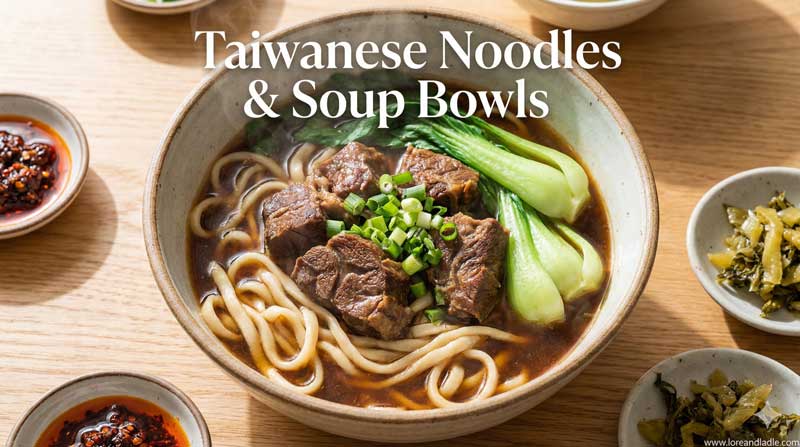
Welcome to the World of Taiwanese Noodle Bowls
This post introduces the best Taiwanese noodle and soup bowls for new home cooks in the U.S. It highlights their cultural value and culinary significance, inviting you to explore how these bowls enrich daily meals. In Taiwan, a steaming bowl acts as a warm welcome. In the home kitchen, it becomes a comforting ritual, a chance to slow down and savor layered flavors. The dishes combined here showcase balance, technique, and a sense of hospitality that welcomes guests with a shared, satisfying meal. By learning these bowls, new home cooks gain more than recipes; they gain a doorway into a thoughtful food culture.
What These Bowls Mean in Taiwanese Food Culture
Taiwanese noodle bowls celebrate tradition through transformation. They honor a respect for ingredients, timing, and texture. First, the broth carries memory: slow simmered richness, a clear aroma, and a gentle depth built from bones, aromatics, and careful seasoning. Next, noodles provide a chewy counterpoint that invites a moment of chew and savor. Finally, toppings bring brightness and personality to each bowl. The result is a dish that feels communal, adaptable, and deeply satisfying. These bowls are not just meals; they are everyday celebrations of home cooking and craft.
Core Flavors and Cooking Techniques
These bowls shine when broth, meat, and greens come together with balance. A clear, richly seasoned broth forms the heart, often adjusted with soy, a touch of sweetness, ginger, and star anise. Meat is gently braised or simmered until tender, absorbing the seasoning without losing its character. Noodles should be al dente, offering resilience without stiffness. Toppings—such as greens, pickled vegetables, scallions, and a drizzle of sesame oil or chili oil—add brightness and contrast. The beauty lies in layering: simmer, skim, season, and taste again. With practice, cooks learn to read the pot, adjusting salt, acidity, and heat to keep the broth inviting from first sip to last drop.
Ingredients and Sourcing in the U.S.
In the United States, you can build these bowls with accessible ingredients while keeping authentic flavors alive. Start with a good broth foundation, then choose a protein you enjoy—beef, pork, chicken, or a plant-based option. Fresh greens, garlic, ginger, and scallions brighten the bowl, while pickled vegetables add tang. Local markets offer many compatible options: bok choy, napa cabbage, cilantro, and fresh chilies can all appear in season. If a traditional broth is challenging, simplify step by step: a shorter simmer for a lighter flavor, or a ready-made broth as a base enhanced with your herbs. The key is to taste often and adjust to your kitchen’s character.
Serving Traditions and Personalization
Serving Taiwanese noodle bowls invites customization. Serve hot, with a clear broth and a generous portion of noodles. Provide a small tray of condiments on the table—chili oil, vinegar, minced garlic, sesame seeds—so each diner can tailor their bowl. This practice invites conversation and shared joy. The act of arranging toppings—greens here, a splash of soy there—lets each person express preference. In this way, the bowls become not only a meal but a small ceremony of hospitality and care.
Tips for New Home Cooks in the U.S.
for Beginners, start simple and grow gradually. Begin with a flavorful broth base, then add meat or vegetables you enjoy. Plan ahead: broth flavors deepen with time, so a day or two of resting can improve the overall taste. Keep noodles separate until ready to serve for the best texture. Finally, pair the dish with a light tea or a sparkling beverage to balance richness. These bowls teach patience, attention to detail, and the joy of building a dish that fits your kitchen and your table. Enjoy the journey, learn as you cook, and share the results with friends and family.