
Introduction
Welcome to “Best Taiwanese Noodle And Soup Bowls Dishes for Taiwanese Food Lovers in America,” a thoughtful tour of bowls that embody Taiwan’s warmth and artistry. This piece centers on cultural value and culinary significance. It stays clear of politics and focuses on flavor, craft, and shared meals. You will discover how noodles, broths, and toppings tell stories of technique, memory, and daily life. The tone invites curiosity, respect, and a sense of belonging at the table.
The Cultural Soul of Taiwanese Noodle Bowls
Taiwanese noodle and soup bowls are more than meals. They are rituals of care and craft. Each broth is built step by step, layer by layer, from gentle simmering to bold seasoning. Dumplings, greens, and noodles join in a harmony that celebrates seasonality and comfort. Sharing a pot of hot noodles signals welcome and belonging. The bowls invite conversation, ease, and a moment to pause together. In America, these dishes bridge kitchens, markets, and families through scent, texture, and aroma that feel instantly familiar.
Signature Dishes and Their Significance
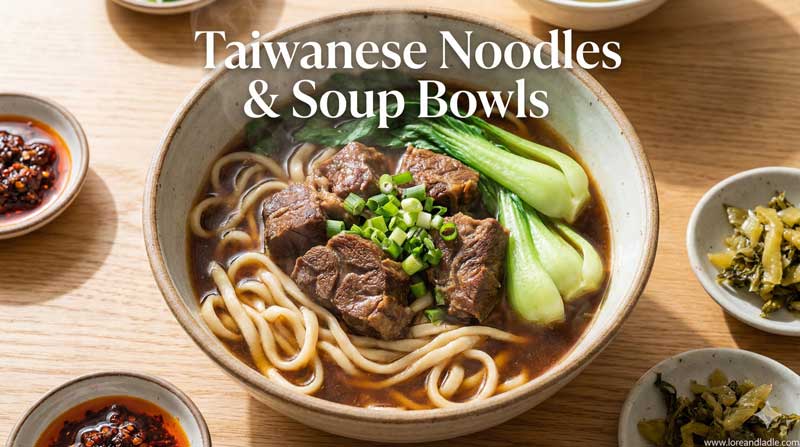
Beef Noodle Soup (Niu Rou Mian) stands as a crown jewel of Taiwan’s noodle world. Rich braised beef mingles with star anise, cinnamon, and aromatic aromatics in a deeply flavorful broth. Thick or springy noodles soak up every note, producing a comforting, nourishing bowl. The dish speaks to patience and balance, rewarding slow simmering and careful seasoning. It is a symbol of home cooking that travels well and welcomes friends.
Minced Pork Noodles (Lu Rou Mian) centers on tender pork belly braised in soy, sugar, and spices. The pork mingles with noodles and savory greens, offering a glossy, savory bite. This bowl celebrates everyday ingenuity—simple ingredients transformed through braising, timing, and texture. It echoes family meals and careful home kitchen practice, reminding diners that flavor grows from steady attention.
Oyster Vermicelli (Oyster Mee Sua) presents a lighter, silky option. Fine vermicelli carries a glossy broth infused with garlic, ginger, and fresh oysters. The result is a delicate contrast: briny brightness against the smooth noodles. This dish highlights the sea’s role in Taiwan’s cooking and the joy of soft, comforting textures in a soothing broth.
Danzai Noodles (Dan Zai Mian) offers an urban, street-food charm. This small-bowl specialty features fragrant broth, minced pork, and dried shrimp accents on slender noodles. The result is bright, quick, and memorable. It reflects how Taiwan’s noodle culture thrives in bustling markets and intimate eateries alike, delivering vivid flavors in every slurp.
Techniques That Elevate Flavor
The soul of these bowls rests on careful technique. Broths begin with a respectful extraction of umami, achieved through simmering bones, aromatics, and patience. Braising deepens flavors, while balancing salt, sweetness, and acidity ensures clarity and warmth. Noodles play an essential role; some are hand-cut or pulled, others are sturdy enough to hold up to robust broths. The finish often relies on a bright garnish—scallions, fresh cilantro, and a touch of chive oil—to lift the dish in the final moments.
Texture matters as much as aroma. The contrast between tender meat, chewy noodles, and silky seafood in the Oyster Vermicelli creates a memorable mouthfeel. In Danzai Noodles, the aroma of shrimp and pork mingles with crisp toppings, giving a lively, layered experience. Great Taiwanese bowls balance depth with freshness, delivering comfort without heaviness.
In America: A Bridge Between Kitchens
In American restaurants and homes, these bowls adapt without losing core identity. Chefs reuse familiar pantry items while honoring traditional methods. You may find precise braises, well-timed simmering, and noodles chosen for their capacity to soak up broth. Consumers enjoy the same sense of ritual—watching steam rise, sensing soy warmth, and tasting a harmony of textures. The result is a welcoming cuisine that respects craft and invites lively conversations about flavor, technique, and shared meals.
How to Enjoy: Etiquette, Atmosphere, and Pairings
Approach these bowls with curiosity and a relaxed pace. Slurping is common and signals appreciation in many Asian noodle contexts; savor the broth and textures alike. Pairings matter too: a crisp pickled vegetable, a small plate of greens, or a light tea can cleanse the palate between bites. If you’re new to these flavors, begin with a smaller bowl and gradually explore richer varieties. Note the balance of spice, salt, and sweetness, and allow yourself to follow the chef’s lead through the bowl’s evolving profile.
Conclusion
The collection behind “Best Taiwanese Noodle And Soup Bowls Dishes for Taiwanese Food Lovers in America” offers more than nutrition; it celebrates craft, memory, and hospitality. Each bowl invites you to slow down, notice the layers, and share a moment of warmth. Whether you’re revisiting a family favorite or discovering a new take, these dishes illuminate Taiwan’s rich noodle culture and its joyful presence in America. May every slurp remind you of care, community, and the beauty of well-made food.