
Best Taiwanese Rice Bowls And Bento Plates Dishes for Your Next At-Home Feast
Introduction
Taiwanese rice bowls and bento plates are more than meals. They are daily rituals, crafted with care and shared with friends and family. These dishes celebrate balance: a spoonful of tender protein, a bed of steaming rice, and bright vegetables that lift every bite. This post explores their cultural value and culinary significance, inviting you to savor the beauty of these at-home feasts.
The Cultural Heartbeat of Taiwanese Rice Bowls
In Taiwan, a rice bowl is a small story told at the table. The bowl carries memories of home kitchens, night markets, and school lunch lines. Biandang, the word many use for a bento, embodies practical artistry. It blends protein, vegetables, and pickles in a compact, portable form. Yet it remains a reflection of shared meals and seasonal flavors. The rice acts as a steady canvas, holding sauces and toppings with grace. The result is comfort that travels—from bustling streets to quiet kitchens at home.
Signature Dishes and Their Significance
Lu Rou Fan (braised pork over rice) is a beloved icon. Its glossy pork and savory sauce coat the rice, creating a harmony of sweetness and umami. The dish teaches patience in braising and respect for slow-cooked flavor. Three-Cup Chicken, with its fragrant glaze of sesame, soy, and ginger, shows how simple staples can become deeply aromatic. Beef over Rice offers a hearty, comforting bite that highlights regional techniques for tender meat resting on a warm bed of rice. Minced pork rice, with a touch of aromatic greens, embodies everyday abundance and easy sharing.
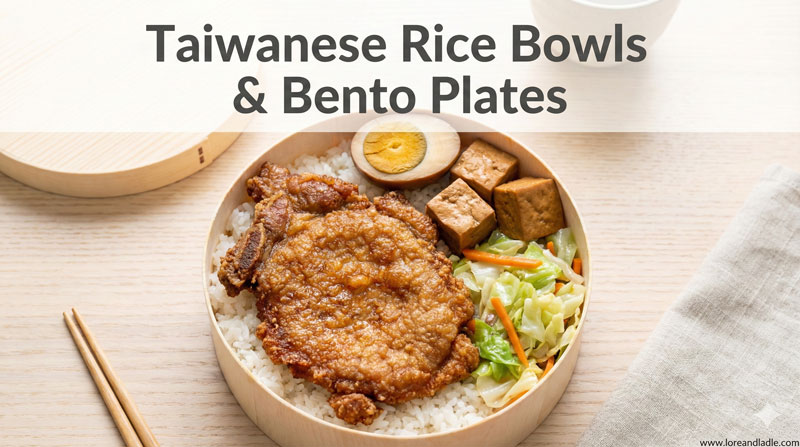
Bento plates, or biandang, bring variety to one meal. They pair protein with greens, pickles, and sometimes a softly cooked egg. This arrangement mirrors Taiwan’s value of balance: a little sweet, a little salty, a touch of sour from pickles, and generous freshness from vegetables. The presentation matters too. A tidy plate, arranged with care, signals respect for those at the table and for the food itself.
Core Ingredients and Techniques that Carry Tradition
Rice is the heart of these dishes. It anchors flavors and soaks up sauces gracefully. Soy sauce, garlic, and ginger provide warmth and depth. Five-spice powder appears in braises, adding a comforting, familiar scent. Slow braising turns meat tender and rich, a process learned from many cooks over generations. Pickles and pickled greens bring brightness and contrast, keeping the meal lively. Fresh herbs and scallions finish dishes with a clean, crisp finish.
Timing matters. A well-balanced bowl comes from careful cooking of each component, then thoughtful assembly. The result is a meal that feels comforting yet refined, suited for everyday feasts and special gatherings alike.
How to Present an At-Home Feast with Biandang
Creating a Taiwanese-inspired at-home feast starts with plan and rhythm. Start with a few staple bowls and plates that you enjoy. Add a couple of bright vegetables to brighten the plate. Include pickled elements for zing and crunch. For presentation, use simple bowls and a flat plate or tray for a bento-style display. Keep colors varied: pale rice, dark glaze on meat, emerald greens, and gold yolk or egg. The act of arranging food nicely elevates the experience and honors the meal’s culture.
Tips for Hosting a Taiwanese Rice Bowls Experience
- Choose 2–3 protein options: braised pork, chicken, or beef, plus a plant-based choice like braised tofu or mushrooms.
- Include 2–3 greens or vegetables for color and freshness.
- Add pickles or a tangy relish to provide contrast.
- Offer a soft-cooked egg or a sliced boiled egg for richness.
- Use serving dishes that feel warm and natural, such as lacquered bowls and wooden trays.
- Keep sauces on the side if you’re serving guests with varying spice preferences.
- Finish with a simple fruit or light dessert to cleanse the palate.
The Future of Taiwanese Rice Bowls in Home Kitchens
These dishes travel well from street stalls to home tables. They invite cooks to experiment with locally available ingredients while preserving core flavors. The technique of braising, steaming, and quick pickling travels easily, encouraging Home Cooks to create respectful, joyful meals. The result is a growing family of bowls and plates that honor tradition while welcoming new flavors and textures.
A Respectful, Welcoming Table
At the heart of Taiwanese rice bowls and biandang is hospitality. The meals invite sharing, conversation, and slow enjoyment. They remind us that good food comes from careful hands, thoughtful timing, and a willingness to adapt. By cooking these dishes at home, you connect with a culture that treasures balance, flavor, and the joy of gathering around a table.
Closing Thoughts
Best Taiwanese Rice Bowls And Bento Plates Dishes for Your Next At-Home Feast celebrate culinary craft and cultural heart. They honor a tradition of simple, generous meals that fit any occasion. Whether you cook Lu Rou Fan, Three-Cup Chicken, or a small biandang for Family night, you open a doorway to flavor, memory, and shared delight. May your next at-home feast be warm, inviting, and beautifully balanced.