
Introduction
This blog introduces the concept “Best Taiwanese Seafood Dishes Dishes for Family Dinners in America.” It invites readers to explore how Taiwan’s coastal flavors blend with home cooking in the United States. The focus is on culture and culinary craft, not on politics or history beyond the kitchen. You will discover how fresh seafood, bright seasonings, and careful technique create meals that feel centered, warm, and inviting.
The Cultural Value of Taiwanese Seafood
Taiwan’s seafood culture rests on reverence for freshness and balance. Dishes honor the catch of the day and the season. They emphasize sharing, conversation, and care around the table. The style blends simple methods with bold flavors, letting natural ocean notes shine. This approach suits family dinners, where meals become a comforting ritual.
Core Flavors and Techniques
Taiwanese seafood shines when cooks blend salt, sweetness, sourness, and umami. Common techniques include quick wok tossing, gentle steaming, and slow braising. Fresh garlic, ginger, scallions, and chilies often lead the aroma. Toasted sesame oil and a touch of soy bring warmth without overpowering the sea. These choices make every bite lively yet balanced.
Oyster Omelette
Oyster Omelette is a beloved starter in many Taiwanese kitchens. It pairs plump oysters with eggs and a touch of starch to create a crisp edge and a tender center. The result is a delicate contrast in texture and a bright, savory aroma. It invites sharing, as small bites come quickly and invite conversation. This dish shows how simple ingredients can sing together.
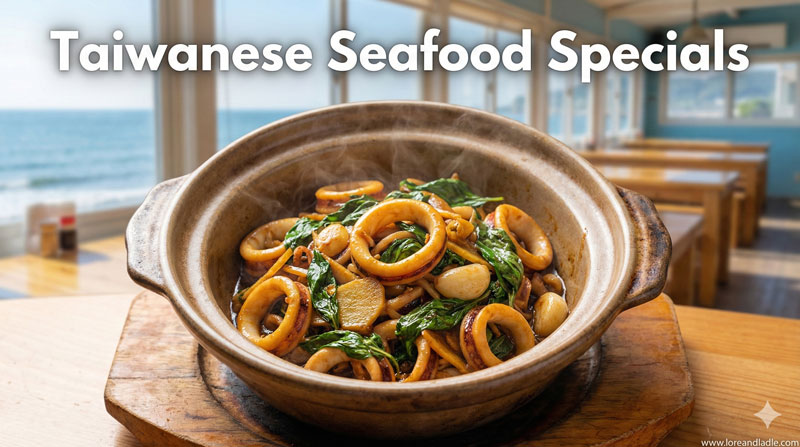
Three-Cup Squid
Three-Cup Squid blends fragrant sesame oil, soy sauce, and rice wine to create a deep, aromatic glaze. Fresh squid absorbs the sauce and stays tender. Fresh basil or cilantro finishes the plate with a green lift. The method celebrates aroma and savor, not heavy sauces. It is a dish that invites slower meals and mindful tasting.
Steamed Fish with Ginger and Scallions
Steaming preserves the fish’s natural sweetness and texture. Thin slices of ginger and scallions perfume the steam, infusing brightness into every bite. The dish highlights purity of flavor, letting the fish shine. It pairs well with plain rice and light salads. This preparation demonstrates restraint as a culinary virtue.
Clams with Garlic and Chili
Clams enriched with garlic and a hint of chili offer warmth without heaviness. The cooking remains quick, so the juices stay bright. A splash of citrus or a touch of vinegar can brighten the sauce. This dish brings a coastal memory to the table, even far from the shore. It is comforting and uplifting at once.
The Shared Table: Pairings and Rhythm
Taiwanese seafood shines when served as a shared feast. White rice acts as a quiet canvas that welcomes bold flavors. Light soups or clear broths can cleanse the palate between dishes. Tea, especially jasmine or oolong, complements the seafood without competing with it. The rhythm of passing plates and lifting chopsticks creates a warm dining cadence.
Bringing Taiwanese Seafood Dishes Home in America
Families in America can recreate the spirit of Taiwanese seafood with accessible ingredients. Use fresh or frozen seafood from trusted markets. Adjust spice and salt to suit local tastes while preserving the dish’s character. Equip a sturdy wok, a steamer, and a deep skillet if possible. With these tools, home cooks can build a weekly ritual of bright, social meals.
Tips for Freshness and Ease
Choose seafood with a clean smell and firm texture. Keep ingredients cold until ready to cook. For faster weeknight meals, prep sauces and aromatics ahead. Use simple, bright dressings rather than heavy sauces. Practice makes the technique easier, and the results consistently inviting.
Conclusion
The collection of Best Taiwanese Seafood Dishes Dishes for Family Dinners in America highlights cultural value and culinary significance. It shows how coastal flavors translate into family meals far from the sea. With balance, care, and shared plates, these dishes celebrate warmth, hospitality, and tradition. The result is meals that feel both rooted and fresh, inviting everyone to gather, taste, and tell stories.