
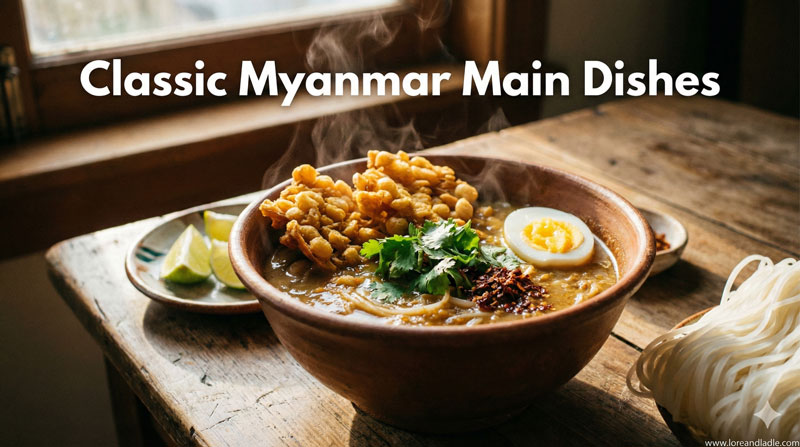
Budget-Friendly Classic Myanmar Main Dishes for Families in the U.S.
Myanmar cuisine shines in family kitchens with warm aromas, bright flavors, and a rhythm that fits everyday life. This guide introduces budget-friendly, classic Myanmar main dishes that families in the U.S. can enjoy together. The focus is on cultural value and culinary significance, not on politics. Each dish uses simple, accessible ingredients and straightforward techniques.
The Cultural Heart of Myanmar Home Cooking
In Myanmar homes, meals center the table and invite sharing. Bowls of rice anchor the spread, while curries and vegetable dishes sit beside them. Fresh herbs, gentle sour notes, and a touch of heat create harmony. Cooking is a thoughtful act that expresses care and hospitality. These dishes honor patience, balance, and the joy of meals eaten side by side. The result is a food culture that feels both comforting and elevating, even in a busy weeknight kitchen.
Core Dishes and Their Significance
The budget-friendly Myanmar main dishes blend protein, vegetable, and aromatic spices in one pot or a single skillet. You’ll often see a curry base built from onions, garlic, and ginger, with turmeric, coriander, and sometimes lemongrass. Fish, chicken, or tofu provide protein, while vegetables add color and texture. Salt and a touch of tang come from fish sauce, lime, or tamarind. Coconut milk may appear for a gentle richness. The same technique shows up across dishes: layer aromatics, simmer to meld flavors, and finish with a bright splash of lime or a fresh herb.
These dishes are economical by design. They use affordable proteins, seasonal vegetables, and Pantry Staples. Yet they offer depth, comfort, and a sense of place. For families in the U.S., they provide a bridge between familiar home foods and new flavors, making every meal feel like a small celebration.
Ingredient Staples on a Budget
Rice forms the nourishing base for most meals. Aromatics like onions, garlic, and ginger are pantry staples. Spices such as turmeric, cumin, coriander, and a dash of chili wake the palate. Fresh herbs, lime or tamarind adds brightness. Fish sauce or soy sauce provides savory depth. Coconut milk or cream softens textures when you want a smoother curry. Common vegetables include leafy greens, eggplant, okra, green beans, and potatoes. These ingredients are widely available in U.S. grocery aisles and markets, and they scale well for family cooking.
Simple Techniques with Big Flavor
Start by softening aromatics in a little oil. Then add spices to perfume the oil. Build a tomato-onion base for body. Add your protein and simmer until tender. Finish with a bright acid and a fresh herb if you like. To keep costs down, cook in a single pot when possible. Use leftovers creatively—for example, turn yesterday’s curry into a new dish with steamed rice or noodles. These straightforward techniques honor the tradition of patient simmering and careful seasoning.
Serving and Family Table Traditions
Myanmar meals invite sharing. Serve rice in the center, with a few curry bowls and a plate of vegetables. Small bowls of pickled vegetables or fresh lime wedges add zing at the table. The beauty comes from color, aroma, and balance, not from complexity. A family meal feels welcoming when everyone can customize portions and enjoy multiple textures in one sitting.
Quick Weeknight Plan
Plan a two-dish lineup to fit a busy evening. Start with a quick chicken or tofu curry simmering on the stove. Meanwhile, steam rice and sauté a quick vegetable side, like greens with garlic. By dinner time, you have a comforting main plus a fresh, crisp accompaniment. If you have a little extra time, a small spice toasting step can lift flavors without adding stress. This approach keeps Myanmar flavors accessible and family-friendly.
Embracing Myanmar Flavors in the U.S. Kitchen
These budget-friendly Myanmar main dishes celebrate cultural richness through everyday cooking. They honor nourishing meals shared with loved ones and the joy of seasonal produce. With simple ingredients and clear methods, families in the U.S. can savor authentic flavors, create lasting memories, and carry a piece of Myanmar’s culinary heritage to their own tables.