
Introduction to the Concept
How to Build a Full Menu Around Myanmar Soups & Stews is more than a collection of recipes. It is a celebration of heartful meals that come together in countless homes and kitchens across Myanmar. This concept dish invites us to place soups and stews at the center of the table, where warmth, aroma, and hospitality mingle. The value lies in how these pots tell stories of daily life, family gatherings, and shared flavors. Culinary significance shows up in the balance of brightness, richness, and comfort that these dishes offer. By arranging a complete menu around Myanmar soups and stews, we honor a tradition of layering tastes, textures, and memories with every course.
Core Flavors of Myanmar Soups & Stews
Myanmar soups and stews resonate through bright aromatics, deep broths, and gentle tang. Lemongrass, garlic, and shallots form a fragrant base, while turmeric and ginger add warmth. Fresh herbs like coriander and mint brighten the bowls, and lime or tamarind brings a lively sour note. Fish sauce or shrimp paste adds a savory depth, never overpowering but clearly present. Coconut milk can soften heat and round out richness, especially in coastal-inspired dishes. The key is balance: a small touch of sweetness, a bit of sour tang, a savory backbone, and a gentle heat that invites a second spoonful. When you taste a Myanmar soup or stew, you taste centuries of home kitchens, markets, and seasonal harvests working together to create comfort and character.
Crafting a Full Menu: Core Principles
The goal is a coherent culinary journey, from first bite to the last spoonful. Start with a bright, broth-forward starter that awakens the palate. Move to a heartier stew or noodle-based main that carries the regional character. Round out with a crisp, fresh element—herbed salad, pickles, or a crunchy fritter—to contrast the softness of the soups. Keep the menu modular, so guests can pair a lighter option with a richer one or enjoy a tasting sequence. Maintain a clear narrative: coastal flavors lead to inland depths; tangy notes lead into mellow, coconut-rich rounds; and finally, clean herbs refresh the palate. Clear transitions help guests move with ease from course to course.
Signature Dishes to Spotlight
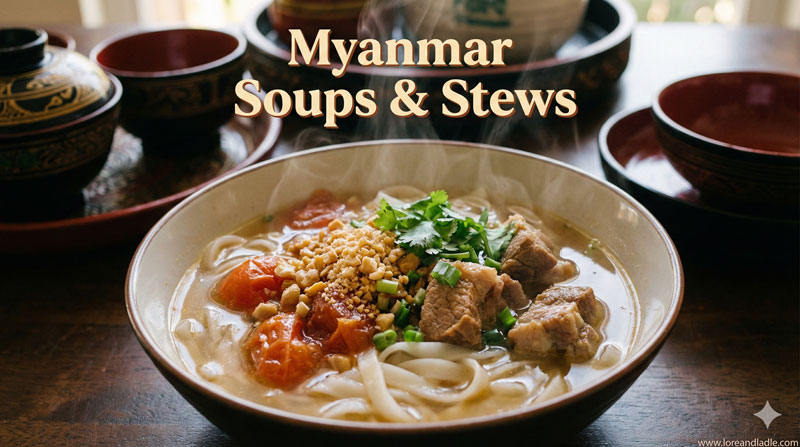
Mohinga stands as the emblematic Myanmar bowl. A fragrant fish broth, seasoned with lemongrass, onions, garlic, and a touch of pounded spices, is coaxed into silky noodles. This dish often arrives as a comforting morning staple, yet it shines at any meal when framed with crisp herbs, lime wedges, and a dash of chili. Ohn No Khao Swè, a beloved coconut-chicken noodle soup, offers a softer, creamier counterpoint with tender meat and rice noodles bathed in coconut milk and spices. These two dishes anchor the menu, and surrounding bowls echo their spirit—bright, comforting, and deeply satisfying. Include a beef or vegetable stew that carries a similar balance of tang, warmth, and richness for variety. Each spotlight dish becomes a storytelling anchor, inviting guests to trace flavors back to a home kitchen.
Pairings, Textures, and Presentation
Texture contrasts elevate the menu. Think silky broths against tender noodles, plus a crisp fried element or fresh herb garnish for bite. Serve bowls with bright accompaniments: lime wedges, sliced chilies, crushed peanuts, and a handful of fresh herbs. Offer a small plate of crisp fritters or toasted rice crackers to add crunch between spoonfuls. Visual appeal matters too. Use bowls with warm tones, and present soups with a sprinkle of fried shallots or sesame to catch the eye. Plating should feel generous yet precise, inviting guests to savor the aroma as much as the taste. In this way, the dishes convey care, craft, and cultural pride with every serving.
Regional Inspirations and Techniques
Myanmar’s geography shapes its soups and stews. Coastal regions emphasize fish and coconut, yielding lighter, coconut-kissed broths with bright tropical notes. Inland areas lean on tamarind, greens, and heartier meats, building deeper, tangy stews. Upland kitchens may showcase dried spices and leafy greens grown in terraces, producing robust, comforting bowls. Techniques vary as well: long, slow braises enrich textures; quick simmering preserves a fresh zing in aromatics; and careful stock-building creates a clean, nourishing foundation. By weaving these regional voices through the menu, you create a mosaic that honors diversity while maintaining a unified thread of flavor philosophy.
Storytelling Through Menu Layout
The menu can tell a story as much as a recipe can. Start with a bright starter soup, then move through a progression of textures and depths. Place Mohinga and Ohn No Khao Swè at the core as narrative anchors, with supporting dishes that echo their essence. Use section headings to guide guests: Broth-based Starters, Creamy Curries, Hearty Stews, Fresh Condiments, and Sides. Include a short note with each dish about its signature technique or ingredient. Visuals—photos or simple sketches of ingredients like lemongrass, turmeric roots, and rice noodles—help guests connect with the culture. A clear, inviting structure makes the dining experience both educational and comforting.
Seasonal and Sustainable Choices
Let the seasons guide ingredient selection. Fresh lemongrass and herbs appear in abundance in spring and summer, while greens and root vegetables shine in autumn and winter. Choose locally sourced fish and vegetables when possible, and celebrate small producers who grow traditional herbs and spices. Use coconut milk mindfully to balance richness, and rotate condiments to reflect what is freshest in markets. This approach keeps the menu vibrant year-round and respects the land that nourishes the kitchen.
Serving, Hospitality, and Experience
Hospitality shines through the way dishes are served. Offer family-style portions or comfortable bowls for sharing. Encourage guests to ladle as they please, add garnishes to taste, and join in the ritual of a shared meal. Alongside the food, provide aromatic teas or light, fragrant drinks to cleanse the palate. The experience should feel welcoming and respectful, inviting guests to slow down, enjoy the scents, and savor the interplay of spice, sour, and smooth textures.
Closing Thoughts
Building a full menu around Myanmar soups and stews invites cooks and guests into a rich culinary conversation. The dishes honor everyday meals while offering a stage for creativity and care. By focusing on core flavors, regional nuances, and thoughtful presentation, this approach celebrates the cultural value and culinary significance of Myanmar’s soups and stews. It invites everyone to experience the warmth of a shared pot, the joy of balanced flavors, and the beauty of a well-constructed menu that tells a meaningful edible story.