
Introduction
Chicken Satay 101: Simple Ways to Unlock Big Indonesian Flavor celebrates more than a dish. It invites you into a cooking tradition that honors fire, balance, and sharing. This post highlights the cultural value and culinary significance of chicken satay. It shows how simple steps become a doorway to a beloved Indonesian flavor profile.
The Cultural Heartbeat of Satay
Satay is woven into daily life and festive moments across Indonesia. Street stalls, home kitchens, and family gatherings all claim a place for skewered chicken and its warm peanut sauce. The dish travels with aroma and memory, turning a casual bite into a moment of cultural connection. Different regions offer subtle twists, yet the core idea remains the same: meat on skewers, grilled over a lively flame, enjoyed together with companions.
Why Chicken Satay Stands Out
Chicken satay is approachable, portable, and adaptable. The skewers keep the dish easy to share, whether at a busy market counter or a quiet family meal. The interplay of char, spice, and peanut sauce creates a memorable harmony. This balance—savory meat, nutty sauce, and bright accompaniments—speaks to a culinary sensibility that values color, aroma, and texture in every bite.
The Marinade and Sauce: A Flavor Bridge
The marinade forms the backbone of Indonesian flavor. Typical ingredients include aromatic herbs and spices such as garlic, shallot, coriander, cumin, turmeric, and lemongrass, often enriched with coconut milk for tenderness. The result is fragrant but not overpowering, allowing the chicken’s natural succulence to shine.
The peanut sauce, or bumbu kacang, acts as a flavor bridge. Roasted peanuts mingle with palm sugar, tamarind or lime for brightness, soy sauce or salt for depth, and chili for lift. The sauce is both dip and glaze, enhancing texture and guiding the palate from savory to nutty to spicy-sweet notes. Together, marinade and sauce reveal a thoughtful layering of Indonesian flavor.
Cooking Techniques: Grilling and Fire
Grilling over charcoal gives satay its signature smoky aroma. The flame kiss and occasional basting build a caramelized exterior while keeping the inside moist. If charcoal isn’t available, a hot grill or grill pan can still produce a nice crust and balanced tenderness. The technique matters: even heat, steady turning, and mindful timing preserve juiciness and unmask the dish’s bright spice profile.
Pairings and Serving Traditions
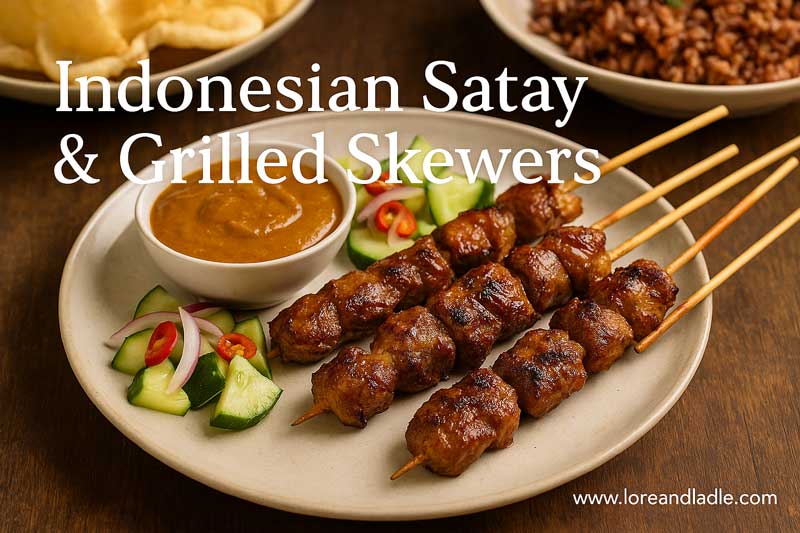
Satay is often served with fresh cucumber slices and red onion, which provide a crisp, refreshing contrast to the rich sauce. It pairs beautifully with rice or lontong (rice cake) and may be accompanied by a tangy lime wedge or crisp crackers. In many homes, satay is the centerpiece of a shared plate, inviting conversation and enjoyment around the table. Each serving emphasizes hospitality and the joy of gathering.
Making It at Home: Simple, Respectful Steps
First, prepare a simple spice paste using garlic, shallot, coriander, cumin, turmeric, and a splash of coconut milk. Next, marinate bite-sized chicken pieces for at least 1–4 hours to let flavors penetrate. Then thread the meat onto skewers, and grill over medium-high heat until lightly charred and cooked through. Finally, serve with peanut sauce and fresh accompaniments. If you’re short on time, skip the long marinade and still enjoy a lighter version with a bright, herb-forward paste and a quick sauce.
Conclusion: A Flavorful Link to Indonesian Culinary Identity
Chicken Satay 101 highlights how a modest dish can carry deep cultural significance. The method, ingredients, and serving style reflect a culinary heritage that values shared meals, balance of flavors, and craftsmanship in fire and flavor. By exploring this dish, you honor Indonesian cooking and its place in the global love for vibrant, approachable, and respectful food.