
Welcome to Classic Taiwanese Main Dishes for Family Dinners in America
Taiwanese cuisine offers a thoughtful blend of bold flavors and careful technique. At the heart of many American kitchens, classic Taiwanese main dishes become more than meals; they become rituals of gathering and sharing. This collection highlights the best classic Taiwanese main dishes for family dinners in America. Each dish carries a story of balance, texture, and aroma that invites conversation and comfort. The idea is simple: food that warms the heart, respects ingredients, and celebrates togetherness.
Beef Noodle Soup: A Soulful Broth and Silky Noodles
Beef Noodle Soup centers on a rich, aromatic broth and tender beef. The broth often relies on slow simmering and a chorus of spices, such as star anise, cinnamon, and fennel, to release deep warmth. In American homes, this dish becomes a communal bowl where flavors mingle with laughter. The noodles provide a silky contrast to the meat. Together, they offer a comforting sense of fullness and balance that suits family dinners at any season.
Three-Cup Chicken: A Harmony of Garlic, Ginger, and Sesame
Three-Cup Chicken showcases a simple, precise balance of soy sauce, rice wine, and sesame oil — traditionally prepared with equal respect for technique and timing. The name hints at the core idea: three cups of flavor that simmer until the chicken becomes glossy and tender. In American kitchens, this dish teaches patience and attention to heat, producing meat that absorbs fragrance and softness. Serve it with steamed greens or rice to experience a complete, savory harmony at the table.
Lu Rou Fan: The Comfort of Slow-Braised Pork
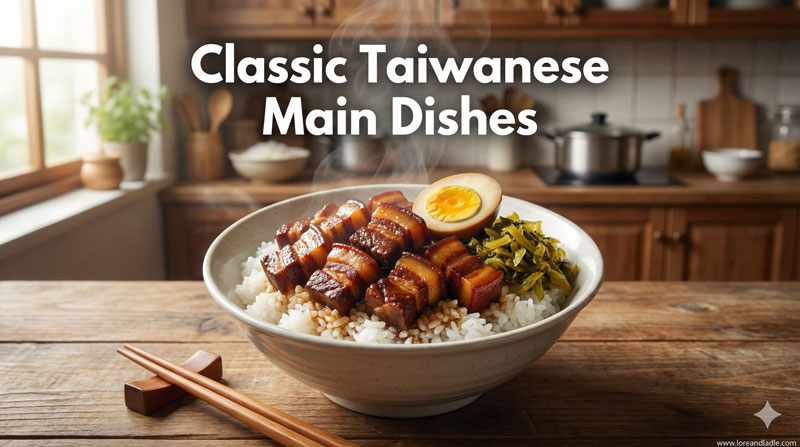
Lu Rou Fan, or braised pork over rice, is a classic comfort dish. Pork braises slowly in soy sauce, a touch of sugar, and aromatics until it becomes tender and fragrant. The result is a glossy, deeply seasoned topping resting on steamed rice. American family tables appreciate the way this dish fills the room with a warm scent and invites shared bites. It’s a study in depth of flavor that remains approachable for cooks of all levels.
Oyster Omelette: Sea Freshness with Crispy Edges
Oyster Omelette blends eggs with a light batter and plump oysters, finished with a crisp edge. The texture pairing—soft interior, with a slightly chewy bite and a gentle crunch—appeals to many palates. In a family setting, the omelette offers a bright contrast to richer dishes and a sense of seaside freshness. This dish demonstrates how Taiwan’s coastal flavors can be woven into a hearty main course in American kitchens.
Mei Cai Kou Rou: Earthy Luxury with Preserved Greens
Mei Cai Kou Rou combines braised pork with preserved vegetables for a layered, earthy taste. The greens bring a touch of sharp, savory brightness that cuts through the pork’s richness. In family dinners, this dish provides both depth and texture, helping to anchor a meal with familiar, homey notes. The preservation method adds a tangy, comforting element that lingers on the palate.
Techniques that Travel Well to American Kitchens
A common thread among these dishes is technique that travels easily into home kitchens. Slow braising, careful simmering, and attentive reduction create flavor depth without requiring specialized equipment. Pressure cookers or sturdy pots can shorten long braises, making tradition accessible on busy evenings. The emphasis on layering aromatics—garlic, ginger, scallions, and soy—helps even novice cooks build confidence while preserving the essence of Taiwanese flavor.
Sourcing and Substitutions for Fresh, Local Markets
In America, ingredients evolve with seasons and regional availability. Soy sauces, rice wine or cooking wine, and dried spices are often found in pantry staples. If a specific ingredient is hard to locate, consider alternatives that preserve the dish’s character: a well-aged soy for depth, a splash of rice vinegar for brightness, or a small amount of sugar to balance saltiness. Fresh greens, mushrooms, or cabbage can stand in for traditional accompaniments without losing the overall balance of the dish. The goal is to keep the core flavors intact while adapting to what’s in the market.
Hosting with Heart: Presenting Taiwanese Classics at Home
A thoughtful serving plan helps these dishes shine. Start with a clear broth for Beef Noodle Soup, allowing each person to tailor flavor with chili oil, lime, and herbs. For the other dishes, offer plain steamed rice to anchor flavors, along with bright, crisp vegetables to provide contrast. Plating can remain simple: a generous bowl of Lu Rou Fan over rice, a plate of Three-Cup Chicken with a sprinkle of sesame seeds, and a warm slice of Mei Cai Kou Rou. Above all, invite conversation about ingredients and technique; the shared discovery enhances the dining experience.
The Cultural Value: Food as a Shared Language
These dishes embody a philosophy of cooking that honors ingredients, time, and attention. They teach the importance of balance: a broth that carries depth without overpowering, a sauce that coats meat evenly, textures that compliment each bite. In America, these classics offer a bridge between kitchen wisdom and everyday life. They encourage families to slow down a little, savor the aroma, and enjoy the spectrum of flavors that Taiwan’s main dishes bring to the table. The result is not only nourishment but also a sense of connection, curiosity, and pride in what a home kitchen can create.
If you’re exploring new weekly menus, these dishes provide reliable anchors. They are adaptable, flavorful, and grounded in technique that respects both tradition and modern living. Most importantly, they invite family members to gather, share, and celebrate the beauty of a well-made meal. This is the enduring value of classic Taiwanese main dishes for family dinners in America: food that teaches, comforts, and unites.