
Crowd-Pleasing Myanmar Noodle Favorites for Potlucks and Parties
Myanmar Noodle dishes hold a warm, welcoming place at gatherings. They bring friends and families together through practical warmth, bright colors, and comforting aromas. These bowls sparkle with fresh herbs, tangy citrus, and savory broths. They invite guests to mix, taste, and share. In potlucks and parties, Myanmar noodles shine because they are flexible, approachable, and deeply rooted in everyday joy. This post explores their cultural value and culinary significance, inviting you to celebrate them at your next gathering.
What makes Myanmar noodles special for gatherings
The noodle family from Myanmar blends oceanic, garden, and pantry flavors. Fresh herbs like cilantro and mint, vibrant lime, and crisp onions brighten every bowl. Textures matter too: silky noodles, tender meats, crunchy toppings, and chewy fritters harmonize in a single serving. The same dish can be simple or elaborate, depending on the kitchen. This adaptability makes Myanmar noodles ideal for potlucks, where cooks bring diverse favorites, and guests share a common table.
Another strength is sharing. Noodle bowls travel well in large pots or large trays. They are easy to portion and serve. The act of assembling a bowl becomes a small ceremony: guests customize with toppings and adjust heat. This openness mirrors a culture that values hospitality and communal eating. In short, Myanmar noodle dishes perform well in social settings, while still honoring traditional flavors.
Signature crowd favorites to consider
These four noodle styles are reliably crowd-pleasing and easy to adapt for parties.
-
Mohinga: Often called Myanmar’s national bowl, this fish broth soup centers on rice noodles. Lemongrass, onions, garlic, and a kiss of fish sauce create a warm, savory base. Guests love adding fresh herbs, lime, and chili to tailor each sip. Mohinga forgives variation in ingredients, so it travels well from kitchen to potluck table.
-
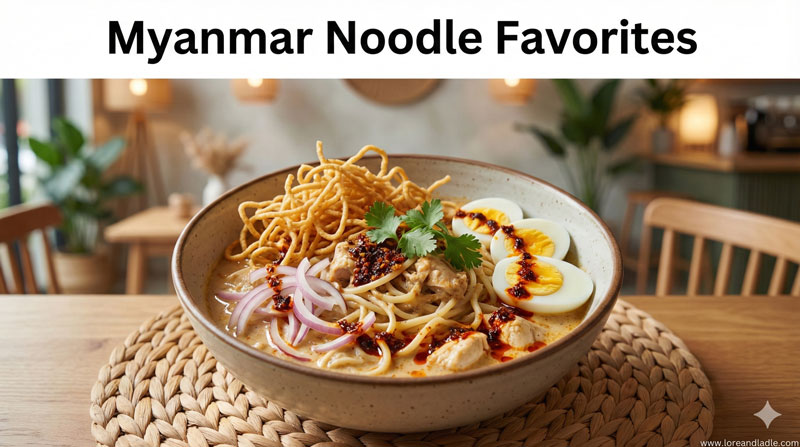
Ohn No Khao Swè: This coconut chicken noodle soup feels bright and comforting at once. A creamy coconut broth mingles with turmeric, ginger, and fragrant garlic. Rice noodles soak up the flavors, and toppings like toasted sesame, shallots, and lime lift the dish. It is accessible to vegetarian guests when you swap chicken for mushrooms or tofu, keeping the party inclusive.
-
Nan Gyi Thoke: A hearty, topping-rich noodle salad. Thick rice noodles serve as a sturdy base for curry, sliced chicken, and crisp chickpea fritters. A tangy tamarind or lime glaze ties the bowl together, while crunchy sesame seeds and fresh herbs add contrast. It travels well in shallow trays and invites guests to mix and match.
-
Shan Noodles: This dish brings a rich, slightly earthy curry over soft noodles. Usually crowned with ground peanuts, herbs, and a squeeze of lime, Shan noodles offer a comforting, comforting-satisfying bite. They pair nicely with lighter options at a party, balancing flavors across the table.
How to highlight flavor, texture, and balance at a party
-
Layer textures: Combine smooth noodles with crisp toppings like fried shallots, peanuts, and fresh herbs. The mix keeps every bowl interesting.
-
Build brightness: Use lime, cilantro, and mint generously. A touch of chili adds warmth without overpowering the main flavors.
-
Offer a gentle heat option: Provide a mild chili sauce on the side. This lets guests adjust their bowls to taste.
-
Keep broth warm and ready: For soups, a steady simmer helps noodles stay tender without becoming mushy as servings go out.
-
Provide flexible toppings: Scallions, shredded cabbage, cucumber ribbons, and fried chickpea bites let guests customize.
Tips for hosting with Burmese noodle dishes
-
Plan for the potluck timeline: Keep soups and broths on a slow simmer so guests can ladle as they arrive. Prepare toppings in separate bowls to maintain freshness.
-
Label clearly: Name each noodle dish and note vegetarian or gluten-free options. Simple labels help guests choose confidently.
-
Set up a self-serve station: A shared table with bowls, spoons, chopsticks, herbs, and toppings makes serving smooth and festive.
-
Consider dietary needs: Offer at least one vegetarian and one protein-rich option. This inclusion keeps the gathering welcoming to all guests.
-
Rehearsal-friendly prep: Many elements can be prepared a day ahead. Broth, chopped herbs, and fritters can be cooked in advance and finished quickly before serving.
Flavor notes to celebrate at the table
-
Aromatics: Lemongrass, garlic, shallots, and curry spices create comforting warmth.
-
Freshness: Bright cilantro, mint, and lime lift the bowls and invite another round.
-
Umami: Fish sauce, roasted peanuts, and chickpea fritters bring depth and complexity.
-
Comfort and brightness: The creamy coconut in Ohn No Khao Swè contrasts with tangy lime and crisp herbs for a balanced bite.
The cultural value of sharing Burmese noodles
Sharing Burmese noodle dishes is more than feeding a crowd. It is an act of hospitality and togetherness. People gather around large pots and trays, chatting as bowls are filled. The ritual of adding toppings together creates momentary conversation and connection. In many communities, noodles become a bridge between generations, with elder cooks passing along tips on broth balance, spice level, and textures. The result is a table where memories mingle with flavors, making the meal feel personal and communal at the same time.
Serving suggestions and complementary dishes
-
Light salads: A cucumber-tennel salad or tomato-onion salad adds freshness to counter the richness of soups.
-
Snack options: Crispy fried onions or garlic chips pair well with both mohinga and nan gyi thoke.
-
Beverages: Refreshing limeade, Burmese tea, or tamarind juice can round out the meal without overpowering the noodles’ flavors.
-
Dessert pairing: A simple fruit platter or a coconut-based dessert can provide a gentle finish after the noodle bowls.
Regional variety and adaptability
Myanmar’s noodle traditions vary by region, offering different textures and seasonings. This variety is a strength for potlucks, because it gives hosts a choice of styles to please diverse palates. You can mix and match mohinga, nan gyi thoke, and Shan noodles to create a multi-section noodle station that still feels cohesive. The shared experience of tasting several styles becomes a celebration of regional flavors within one table.
A closing note on inviting dining experiences
Crowd-pleasing Myanmar noodle favorites bring warmth, color, and variety to potlucks and parties. They invite guests to participate, customize, and share in a collective meal. By presenting these dishes thoughtfully, you honor a rich culinary heritage and create spaces where joyful meals become lasting memories. Whether you lean toward a silky Mohinga, a tangy Nan Gyi Thoke, or a comforting Ohn No Khao Swè, you are inviting friends and family to enjoy flavors that tell a generous, welcoming story.