
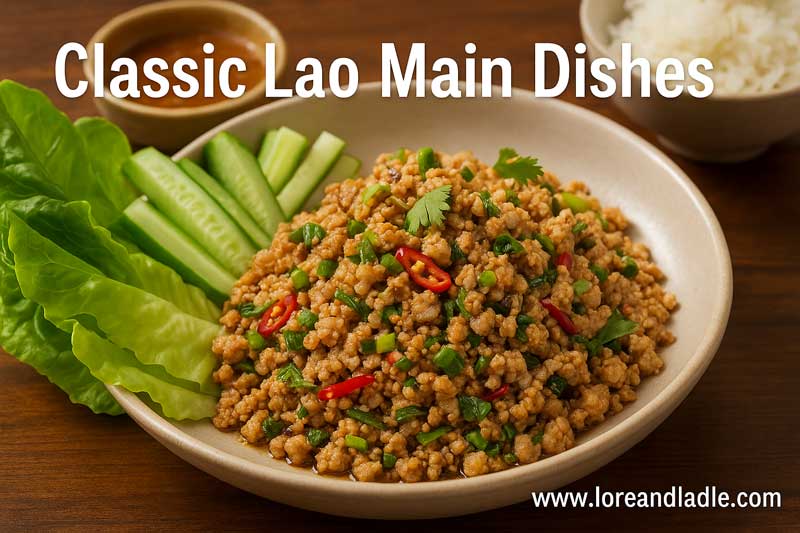
Beginner-Friendly Classic Lao Main Dishes Anyone Can Cook
Lao cuisine shines in the way it invites cooks of all levels to the table. This collection focuses on main dishes that are approachable yet steeped in culture. The aim is to celebrate flavor, technique, and a dining tradition that welcomes everyone to try, taste, and learn. Each dish here is a doorway to Lao dining rituals, seasonal ingredients, and shared moments around the family table.
What makes Lao main dishes culturally meaningful
Lao meals are built around balance and harmony. Fresh herbs, bright citrus, salty fish sauce, and a touch of heat come together to create flavors that sing. Sticky rice is more than food; it is a symbol of togetherness and a practical tool for eating and sharing. In Lao homes, the table often centers on a main dish that guests can gather around, then complement with small sides and dipping sauces. This style of dining emphasizes hospitality, clarity of flavor, and a mindful approach to ingredients. The dishes here honor that spirit while keeping cooking clear and friendly for beginners.
Core techniques that help beginners cook Lao flavors confidently
- Fresh herbs and bright aromatics lift each dish. Start with mint, cilantro, scallions, and dill, then add lemongrass or lime zest as you wish.
- Fish sauce and lime juice provide essential salt and tang. Taste as you go, balancing salty and sour levels.
- A mortar and pestle can be used to pound herbs for extra fragrance, especially in salads. If you don’t own one, a chopping board and knife work well too.
- Grilling, steaming, and quick sautéing keep flavors clean and intense. Short cooking times preserve texture and aroma.
- Sticky rice is the perfect accompaniment. It anchors flavors and helps fold ingredients together in each bite.
- Dishes are often flexible. You can adjust heat, herbs, and acidity to suit your palate without losing cultural character.
Larb: The fresh heartbeat of Lao meals
Larb is a bright minced-meat salad that shows Lao flavors at their cleanest. Use ground pork, chicken, beef, or mushrooms for a lighter version. The mix of lime juice, fish sauce, shallots, and fresh herbs is straightforward and bright. What makes larb beginner-friendly is its direct cooking: a quick sauté or briefly warmed meat, then a vibrant toss with herbs. Serve with small portions of sticky rice. The dish embodies a social vibe: people gather, scoop with their hands, and share. Larb teaches balance, texture, and the joy of fresh ingredients coming together quickly.
Mok Pa: Fragrance wrapped in banana leaf
Mok Pa is a steamed fish dish wrapped in banana leaf. The leaf traps steam and releases a gentle aroma of herbs as the fish cooks. In Lao kitchens, this dish highlights the art of wrapping and steaming as a simple, reliable technique. A light marinade—often with dill, lemongrass, and garlic—flavors the fish without masking its delicate sweetness. The result is tender fish, fragrant greens, and a visually appealing presentation. Mok Pa makes a striking main course for everyday meals or special occasions, and it remains approachable for a beginner with careful timing and gentle folding of the leaves.
Ping Gai and Sai Ua: Grilled stars of the plate
-
Ping Gai (grilled chicken) brings a comforting, familiar texture and a pleasing aroma. A simple marinade of garlic, lime juice, lemongrass, and a touch of fish sauce yields bright flavor. Grill to a crisp exterior while keeping the meat juicy inside. The technique is straightforward, and the result is a reliable centerpiece that pairs well with sticky rice and herbs.
-
Sai Ua (Lao sausage) introduces spice and warmth. A basic mix of herbs and ground meat, formed into patties or links, and pan-fried or grilled, creates a robust main dish with character. The sausage teaches how seasoning and fat balance can carry a dish from simple to memorable, while remaining easy to manage at Home.
Or Lam: A hearty, comforting Lao stew
Or Lam is a slow-cooked stew that blends meat with vegetables and fragrant herbs. The beauty of Or Lam lies in patience. Simmering lets flavors mingle gently, producing a comforting depth. While some versions are richer or thicker, beginners can start with a simpler version using a single meat and a handful of vegetables. The end result is a nourishing main dish that echoes mountain regions where herbs and slow cooking are treasured. Or Lam demonstrates how Lao cooks cultivate warmth and heartiness in a single pot.
Tam Mak Hoong: Papaya salad as a main course
Tam Mak Hoong is Lao papaya salad with a satisfying bite. It uses shredded green papaya, tomatoes, long beans, and a balance of lime, fish sauce, and chili. A mortar and pestle helps release the aroma of garlic and chilies, but you can also chop and mix to achieve a crisp texture. For many, this dish centers the meal with lively contrasts—green papaya’s crunch meets sour and salty notes. When plated as a main dish, Tam Mak Hoong shines with sticky rice and a few fresh herbs on the side. It’s a vibrant example of how a bright salad can anchor a full meal.
Pairing and plate: The role of sticky rice
Sticky rice plays a unifying role across Lao meals. It is shaped into small balls or simply formed into a scoop to hold bites of meat, vegetables, and herbs. It anchors flavors and adds comforting texture. When you plate Lao main dishes, offering sticky rice alongside allows everyone to tailor bites to taste. This simple pairing channels a traditional approach and invites slow, mindful tasting.
Practical tips for a successful first Lao main
- Start with one dish at a time. Learn the core flavor profile before layering more elements.
- Keep fresh herbs handy. Their brightness defines Lao dishes and makes them feel alive.
- Taste as you go. Adjust acidity with lime, salt with fish sauce, and heat with chilies to your preference.
- Use quick-cooking methods first. Grilling, quick sautéing, and steaming keep flavors crisp.
- Build color on the plate. A mix of greens, herbs, and orange or red accents makes the meal inviting.
A warm invitation to explore
The dishes in this collection are chosen for accessibility and cultural resonance. They invite beginners to participate in Lao culinary traditions with confidence and curiosity. Each recipe is a chance to experience harmony of flavors, textures, and aromas that Lao cookery offers. By cooking these dishes, you join a long line of cooks who value clear, honest ingredients and a generous, shared table.
If you are new to Lao cooking, approach with patience and joy. Start with one dish, savor the process, and gradually add more steps as you grow comfortable. The beauty of Lao cuisine lies not only in taste, but in the care and community that accompany every meal. Welcome to a kitchen where simple techniques unlock a world of flavor, and every plate tells a story of family, place, and celebration.