
Introduction
in the collection Easy Indonesian Indonesian Rice Dishes & Bowls: Nasi Uduk and More for Summer Cookouts, the spotlight rests on a fragrant, comforting staple. This post explores the cultural value and culinary significance of Nasi Uduk and the family of rice bowls that accompany it. The goal is to honor how scent, texture, and shared meals weave together into Indonesian food culture. You will read about the dish’s meaning, its place in everyday life, and why it shines at summer gatherings.
What is Nasi Uduk?
Nasi Uduk is a dish built from simple rice transformed by its ingredients. The rice cooks with coconut milk, a hint of lemongrass, pandan leaves, and a touch of salt. The result is grain that is soft yet distinct, infused with a warm, gentle coconut aroma. This preparation is one of the most beloved ways Indonesians experience comfort food in everyday life. In many homes and eateries, a pot of Nasi Uduk signals hospitality and a welcoming table. It is often served with a careful array of toppings and sides, turning a single pot of rice into a complete, balanced meal.
Flavor, Fragrance, and Technique
The magic of Nasi Uduk lies in fragrance and balance. The coconut milk adds richness without heaviness, while pandan and lemongrass provide a fresh, aromatic lift. The technique is practical and nuanced: rice is simmered in coconut milk with the aromatics, then rested so the grains soak in the infused flavors. The surface may glisten with a light sheen, and every bite carries a quiet sweetness from the coconut complemented by savory hints from the spices. This method makes the dish both comforting and celebratory, suitable for quiet weeknights and festive tables alike.
Cultural Value in Indonesian Food Culture
Nasi Uduk reflects a cultural impulse toward warmth, hospitality, and shared nourishment. Across Indonesia, families gather around a steaming pot of rice to talk, laugh, and plan the meal that will follow. In Jakarta’s neighborhoods, the Betawi-influenced version of Nasi Uduk sits at the center of weekend breakfasts and special occasions. Yet the dish travels beyond a single city. Its versatility allows cooks to pair it with fried chicken, omelets, tempeh, or seafood, revealing how Indonesian cooks adapt a core technique to local tastes and seasonal ingredients. The bowl becomes a canvas for memory—what a family ate together last week, the flavors that remind someone of home, the small acts of care in cooking for others. In this sense, Nasi Uduk acts as a bridge between the home kitchen and social gatherings, a tangible expression of Indonesian hospitality.
Nasi Uduk for Summer Cookouts
Summer cookouts invite foods that travel well and stay satisfying as temperatures rise. Nasi Uduk meets these needs beautifully. The rice can be prepared a little ahead and served at room temperature or warm, making it a practical centerpiece for outdoor meals. Its coconut aroma is inviting without overpowering, so it pairs easily with grilled items like chicken or fish and with fresh vegetables. A bright cucumber salad and a tangy sambal add color and contrast, while fried onions and roasted peanuts provide textural variety. The result is a crowd-friendly dish that honors tradition while embracing the relaxed tempo of summer gatherings. In this way, Nasi Uduk becomes more than food; it becomes a quiet, fragrant ritual of sharing among friends and family.
Other Bowls and Rice Dishes in the Collection
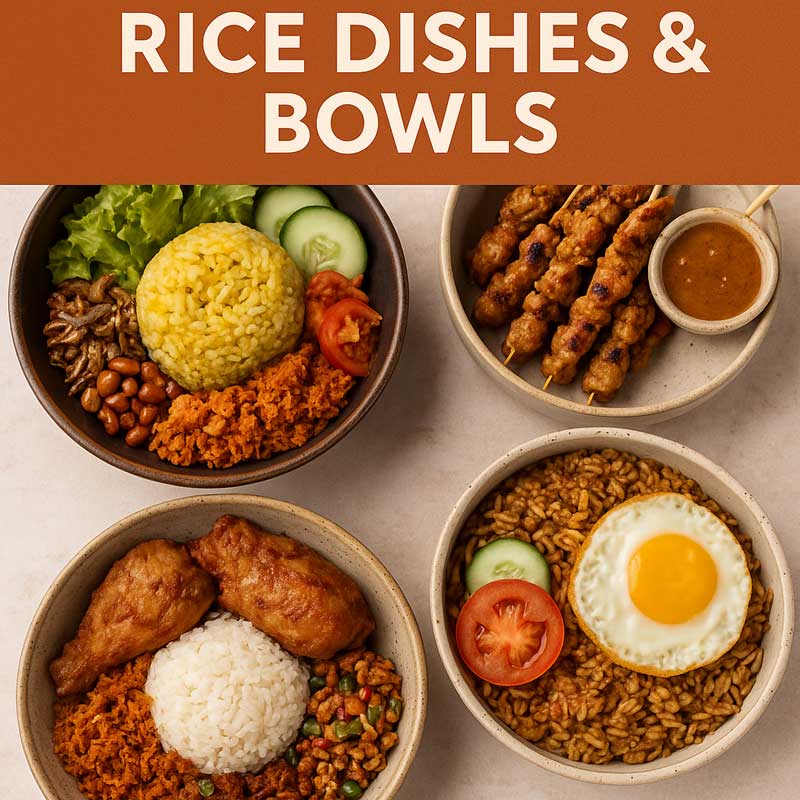
The collection highlights a range of rice bowls that echo Nasi Uduk’s appeal. Nasi Kuning, with its sunny yellow color from turmeric, is often prepared for celebrations and communal meals. Nasi Campur blends small portions of several dishes in one bowl, illustrating regional diversity and the joy of variety. Nasi Goreng, Indonesia’s iconic fried rice, shows how heat and wok technique shape texture and depth of flavor. Together, these bowls demonstrate how rice, as a staple, serves as a flexible platform for culture, technique, and seasonal ingredients. Each dish emphasizes balance—between sweet and savory, between fragrance and freshness—and celebrates food as a social practice that brings people together.
Culinary Techniques that Shape Indonesian Rice Dishes
Beyond flavor, these dishes teach important culinary principles. Layering aromatics, such as pandan and lemongrass, creates a scent memory that signals a well-made dish. The choice of starch—rice—becomes a vehicle for texture, sauce, and toppings. The practice of pairing rice with a mix of proteins, vegetables, and condiments shows Indonesian cooks’ skill at composing meals in bowls. The emphasis on shared serving, multiple accompaniments, and interactive presentation reflects a culture that values hospitality, conversation, and mutual enjoyment around the table.
Pairings and Presentation for Summer Gatherings
For summer cookouts, thoughtful pairings elevate Nasi Uduk. Crisp cucumber slices, tangy pickles, and a bright tomato salad bring freshness. A portion of fried chicken or grilled tempeh offers protein with satisfying texture. A small bowl of sambal adds a gentle heat for those who want it, while roasted peanuts give a pleasant crunch. Garnishes like fried shallots enhance aroma and color. Presentation matters: arrange the bowls in a way that invites sharing, with a central pile of rice and separate sides that guests can mix themselves. This approach mirrors Indonesian dining customs, where variety and generosity create a memorable meal.
Quick Tips for Home Preparation
- Use full-fat coconut milk for a richer aroma and texture.
- Tie pandan leaves and a lemongrass stalk to release fragrance as you cook.
- Let the rice rest after cooking to finish absorbing the flavors.
- Prepare toppings and sides in advance for a smooth outdoor service.
- Offer a mild and a spicy sambal so guests can choose their heat level.
- Keep a simple cucumber salad handy for brightness and crunch.
Cultural Significance in Daily Life
Nasi Uduk is a reminder that food can carry memory, care, and community. In homes and eateries, its preparation often signals a welcome to guests and family alike. The dish honors regional roots while adapting to contemporary tastes, showing how Indonesian cooking keeps its core identity while staying lively and evolving. The bowl’s appeal lies not only in aroma and taste but also in the shared experience of serving, portioning, and tasting together. It is a everyday luxury—comforting, approachable, and deeply human.
Conclusion
Easy Indonesian Indonesian Rice Dishes & Bowls: Nasi Uduk and More for Summer Cookouts invites readers to savor a cuisine that values aroma, texture, and togetherness. Nasi Uduk stands out as a poised, fragrant centerpiece that suits warm-weather gatherings and everyday meals alike. The broader collection of rice bowls reinforces Indonesia’s rich culinary vocabulary, where rice becomes a stage for flavor, technique, and communal joy. By focusing on cultural value and culinary significance, we celebrate not just a dish but a living tradition of sharing food with care and respect.